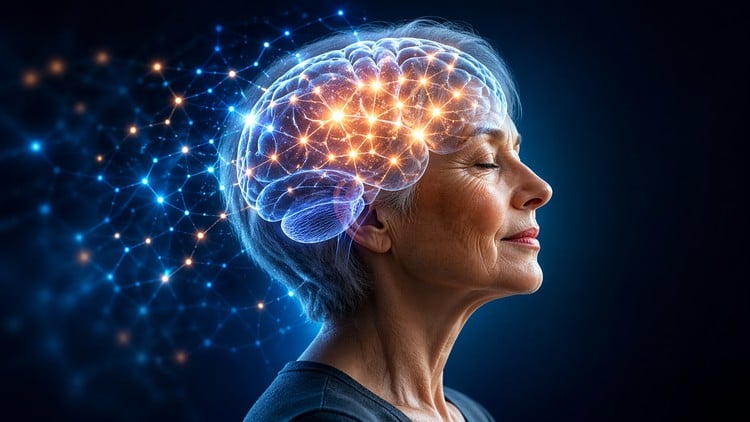
Practical neuroscience to protect memory, enhance focus, and build a resilient, high-performing brain for life
What You Will Learn:
- The Aging Mind: What Changes?
- Why Don’t We Live Forever?
- : Is Aging a Disease?
- Aging and Brain Structure
- Aging and Brain Function
- : Emotional Aging
- Strategies for an Aging Memory
- : Dementia and Alzheimer’s Disease
- Parkinson’s Disease and Stroke
Overview
Let’s be honest: in the tech world, we spend a ridiculous amount of time obsessing over hardware upgrades, the latest cloud infrastructure, and optimizing our deployment pipelines. But how much time do we actually spend optimizing the biological hardware between our ears? I’ve spent fifteen years in the industry, and I’ve seen brilliant engineers burn out not because they lost their technical edge, but because they neglected their cognitive baseline. That’s why I picked up Ageless Mind: The Science of Brain Health, Memory Longevity.
This isn’t some fluffy “positive thinking” seminar. It’s a deep dive into the wetware. The course takes a pragmatic, almost engineering-focused look at how our brains degrade over time and, more importantly, how we can “refactor” our habits to maintain high-performing cognitive functions. Instead of just listing symptoms of aging, it digs into the “why” of cellular senescence and the structural shifts in the prefrontal cortex. As someone who values data-driven decision-making, I appreciated that the content leans heavily on peer-reviewed neuroscience rather than wellness trends. It treats the brain as a complex system that requires proactive maintenance to avoid “legacy system” failures like cognitive decline or memory fragmentation.
What really hit home for me was the discussion on resilient brain architecture. In an industry where career growth is tied to how fast you can learn new languages and frameworks, your memory is your most valuable asset. This course provides a blueprint for protecting that asset, framing brain health as a long-term project with significant ROI for your professional and personal life.
Prerequisites
- Foundational Biology: You don’t need a medical degree, but a basic understanding of human biology helps you grasp the hands-on physiological concepts faster.
- Analytical Mindset: A background in technical troubleshooting or logic-based work is useful for understanding the cause-and-effect nature of neuro-degeneration.
- Commitment to Lifestyle Iteration: This isn’t a passive watch; you need to be ready to implement real-world changes to your routine.
- No specialized gear required: Unlike a cybersecurity lab, the only “tools” you need are a notebook and a willingness to audit your current habits.
Skills & Tools
- Neuroplasticity Optimization: Learning how to “rewire” neural pathways to improve job-ready skills acquisition even as you age.
- Stress Response Management: Using industry-standard physiological techniques to mitigate cortisol damage to the hippocampus.
- Cognitive Load Balancing: Tools for enhancing focus and reducing “brain fog” during intense coding sprints or complex project management.
- Diagnostic Awareness: Understanding the early markers of neurological conditions, similar to how we monitor system health logs.
- Bio-Hacking Frameworks: Implementing nutrition and sleep protocols that act as performance tuning for your cognitive output.
Career Benefits & Job Roles
While this isn’t a full-stack development bootcamp, the career benefits are massive. If you are a Senior Software Architect, a CTO, or a Product Manager, your value is derived entirely from your cognitive processing speed. Maintaining a “sharp” brain ensures you aren’t phased out by younger talent, making this a form of career longevity insurance. For those in high-stress roles like Site Reliability Engineering (SRE) or Cybersecurity Analysis, the modules on emotional aging and stress resilience are gold. You’ll learn to stay calm under pressure, which is a soft skill that leads directly to leadership promotions. Ultimately, a healthy brain makes you more efficient, meaning you can knock out real-world projects faster and with fewer errors, leading to better performance reviews and higher salary ceilings.
Pros
- No Fluff, All Science: The course avoids the “woo-woo” and sticks to evidence-based neuroscience, which is a breath of fresh air for those of us who prefer technical documentation over marketing hype.
- High Production Quality: The visual aids explaining brain structure and vascular health are top-notch—think of them as clear architectural diagrams for your head.
- Actionable Takeaways: Every module ends with practical labs for your daily life, making the theory immediately applicable to your work-from-home or office routine.
- Holistic View: It covers everything from the physical (stroke, Parkinson’s) to the emotional, providing a 360-degree view of cognitive health.
Cons
- Information Density: Some of the medical terminology can feel like a certification prep exam for a med student; if you aren’t paying close attention, it’s easy to get lost in the jargon of protein folding and neurotransmitter pathways.