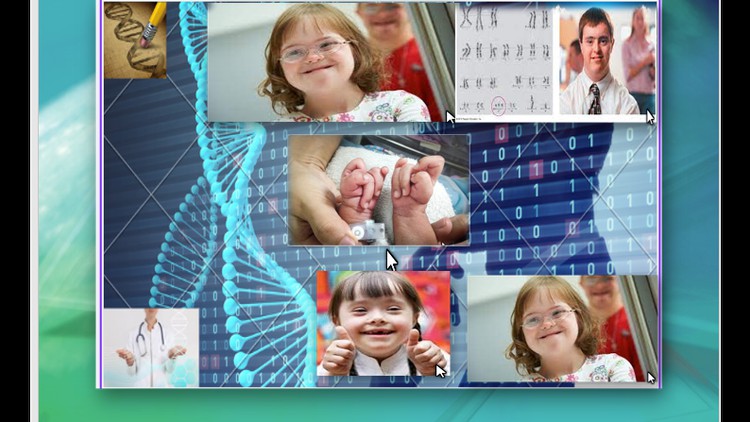
cares for individuals and families with abnormal variation the story of genetics and its applications
What you will learn
introduction to genetics
chromosomal disorders
single gene disorders
multifactorial inheritance
population genetics
Description
Medical genetics is the branch of medicine that involves the diagnosis and management of hereditary disorders. Medical genetics differs from human genetics in that human genetics is a field of scientific research that may or may not apply to medicine, while medical genetics refers to the application of genetics to medical care. For example, research on the causes and inheritance of genetic disorders would be considered within both human genetics and medical genetics, while the diagnosis, management, and counselling people with genetic disorders would be considered part of medical genetics.
In contrast, the study of typically non-medical phenotypes such as the genetics of eye color would be considered part of human genetics, but not necessarily relevant to medical genetics (except in situations such as albinism). Genetic medicine is a newer term for medical genetics and incorporates areas such as gene therapy, personalized medicine, and the rapidly emerging new medical specialty, predictive medicine
Medical genetics encompasses many different areas, including clinical practice of physicians, genetic counselors, and nutritionists, clinical diagnostic laboratory activities, and research into the causes and inheritance of genetic disorders. Examples of conditions that fall within the scope of medical genetics include birth defects and dysmorphology, intellectual disabilities, autism, mitochondrial disorders, skeletal dysplasia, connective tissue disorders, cancer genetics, and prenatal diagnosis. Medical genetics is increasingly becoming relevant to many common diseases. Overlaps with other medical specialties are beginning to emerge, as recent advances in genetics are revealing etiologies for morphologic, endocrine, cardiovascular, pulmonary, ophthalmologist, renal, psychiatric, and dermatologic conditions. The medical genetics community is increasingly involved with individuals who have undertaken elective genetic and genomic testing.
Content
Introduction
human genetic disorders
single gene disorders
chromosomal disorders
Multifactorial Inheritance
Population Genetics
Overview
Let’s be real: most “foundational” courses in the medical space feel like a dry recitation of a 1990s textbook. You go in expecting to unlock the secrets of the human genome and come out wondering why you spent six hours on the history of peas. However, Clinical Foundations of Medical Genetics actually manages to break that mold. As someone who spends most of my time looking at data pipelines and software architecture, I approached this from a “human codebase” perspective, and I wasn’t disappointed. This isn’t just about memorizing base pairs; it’s about the clinical narrative—the story of how abnormal variation manifests in real people and how we, as professionals, interpret that data to change lives.
What struck me most was the shift from theory to application. Instead of just looking at abstract sequences, the course pushes you into the shoes of a clinician or a clinical data analyst. You start seeing genetics not as a static blueprint, but as a dynamic, shifting system where small “bugs” in the code lead to massive downstream effects. It bridges the gap between the lab bench and the bedside, providing a narrative framework that makes the complex concepts of multifactorial inheritance feel intuitive rather than overwhelming. If you’re looking for job-ready skills in the burgeoning healthtech or biotech sectors, this provides the essential context that most coding bootcamps or standard bio degrees completely skip over.
Prerequisites
You don’t need a PhD in Molecular Biology to survive this, but don’t walk in totally cold either. I’d recommend a beginner to advanced mindset—meaning, you should at least know what a chromosome is and have a basic grasp of cell biology. If you’re coming from a tech background, your logic-based brain will actually give you an edge in understanding inheritance patterns. A little familiarity with data interpretation or statistics will help when you hit the population genetics modules. Essentially, if you can follow a logic gate, you can follow a pedigree chart.
Skills & Tools
This course goes beyond the whiteboard and introduces you to the industry-standard tools used in modern genetic counseling and diagnostic labs. You’ll get hands-on with:
- Pedigree Mapping: Learning how to visually architect family histories to predict risk—think of it as a specialized version of system architecture diagrams.
- Variant Interpretation: Getting a feel for how clinicians distinguish between “noise” and pathogenic mutations.
- Risk Assessment Models: Using statistical frameworks to calculate the probability of recurrence in single gene disorders.
- Genomic Databases: Navigating the same repositories used by bioinformatics engineers to cross-reference genetic variants with known phenotypes.
Career Benefits & Job Roles
If you’re looking for career growth in 2024, the intersection of healthcare and data is where the money is. Completing this course isn’t just a line on a resume; it’s a signal that you understand the “why” behind the data. It serves as excellent certification prep for those looking to move into specialized clinical roles or for tech pros aiming for Bioinformatics Analyst positions. We’re seeing a massive surge in high-paying roles for people who can bridge the gap between complex genetic data and actionable medical insights. Other potential job roles include:
- Genetic Counseling Assistant: Supporting clinical teams in patient intake and data management.
- HealthTech Product Manager: Building the next generation of real-world projects in personalized medicine.
- Clinical Research Coordinator: Managing the data integrity of trials focusing on genomic therapies.
- Medical Data Curator: Ensuring that industry-standard tools are populated with accurate genetic information.
Pros
- Real-World Projects: The course uses actual case studies that feel like hands-on labs. You aren’t just learning theory; you’re solving clinical puzzles that mirror what you’d see in a diagnostic facility.
- No Fluff: It respects your time. The transition from chromosomal disorders to population genetics is seamless and stays focused on clinical utility rather than academic minutiae.
- Career-Focused: It’s designed for professional development. Every module feels like it’s building toward making you more employable in the biotech space, focusing on job-ready skills that employers actually care about.
Cons
If I have one gripe, it’s the nomenclature density. In the middle modules, the sheer volume of acronyms and specific gene names can feel like drinking from a firehose. For a course that prides itself on being a “foundation,” it occasionally veers into “advanced” territory without enough of a ramp-up, which might frustrate a true beginner who isn’t used to medical jargon. I would have liked to see a more interactive “cheat sheet” or a searchable glossary integrated directly into the hands-on labs to help keep the terminology straight while working through the cases.