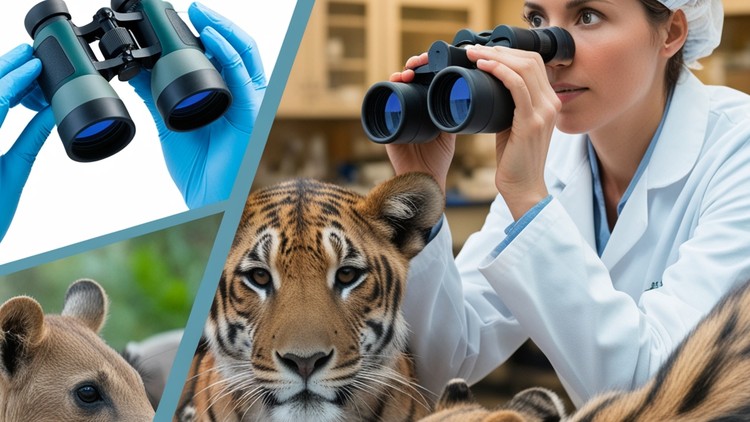
principales of ethology
Why take this course?
🐾 Ethology for Veterinarians: An Introduction to Understanding Animal Behavior
🚀 Course Headline: Principales of Ethology for Future-Ready Veterinarians!
👀 Preview the Fascinating World of Ethology
Are you a veterinarian looking to deepen your understanding of animal behavior? Or perhaps a student with a keen interest in the field? Our comprehensive online course, “Ethology for Veterinarians: An Introduction,” is tailored to introduce you to the fascinating scientific study of animal behavior. This isn’t just about scratching behind the ears; it’s about unlocking the secrets that lie beneath these actions.
📗 Course Description:
Ethology is the door through which we explore and understand the behaviors of animals in their natural environment. It’s a key component in veterinary practice, where recognizing normal versus abnormal behavior can significantly impact an animal’s health and well-being. In this course, you’ll embark on a journey through the core principles of ethology that are essential for veterinarians to apply effectively in their clinical practice.
Key Topics Covered:
- Introduction to Ethology: Discover the history and significance of this vital science in understanding animal behavior. 🕰️
- Behavioral Development: Shed light on how genetics, environment, and learning contribute to an animal’s behavior from birth to adulthood. 👶➡️🐾
- Learning and Conditioning: Get a grips on classical and operant conditioning, along with habituation, imprinting, and social learning – the building blocks of animal cognition. 🧠✨
- Communication in Animals: Learn to interpret the myriad ways animals convey messages through visual, auditory, chemical, and tactile signals. 🤫👂🌬️🤗
- Social Structures and Behavior: Dive into understanding animal societies, including social hierarchies, territoriality, and group dynamics. 🌍🐖
- Normal vs. Abnormal Behavior: Acquire the skills to identify behavioral disorders across various species, and understand their underlying causes. 🚧➡️✅
- Fear, Aggression, and Stress: Learn comprehensive management techniques for fears, aggression, stress-related behaviors, and anxiety. 😫✨️
- Human-Animal Interaction: Examine how human interaction affects an animal’s behavior and how proper handling can enhance their welfare. 🤲🐕🦺
- Behavioral Disorders: Gain insights into diagnosing and treating issues such as separation anxiety, compulsive behaviors, and aggression in clinical settings. 🏥❌➝✅
- Animal Welfare and Ethics: Grasp the vet’s role in promoting animal welfare through knowledgeable behavioral understanding. 💜🐒
- Species-Specific Behavior: Tailor your approach to common domestic animals like dogs, cats, horses, and livestock, as well as exotic species. 🐑➡️🐘➡️🦅
- Environmental and Enrichment Strategies: Master environmental modifications and enrichment techniques to promote natural behaviors and reduce stress. 🏞️🎈
By the end of this course, you’ll be well-equipped with the knowledge to apply ethological principles in your clinical practice, thereby improving animal welfare, preventing behavioral issues, and treating animals holistically. Join us on this enlightening journey into the world of veterinary ethology! 🌟🐾❤️
Enroll now and be part of a vanguard of veterinarians who make a significant difference in the lives of animals through the science of behavior. Let’s unlock the animal mind together! 🧠🚀
- Course Overview
- Explore the biological and evolutionary mechanisms that drive animal behavior across domestic, laboratory, and wild species.
- Analyze the four pillars of ethology—mechanism, ontogeny, adaptive value, and phylogeny—to gain a holistic understanding of why animals act the way they do.
- Investigate the complex relationship between genetics and environment (nature vs. nurture) and how this interplay manifests in behavioral phenotypes.
- Examine the neuro-endocrinological foundations of behavior, linking hormonal fluctuations and brain chemistry to physical actions and social interactions.
- Bridge the gap between theoretical behavioral ecology and practical application in veterinary clinics and research facilities to improve animal management.
- Requirements / Prerequisites
- A foundational background in biological sciences or animal husbandry is recommended to fully grasp the physiological concepts.
- Basic knowledge of anatomy and physiology, particularly the nervous system, to understand the physical drivers of animal movement.
- A professional or academic interest in animal welfare, veterinary medicine, or behavioral research.
- Access to a digital device capable of streaming high-resolution video case studies for behavioral observation exercises.
- Skills Covered / Tools Used
- Designing and implementing ethograms for the systematic and objective recording of an animal’s behavioral repertoire.
- Mastery of quantitative sampling techniques, such as focal, scan, and ad libitum sampling, to ensure statistically significant data collection.
- Utilization of behavioral diagnostic protocols to differentiate between pathological clinical signs and natural behavioral responses.
- Application of non-invasive observation tools to minimize the observer effect and maintain the integrity of behavioral data.
- Techniques for interpreting non-verbal communication cues to predict aggression, fear, or submission in various species.
- Benefits / Outcomes
- Enhanced diagnostic accuracy in veterinary practice by recognizing behavioral shifts as early indicators of underlying systemic disease or pain.
- Improved research integrity by identifying and mitigating behavioral stressors that could otherwise confound experimental data and physiological results.
- Implementation of low-stress handling protocols that increase safety for the handler and reduce psychological trauma for the animal.
- Ability to create scientifically-backed enrichment programs that fulfill species-specific biological needs and reduce the incidence of stereotypies.
- Greater professional authority when advising on animal welfare standards, facility design, and behavioral modification programs.
- PROS
- Provides a rigorous scientific framework that replaces anecdotal observations with evidence-based behavioral analysis.
- Equips professionals with universal principles that are applicable to a vast range of taxa, from companion animals to livestock.
- Fosters a deeper empathy and understanding of animal needs, leading to improved ethical standards in both clinical and laboratory settings.
- CONS
- The inherent variability between individual animals means that even with expert knowledge, some behavioral patterns may remain unpredictable and require ongoing longitudinal study.