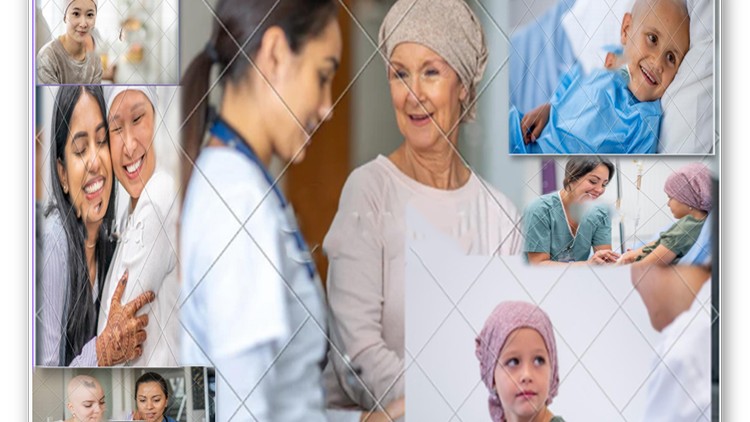
oncology basics
Why take this course?
🚀 Course Headline:
🔬 “Decode the Mysteries of Cancer: A Journey Through Oncology Fundamentals”
🌍 About the Course:
Dive into the complex and dynamic field of oncology with our comprehensive course, “Oncology Fundamentals.” This course is designed to give you a deep understanding of cancer biology, diagnosis, and treatment options. As we unravel the mysteries behind this multifaceted disease, you’ll gain invaluable insights into how cancer affects the human body and learn about the latest advancements in oncological science.
🔍 What You’ll Learn:
- 🧬 The biological processes underlying cancer development.
- 🤝 The complex interactions between cancer cells and their surroundings.
- ⚖️ The hallmarks of cancer and their implications for prevention, diagnosis, and treatment.
- 🌍 The global impact of cancer, including incidence, etiology, and key statistics.
- 🚫 The major risk factors contributing to the prevalence of cancer worldwide.
📊 Global Cancer Burden:
Cancer remains a significant public health challenge, with staggering figures:
- In 2020 alone, there were nearly 10 million deaths attributed to cancer, making it the leading cause globally.
- The global cancer burden in that year stood at an estimated 19.3 million new cases and 10.0 million deaths.
🏥 Cancer Types & Statistics:
Our course covers a variety of common cancers:
✅ Breast Cancer: Approximately 2.26 million new cases worldwide in 2020.
✅ Lung Cancer: Around 2.21 million cases, closely linked to tobacco use.
✅ Colon and Rectum Cancer: Over 1.93 million cases globally, highlighting the importance of diet and lifestyle choices.
✅ Prostate Cancer: Affected approximately 1.41 million men worldwide.
✅ Skin Cancer (Non-Melanoma): Around 1.20 million new cases, emphasizing sun protection and early detection.
✅ Stomach Cancer: Affected about 1.09 million individuals, underscoring the role of Helicobacter pylori infection and diet.
🛠️ Causes & Risk Factors:
Understanding the factors that contribute to cancer is crucial:
- ☫ Tobacco use is responsible for about one-third of cancer deaths.
- 🚧 High Body Mass Index increases the risk for certain types of cancer.
- 🍺 Alcohol consumption is linked to an increased risk of several cancers.
- 🍟 Poor diet, low in fruits and vegetables, can promote cancer development.
- 🚶♂️ Physical inactivity significantly raises the risk of many cancers.
- ❣ Infections from viruses (e.g., HPV) and bacteria (e.g., H. pylori) can lead to cancer.
🔬 Cancer Biology Mechanisms:
Our course will explore the intricate mechanisms behind cancer progression:
- 🡫 Cell Division: Cancer cells replicate uncontrollably, a stark contrast to the controlled division of normal cells.
- ✊♂️ Cell Signaling: Mutations in signaling pathways can alter cell behavior and contribute to cancer growth.
- 🔠 DNA Repair: The failure to repair DNA damage can result in mutations that drive cancer.
- 🌄 Angiogenesis: Cancer cells’ ability to create new blood vessels is essential for their survival and spread.
- 🎯 Metastasis: Understanding how cancer cells spread to other parts of the body is crucial for effective treatment strategies.
🔬 Advancements in Diagnosis & Therapy:
The field of oncology is constantly evolving, with new therapies and diagnostic tools being developed:
- Targeted therapies that inhibit specific cancer cell signaling pathways or block the growth of new blood vessels.
- Innovative diagnostic tools aimed at detecting cancer early when it is most treatable.
📅 Join Our Journey:
Embark on an enlightening journey through the world of oncology with our “Oncology Fundamentals” course. Gain a solid foundation in cancer biology and emerge equipped with knowledge that can impact the fight against this formidable disease. Enroll now to be part of this life-changing educational experience! 🎓
👩🏫 Your Instructor:
Learn from an expert in the field, [Instructor Name], who brings years of experience and a wealth of knowledge to the table. With a deep understanding of oncology and its various facets, your instructor will guide you through each topic with clarity and expertise.
📫 Enroll Today:
Secure your spot in our next cohort and embark on a journey that could redefine the way you understand cancer biology. With each lesson, you’ll be closer to contributing to the global effort against this complex disease. Enroll now and unlock the door to a world of knowledge and potential impact! 🌟
Alright, let’s talk about ‘Oncology: Understanding Cancer Biology, Diagnosis Treatment’. As someone who’s spent a fair bit of time navigating complex tech landscapes, I’ve developed a pretty keen eye for what constitutes a truly valuable educational resource versus just another information dump. When I decided to dive into the intricate world of oncology, it wasn’t out of a desire to become a doctor, but to better understand a pervasive and critical field that impacts so many lives, and increasingly, intersects with data science and biotech innovation. This course popped up on my radar, and after going through it, I’ve got some honest takeaways to share.
Overview
This isn’t just a textbook put into an online format; it’s a thoughtfully structured journey into the core mechanisms of cancer. Forget the superficial; this course digs deep into the molecular and cellular foundations, which, for me, was the real draw. It doesn’t just list facts; it explains the ‘why’ behind cancer’s development, its notorious adaptability, and how that informs treatment strategies. What I found particularly insightful was the way it connected the dots from the microscopic genetic mutations to the macroscopic clinical manifestations, giving a holistic view that often gets lost in more specialized modules. It really helped to demystify a lot of the jargon I’d encountered in news articles and scientific papers, transforming vague concepts into a robust, interconnected understanding. It’s less about memorization and more about building a foundational mental model of cancer, from its earliest cellular origins to advanced therapeutic approaches.
Prerequisites
- Honestly, you don’t need a medical degree to tackle this course. However, a basic grasp of high-school level biology and chemistry will make your life a lot easier. If you understand what DNA, RNA, and proteins are, and have a general idea of cell structure and function, you’re good to go.
- A genuine curiosity about biological processes and disease mechanisms is probably the most crucial prerequisite. Without that, the depth might feel a bit overwhelming.
- No coding or advanced technical skills are required, making it accessible even if your background is purely on the scientific side.
Skills & Tools
- Enhanced Analytical Thinking: You’ll learn to critically evaluate scientific literature and diagnostic information related to cancer.
- Foundational Oncology Knowledge: A comprehensive understanding of the Hallmarks of Cancer, key Risk Factors for Cancer, and various methods of Diagnosis of Cancer.
- Biological Literacy: Deep dive into molecular pathways, genetics, and cellular processes perturbed in cancer. This isn’t about using industry-standard tools like specific software, but rather gaining conceptual tools for understanding and interpreting complex biological data.
- Informed Decision-Making: For those in related fields, this knowledge provides context for product development, investment decisions, or policy analysis in healthcare.
Career Benefits & Job Roles
- This course is a fantastic accelerant for career growth for anyone looking to transition into or gain a deeper understanding of the biotech, pharmaceutical, or healthcare tech sectors.
- It offers significant job-ready skills in foundational knowledge for roles such as:
- Clinical Research Associate (CRA): Understanding trial protocols and disease mechanisms.
- Medical Science Liaison (MSL): Engaging with healthcare professionals on new treatments.
- Healthcare Data Analyst: Interpreting outcomes and patient data with biological context.
- Biotech Sales/Marketing Professional: Articulating the value of oncology products.
- Medical Writer: Crafting clear and accurate content about cancer.
- Public Health Specialist: Developing strategies for cancer prevention and awareness.
- While not direct certification prep for medical boards, it provides an invaluable knowledge base for further specialized studies or professional development in oncology.
Pros
- Unmatched Depth & Clarity: The course does an exceptional job of breaking down incredibly complex biological concepts into digestible, logical modules. It truly takes you from a beginner to advanced understanding without ever feeling rushed. The explanations of gene mutations and signaling pathways are particularly stellar.
- Comprehensive Coverage: From the fundamental biology to detailed discussions of various diagnostic techniques and the principles behind different treatment modalities (chemo, radiation, immunotherapy), it leaves no stone unturned. This is a genuinely holistic view of oncology.
- Relevant & Up-to-Date: The content feels current, reflecting the latest understanding of cancer biology and emerging therapeutic strategies. This isn’t some dusty old textbook; it’s got its finger on the pulse of modern oncology.
- Practical Perspective (Conceptual): While not offering hands-on labs in a traditional sense, the course presents numerous hypothetical case studies and discusses the practical implications of research findings, preparing you to think critically about real-world projects and challenges in oncology.
Cons
- My main gripe, and it’s a minor one for a course of this nature, is the lack of truly interactive elements like virtual labs or direct opportunities to engage with mock patient data using industry-standard tools. While the conceptual grounding is excellent, for someone looking for purely applied, granular job-ready skills in a very specific niche (e.g., operating a flow cytometer), this course provides the “why” but not the “how-to” of that specific operation. It’s more theoretical application than direct practical execution, which means you’ll need to seek out further specialized training if that’s your end goal.