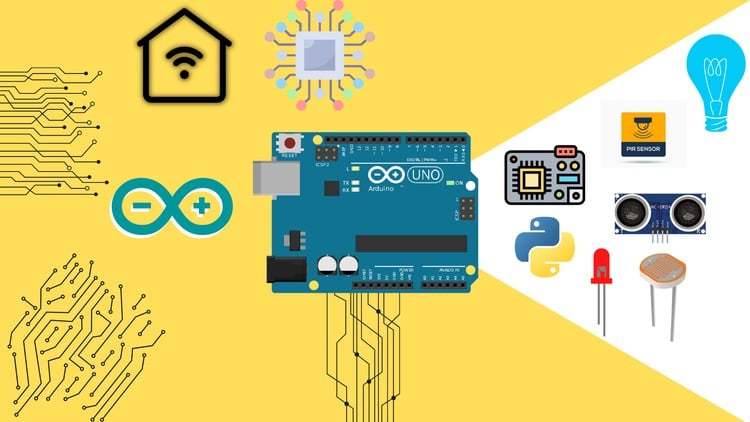
How To Create Home Automation Using Advance AI Assistant (JARVIS 2.0)
⏱️ Length: 3.5 total hours
⭐ 4.53/5 rating
👥 20,329 students
🔄 May 2022 update
Add-On Information:
Note➛ Make sure your 𝐔𝐝𝐞𝐦𝐲 cart has only this course you're going to enroll it now, Remove all other courses from the 𝐔𝐝𝐞𝐦𝐲 cart before Enrolling!
-
Course Overview
- Embark on a Futuristic Journey: This comprehensive course provides a hands-on roadmap to constructing a sophisticated, voice-controlled home automation system, inspired by the iconic JARVIS AI.
- Beyond Basic Smart Homes: Move past off-the-shelf smart devices and delve into creating deeply integrated and customized solutions that respond intelligently to your commands and environmental cues.
- Unleash Personalized Control: Learn to design a system that understands your unique preferences, automating routines, managing appliances, and delivering information all through advanced conversational interfaces.
- Engineer Your Intelligent Environment: Discover the architectural principles behind robust home automation, focusing on creating a responsive and adaptive living space tailored to your lifestyle.
- Bridge the Physical and Digital: Understand how to seamlessly connect diverse physical devices in your home with intelligent software logic, forming a unified and intuitive control network.
- Demystifying Advanced AI Integration: Explore practical techniques to embed AI assistant capabilities directly into your home setup, transforming simple commands into complex, coordinated actions.
- Project-Centric Learning: The curriculum is structured around a central, engaging project that progressively builds your ultimate smart home system, ensuring practical application of every concept.
- Stay Ahead of the Curve: Equip yourself with the knowledge and practical skills to innovate in the rapidly expanding fields of smart technology and artificial intelligence at home.
-
Requirements / Prerequisites
- Foundational Python Familiarity: A basic understanding of Python syntax and programming logic will be beneficial, though key concepts will be revisited in an applied context.
- Basic Computer Proficiency: Comfort with navigating operating systems, installing software, and managing files is essential for setting up development environments.
- Conceptual Grasp of Electronics: While not deeply technical, a general awareness of how electronic components (like sensors and relays) function will aid in understanding hardware integration.
- Access to Development Hardware (Recommended): While not strictly mandatory for all sections, having a Raspberry Pi or similar single-board computer, along with some basic sensors/actuators, is highly recommended for hands-on practice.
- Stable Internet Connection: Required for downloading necessary libraries, accessing online resources, and potential cloud service integrations for your AI assistant.
- Curiosity and Problem-Solving Mindset: An eagerness to experiment, troubleshoot, and explore new technological solutions will significantly enhance your learning experience.
- Microphone and Speakers: Essential for interacting with and testing the voice recognition and text-to-speech capabilities of your JARVIS AI assistant.
-
Skills Covered / Tools Used
- Applied Python for Device Interaction: Master advanced Python scripting for interfacing with hardware, processing sensor data, and controlling smart devices.
- Voice Recognition & Synthesis API Usage: Implement popular Python libraries for converting spoken commands into text and generating speech responses from your AI.
- Natural Language Processing Fundamentals: Learn techniques for parsing user intent from natural language commands, enabling your JARVIS to understand complex requests.
- Microcontroller Programming (e.g., Raspberry Pi): Gain practical experience configuring and programming single-board computers as the central hub for your home automation system.
- MQTT Protocol Implementation: Understand and utilize MQTT for lightweight, real-time communication between various smart devices and your central AI.
- RESTful API Integration: Connect your home automation system with external web services and smart home ecosystems for extended functionality (e.g., weather data, calendar events).
- Custom Sensor & Actuator Interfacing: Learn to read data from various sensors (temperature, motion, light) and control actuators (relays, LEDs, motors) via software.
- Event-Driven Programming: Develop skills in creating responsive systems that react to specific triggers, making your automation truly dynamic.
- System Architecture Design: Acquire the ability to conceptualize, plan, and build scalable and maintainable home automation systems.
- Command Line Interface (CLI) Mastery: Become proficient with basic Linux commands for managing your Raspberry Pi or similar development board.
- Software Design Patterns for AI: Apply intelligent design principles to build a modular and extensible AI assistant framework.
- Data Security Best Practices for IoT: Understand fundamental concepts for securing your smart home network and protecting personal data within your automated environment.
-
Benefits / Outcomes
- Creator of Your Own JARVIS: You will successfully build a functional, advanced AI assistant capable of managing and interacting with your home environment.
- Empowered Home Customization: Gain the ability to personalize every aspect of your smart home, free from the limitations of commercial off-the-shelf solutions.
- Enhanced Daily Convenience: Automate routine tasks, receive intelligent alerts, and control devices effortlessly through voice commands, significantly simplifying your daily life.
- Deep Understanding of IoT Ecosystems: Develop a holistic view of how connected devices, AI, and programming converge to create intelligent spaces.
- Valuable Portfolio Project: Possess a unique, impressive project to showcase your skills in AI, IoT, and software development to potential employers or for personal ventures.
- Problem-Solving Prowess: Sharpen your analytical and debugging skills by tackling real-world integration challenges in hardware and software.
- Foundation for Future Innovations: Establish a strong knowledge base that enables you to expand your JARVIS with new features, integrate more devices, and explore advanced AI concepts.
- Cost-Effective Smart Living: Learn to create sophisticated automation using open-source tools and affordable hardware, bypassing expensive proprietary systems.
- Career Advancement Potential: Position yourself as a skilled professional in rapidly growing fields such as IoT development, AI integration, and smart home technology.
- Confidence in DIY Tech Projects: Foster the confidence to undertake complex technological projects independently, from concept to deployment.
-
PROS
- Highly Practical & Project-Oriented: Focuses on building a complete, real-world system from scratch, ensuring hands-on learning and tangible outcomes.
- Comprehensive Integration of Technologies: Seamlessly blends Python programming, AI principles, IoT hardware, and home automation concepts into a unified learning experience.
- Strong Student Endorsement: A high rating of 4.53/5 from over 20,000 students indicates effective teaching and valuable content.
- Up-to-Date Content: The May 2022 update ensures you are learning relevant and current technologies and best practices.
- Engaging “JARVIS” Theme: The Iron Man AI assistant metaphor makes complex topics accessible and exciting, motivating learners through the project.
- Empowers Deep Customization: Teaches principles that allow users to create truly unique and personalized smart home experiences, unlike restrictive commercial solutions.
- Excellent Foundational Skill Development: Builds a robust skillset applicable not just to home automation but also to general IoT and AI development roles.
- Accessible Learning Curve: While advanced in scope, the step-by-step approach makes it manageable for learners with foundational programming knowledge to build complex systems.
-
CONS
- Intensive Learning Pace for Scope: Given the ambitious goal of creating “Ultimate Home Automation” with “Advanced AI” in 3.5 hours, learners should be prepared for a fast-paced environment that requires diligent practice outside of the core lesson time to truly master every facet discussed.
Learning Tracks: English,IT & Software,Other IT & Software