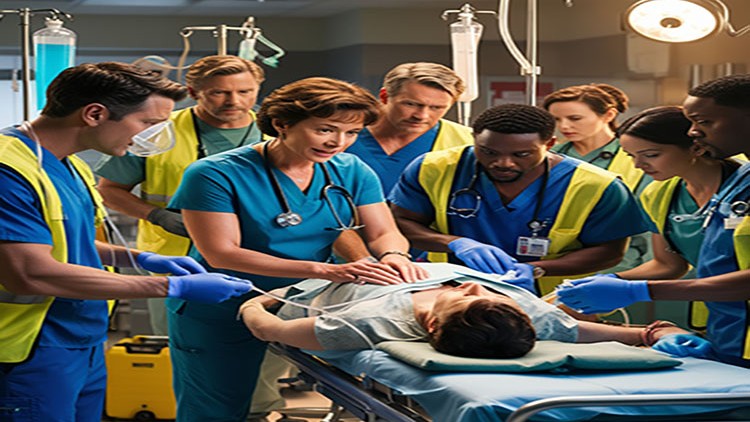
prehospital emergency medicine for professionals
Why take this course?
🚑 Course Title: Emergency Medicine for Medical Professionals: Prehospital Emergency Medicine (PHEM)
Course Headline: Dive into the World of Prehospital Emergency Medicine with Expert Instructor Mohamed Al-Ashram!
Introduction to Emergency Medicine:
Emergency medicine is a dynamic and critical field that demands swift decision-making and compassionate care. As an emergency physician, you are the frontline defender in providing immediate medical attention to those who need it most. This course will delve into the essentials of emergency medicine and introduce you to the fascinating history of Prehospital Emergency Medicine (PHEM), tracing its roots back to pioneers like Dominique Jean Larrey.
The Legacy of Larrey:
In the late 1700s, Larrey, a French surgeon and military doctor, revolutionized medical care on the battlefield. His innovative practices, such as triage and the use of flying ambulances, laid the foundation for modern PHEM. His dedication to providing contemporary medicine at the point of injury was not only inspirational but also set the stage for future advancements in emergency care.
The Evolution of EMS:
Fast forward to the 1960s and 1970s, when legislative and clinical developments transformed prehospital care into a formalized system known today as Emergency Medical Services (EMS). The landmark report “Accidental Death and Disability—The Neglected Disease of Modern Society” brought to light the inadequacies of prehospital trauma care. This led to significant legislative changes, such as the National Highway Safety Act of 1966, which paved the way for the modern EMS system we know today.
Course Structure:
This course is structured to provide comprehensive training in various critical areas of emergency medicine:
- Trauma: Learn to manage traumatic injuries from accidents, falls, violence, and more, stabilizing patients to provide lifesaving care.
- Sepsis: Understand the rapid diagnosis and effective treatment of sepsis, a life-threatening condition that arises from the body’s response to infection.
- Burns: Acquire expertise in assessing and treating burn injuries, understanding their severity, and providing appropriate care.
- Acute Coronary Syndrome (ACS): Gain knowledge on diagnosing and managing ACS, including heart attacks and unstable angina, to prevent serious complications.
- Poisoning: Master the assessment of different types of poisoning and the administration of antidotes or treatments to counteract harmful substances.
Why Study PHEM?
Understanding PHEM is crucial for medical professionals who encounter emergencies outside of traditional hospital settings. This course will equip you with the knowledge and skills needed to provide effective care in prehospital scenarios, ultimately saving more lives. You’ll learn from the historical context to the modern-day advancements, ensuring a well-rounded understanding of this vital field.
Conclusion:
By enrolling in this course, you will join the ranks of dedicated professionals who have embraced the challenges of emergency medicine and excelled in providing care wherever it’s needed most. Prepare to be at the forefront of prehospital care with the expertise to handle any emergency with confidence and competence. 👩⚕️✨
Enroll Now and Embark on Your Journey to Mastering Emergency Medicine in Prehospital Settings!
- Course Overview
- This advanced curriculum is strategically designed to bridge the gap between traditional hospital-based medicine and the unpredictable challenges of the prehospital environment.
- The course focuses on the “Golden Hour” of trauma, providing practitioners with the clinical reasoning skills necessary to stabilize patients during the most critical minutes of an emergency.
- Participants will explore the pathophysiology of acute shock, respiratory failure, and neurological crises, learning to identify subtle signs of deterioration before they become irreversible.
- Special emphasis is placed on tactical medical decision-making, ensuring that professionals can maintain a high standard of care while operating in austere, high-stress, or resource-limited settings.
- The program integrates current legal and ethical frameworks regarding field triage, helping clinicians navigate complex scenarios involving mass casualty incidents and end-of-life directives in the field.
- Requirements / Prerequisites
- To ensure a high level of academic and practical discourse, all applicants must hold an active professional healthcare license (such as MD, DO, RN, PA, NP, or Paramedic).
- A current and valid certification in Basic Life Support (BLS) or Advanced Cardiovascular Life Support (ACLS) is mandatory for enrollment.
- Prospective students should possess a foundational understanding of human anatomy, physiology, and basic pharmacology to keep pace with advanced intervention modules.
- Due to the hands-on nature of the simulation drills, a baseline level of physical stamina is recommended for navigating simulated emergency scenes.
- Skills Covered / Tools Used
- Mastery of 12-lead ECG interpretation specifically for the rapid identification of ST-elevation myocardial infarctions (STEMI) and complex arrhythmias.
- Advanced airway management techniques, including the proficient use of video laryngoscopy, supraglottic devices, and emergency cricothyroidotomy kits.
- Practical application of intraosseous (IO) access devices for the rapid delivery of fluids and medications when traditional venous access is unattainable.
- Strategic utilization of catastrophic hemorrhage control tools, including modern hemostatic dressings, windlass tourniquets, and junctional pressure appliances.
- Training in the use of portable diagnostic technologies such as capnography monitors, transport-grade ventilators, and point-of-care ultrasound (POCUS) for field diagnostics.
- Benefits / Outcomes
- Significantly improve patient survival rates by implementing the latest evidence-based resuscitation and stabilization protocols directly at the scene.
- Cultivate the leadership skills required to effectively command a chaotic emergency scene and coordinate with various public safety and law enforcement agencies.
- Earn essential Continuing Medical Education (CME) or Continuing Education Units (CEU) required for the maintenance and renewal of professional medical licenses.
- Develop the psychological resilience and clinical confidence needed to perform invasive life-saving procedures under extreme environmental and time pressures.
- PROS
- Features high-fidelity simulations that provide a realistic, risk-free environment to perfect complex clinical skills.
- The curriculum is frequently updated to align with the newest guidelines from the International Liaison Committee on Resuscitation (ILCOR).
- Instruction is provided by elite emergency medicine experts with extensive experience in both flight medicine and ground-based trauma response.
- CONS
- The intensive pace and high density of technical information may be physically and mentally taxing for professionals who are not currently active in a high-acuity clinical setting.