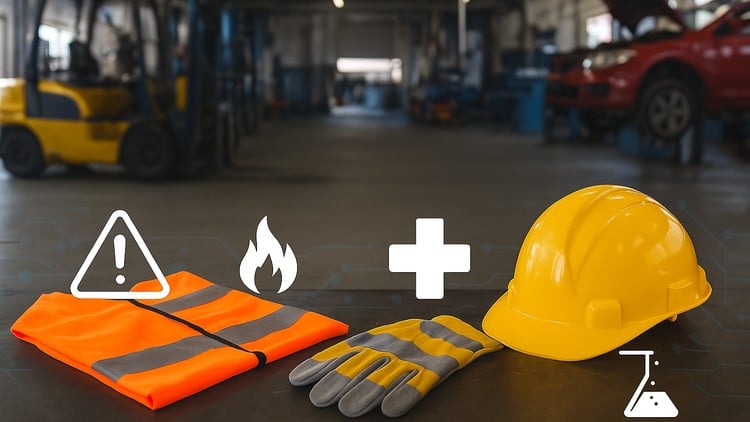
Workshop Health & Safety: Hazard Management, Worker Wellbeing, and Technology-Driven Safety Solutions
⏱️ Length: 3.0 total hours
👥 14 students
🔄 October 2025 update
Add-On Information:
Note➛ Make sure your 𝐔𝐝𝐞𝐦𝐲 cart has only this course you're going to enroll it now, Remove all other courses from the 𝐔𝐝𝐞𝐦𝐲 cart before Enrolling!
-
Course Overview
- This concise 3-hour course delivers essential knowledge for maintaining a safe and productive operational environment. It moves beyond mere compliance, exploring the foundational principles that underpin a truly robust safety culture within high-risk settings like vehicle maintenance and repair facilities.
- Participants will gain insights into the proactive identification and mitigation of evolving hazards, including those introduced by new technologies and equipment in modern workshops. The curriculum emphasizes a holistic approach to wellbeing, integrating physical safety with an understanding of psychological safety factors.
- The course aims to instill a critical safety mindset, equipping individuals to not only follow guidelines but also to actively anticipate risks, contribute to preventative strategies, and advocate for best practices. It underscores the profound impact of effective safety management on operational continuity, staff morale, and overall organizational reputation, highlighting that safety is an investment, not an expense.
- Explore the ethical responsibilities of individuals and organizations to provide a hazard-free work setting, fostering a culture where every team member is empowered to contribute to collective safety. Understand the dynamic interplay between human factors, environmental conditions, and equipment design in preventing incidents and promoting a sustainable work ethic.
-
Requirements / Prerequisites
- No formal prior health and safety training is strictly required; however, a basic familiarity with the general operation of a workshop or a mechanical aptitude would be advantageous for contextual understanding.
- Participants should possess a willingness to engage critically with safety concepts, challenge existing potentially unsafe practices, and commit to personal and collective safety improvement.
- Basic literacy and comprehension skills are necessary to interpret safety instructions, signage, and participate effectively in discussions.
- An open mind towards adopting new safety methodologies and a proactive attitude towards hazard recognition are key for maximizing learning outcomes from this session.
- This course is ideal for new hires, seasoned technicians seeking a refresh, supervisory staff, or anyone responsible for maintaining operational efficiency and worker wellbeing in a dynamic work environment.
-
Skills Covered / Tools Used
- Hazard Recognition Acuity: Develop a keen eye for subtle and obvious dangers within complex mechanical environments, going beyond standard checklists to identify latent conditions that could lead to incidents.
- Risk Prioritization Techniques: Learn methodologies for evaluating the severity and likelihood of identified risks, allowing for strategic allocation of resources to address the most critical threats first.
- Personal Protective Equipment (PPE) Optimization: Gain a deeper understanding of selecting, inspecting, fitting, and maintaining appropriate PPE for various tasks, including specialized gear for welding, painting, and confined space work.
- Chemical Safety and Storage Protocols: Master the interpretation of Safety Data Sheets (SDS), understand chemical compatibility for storage, and practice safe handling and spill containment procedures for a diverse range of workshop chemicals.
- Ergonomic Workstation Design: Apply principles of ergonomics to reduce strain and prevent musculoskeletal injuries, including optimal lifting techniques, workstation setup, and tool selection to minimize fatigue.
- Emergency Response Coordination: Familiarize yourself with advanced aspects of incident command structure for minor workshop emergencies, including communication protocols, casualty assessment basics, and effective liaison with external emergency services.
- Behavioral Safety Principles: Explore concepts of behavioral psychology to understand why people take risks and how to positively influence safety attitudes and habits within a team setting.
- Lockout/Tagout (LOTO) Fundamentals: Understand the critical procedures for isolating energy sources to prevent accidental startup of machinery during maintenance, including proper device application and verification.
- Near-Miss Reporting and Analysis: Cultivate the skill of identifying and reporting near-miss incidents, recognizing their value as leading indicators for preventing future accidents, and contributing to root cause analysis.
- Safety Audit and Inspection Proficiency: Acquire practical knowledge in conducting internal safety inspections, documenting findings accurately, and tracking corrective actions to ensure continuous improvement.
- Fire Prevention and Extinguisher Operation: Beyond knowing types, gain confidence in assessing fire risks specific to workshops and demonstrating effective use of various fire extinguishers in simulated scenarios (theoretical understanding for this 3-hour course).
- Technological Safety Integration: Discuss the role of smart sensors, telematics, and digital platforms in real-time hazard monitoring, predictive maintenance, and enhancing overall workshop safety performance.
- Waste Management & Environmental Protection: Learn about proper segregation, disposal, and recycling of hazardous and non-hazardous workshop waste to comply with environmental standards and minimize ecological impact.
-
Benefits / Outcomes
- Elevated Personal Safety Acumen: Participants will leave with a heightened personal awareness of potential dangers, extending beyond the workshop into everyday life, fostering a continuously safety-conscious individual.
- Enhanced Operational Resilience: Contribute directly to the workshop’s ability to maintain continuous operations by minimizing downtime caused by accidents, equipment damage, or regulatory non-compliance.
- Improved Team Cohesion and Trust: Foster an environment of mutual care and responsibility, where colleagues look out for each other, leading to stronger team dynamics and increased job satisfaction.
- Positive Brand and Reputation: Help project an image of a responsible and ethical organization, attractive to both skilled employees and clients seeking reliable, professional services.
- Reduced Financial Liabilities: Indirectly contribute to lower insurance premiums, fewer compensation claims, and avoided legal penalties associated with workplace accidents and safety breaches.
- Empowered Safety Advocates: Equip individuals to confidently raise safety concerns, propose improvements, and actively participate in creating a more secure working environment without fear of reprisal.
- Sustainable Workplace Development: Play a pivotal role in creating a workplace that prioritizes long-term employee health and environmental stewardship, aligning with modern corporate social responsibility objectives.
- Career Advancement Opportunities: Develop highly sought-after skills that make individuals valuable assets in any professional setting, demonstrating a commitment to industry best practices and organizational well-being.
- Proactive Risk Mitigation: Shift from a reactive approach to safety to a proactive stance, continuously identifying and addressing potential hazards before they escalate into incidents.
-
PROS
- Highly focused and condensed content makes it ideal for busy professionals requiring essential safety updates.
- Directly addresses contemporary challenges in workshop safety, including technology integration and worker wellbeing.
- Provides immediately applicable strategies for hazard identification and risk reduction in a high-risk environment.
- Empowers participants to become active contributors to a positive safety culture, fostering accountability and proactive behavior.
- A cost-effective and time-efficient method for fulfilling fundamental safety training requirements and continuous professional development.
- Specifically designed to enhance both individual protection and overall operational efficiency.
-
CONS
- The limited 3-hour duration may restrict the depth of hands-on practical exercises or extensive scenario-based problem-solving typically found in longer, more comprehensive safety certifications.
Learning Tracks: English,Business,Operations