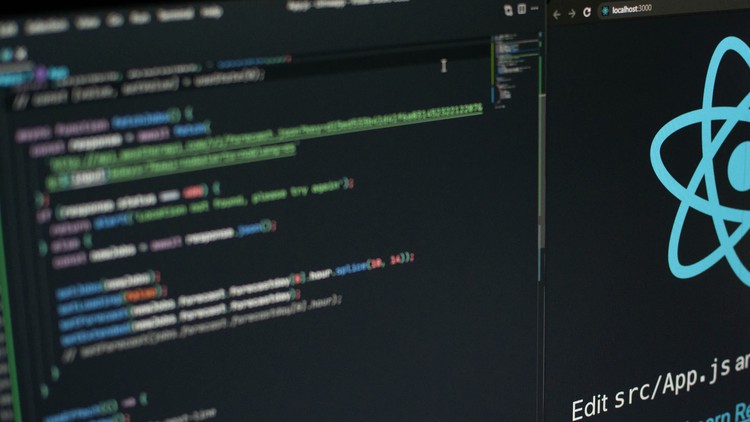
Build a backend NodeJS API with a React client
What you will learn
Being able to quickly build a backend API for any kinds of projects and MVPs
Learning how to create API endpoints, testing an API and secure an API
Building a client React application and being able to plug it to an API
HTTP Client Axios package as well as Fetch Native JS API
Clean Code and Good Coding Practices in NodeJS and RESTful API architecture
Software Architecture: Learn the n-tier and layered architecture pattern
Calling an API from a client and dealing with CORS from the Web browsers
React Bootstrap v5
Implementing unit tests to the API with AVA test runner
All the little things you ABSOLUTELY need to know for taking your skills to the next level and becoming an outstanding Web developer
Implementing several NPM packages such as Pino, Yup, Toastify, React Content Loader, and so on!
Securing and optimizing an API on production with Rate Limiter, Helmet, and Compression
Documenting our API professionally with JSDoc and OpenAPI
Description
Quickly learn the fundamental of building a robust RESTFul API with NodeJS based on an efficient professional architecture pattern, and then, see how to plug your API with a client which you will also learn how to build. A client built with the latest React and Bootstrap versions.
You will learn how to build a backend API from scratch and build a client that will speak to your API through HTTP protocol.
- Communicate with your backend. HTTP and HTTP methods and codes.
- How to validate the input data validation.
- How to request some API endpoints easily
- How to test your API gradually.
- How to design a flexible and solid API architecture.
- How to secure and optimize your API professionally (with the packages you absolutely need to know).
- CORS on your API.
- Building a client from scratch with React JS.
- Calling the CRUD (Create-Read-Update-Delete) endpoints from your client.
- How to document the API endpoints with JSDoc and OpenAPI.
- And so much more will be covered in this course.
This JavaScript course will also cover some great packages that will change your life during the development of an API efficiently.
You will learn to create very easily a design in a matter of minutes, without any complicated CSS (just a few reusable components).
You will learn how to embrace the power of “styled-components”.
You will be able to add as many pages as needed in your React application thanks to React Router Dom.
At the end of this course, you will be comfortable enough to create an API from scratch by yourself, implement new endpoints, being comfortable with many packages (such as logging, rate-limiter, Yup schema validation, …).
Icing on the cake, you will be confident to create a frontend client from scratch and use those endpoints to interact with the backend on your frontend JavaScript application.
At the end of the course, you will even learn how you can create different unit tests for your API.
Content
Introduction
Backend API
React Client
Unit tests (API)
Source Code / GitHub Repositories
The Reality of Modern API Development: An Unfiltered Review
I’ve been in the dev game long enough to see “crash courses” come and go, usually leaving students with a messy “spaghetti code” folder and zero understanding of how things actually work in production. This course, Build a Backend REST API with Node JS from Scratch, caught my eye because it doesn’t just teach you how to write code; it teaches you how to think like a software architect. Most tutorials focus on the “what,” but this one dives deep into the “why,” especially when it comes to the n-tier and layered architecture patterns. In a world where job-ready skills are the only currency that matters, this course moves past the “Hello World” fluff and gets into the grit of building something that won’t break the moment a second user logs in.
What sets this apart from the sea of YouTube tutorials is the focus on the “bridge.” It’s one thing to build an API; it’s another thing entirely to connect it to a React client while navigating the hellscape that is CORS and HTTP security. I appreciate that the instructor treats the student like a professional peer, emphasizing Clean Code and Good Coding Practices. If you’re looking for certification prep or just a way to level up your portfolio with real-world projects, this is where the rubber meets the road. It’s about building MVPs that look like they were written by a senior engineer, not a boot camp grad on day three.
What You Need Before You Start
Let’s be honest: this isn’t for the person who doesn’t know what a variable is. To get the most out of these hands-on labs, you need a solid grasp of Modern JavaScript (ES6+). If you don’t understand Promises, async/await, and arrow functions, you’re going to struggle. While the course covers beginner to advanced concepts, your life will be much easier if you’ve at least tinkered with the Command Line and have a basic understanding of how the web works (Request/Response cycle). This is a technical deep dive, so bring your focus and a decent code editor like VS Code.
The Stack: Skills & Industry-Standard Tools
The curriculum is packed with industry-standard tools that you’ll actually find in a professional job description. You aren’t just learning Node; you’re mastering the ecosystem. Key tools and skills covered include:
- Node.js & Express: The backbone of the modern backend.
- React.js: For building the frontend client that consumes your data.
- Axios vs. Fetch: Understanding when to use a library and when to stay native.
- RESTful API Architecture: Proper use of HTTP verbs (GET, POST, PUT, DELETE).
- N-Tier Architecture: Separating concerns between controllers, services, and data layers.
- Security Best Practices: Protecting your API endpoints from common vulnerabilities.
- CORS Management: Solving the most annoying error in web development.
Career Benefits & Job Roles
Completing this course isn’t just about adding a line to your LinkedIn; it’s about career growth. By mastering layered architecture, you’re moving into the realm of Senior Backend Developer or Full-Stack Engineer. Companies aren’t looking for people who can copy-paste Express code; they want developers who can build scalable MVPs and maintainable codebases. The skills learned here are directly applicable to roles like API Developer, Node.js Engineer, and Technical Architect. If you can explain n-tier architecture in a technical interview, you’re already ahead of 90% of the competition.
The Pros: Why This Course Hits Different
- Architecture First: The focus on n-tier architecture is a game-changer. It stops you from writing “fat controllers” and prepares you for enterprise-level development.
- Full-Stack Integration: Most courses stay in the backend or the frontend. This course forces you to see how they talk to each other, which is crucial for job-ready skills.
- Clean Code Focus: You’ll learn how to write code that your future self (and your teammates) won’t hate. This is the hallmark of an outstanding web developer.
- Practical Security: It doesn’t just mention security; it shows you how to secure API calls, which is vital for any real-world projects involving user data.
The Cons: An Honest Critique
If I have to find a flaw, it’s that the pace can be quite aggressive for a true “beginner.” While it markets itself as beginner to advanced, the jump into layered architecture patterns can feel like drinking from a firehose if you haven’t lived in the documentation for a while. It assumes you’re ready to work hard, so don’t expect a casual Sunday watch—you’ll need to pause, code, and debug along the way to truly internalize the logic.