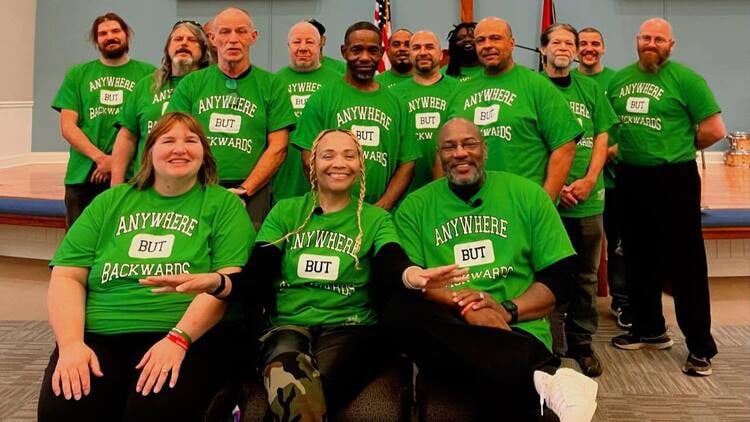
Practical Pathways to Healing and Renewal in Addiction Recovery
What You Will Learn:
- Our primary objective is to encourage, inspire, and assist you in uncovering and embracing your genuine life purpose.
- You will feel empowered spiritually, mentally, emotionally, and relationally.
- You will discover how to differentiate between attaining and maintaining your sobriety while leading a fulfilling and productive life.
- You will gain the abilities to make the required small modifications.
- You will explore fresh methods and possibilities for personal growth.
- Show more
Overview: Debugging the Human Operating System
In the tech world, we’re obsessed with the “major release.” We want the massive overhaul, the total refactor, the ground-up rewrite. But anyone who’s managed a legacy codebase knows that the biggest, riskiest changes are usually the ones that crash the system. The Minor Adjustments Program (Accredited) takes a different approach, one that actually resonates with my “senior dev” sensibilities. Instead of promising a magic “Undo” button for the past, it focuses on the iterative patches—those small, real-world projects of the soul—that lead to long-term stability.
I’ve seen plenty of colleagues burn out and spiral because they couldn’t separate their job-ready skills from their personal identity. This program hits that nerve perfectly. It doesn’t treat recovery as a one-time “installation” but as a continuous integration/continuous deployment (CI/CD) pipeline for your life. It’s about the hands-on labs of daily living. The “Minor Adjustments” philosophy is basically Agile for addiction recovery: you make small, incremental changes, test them in the real world, and pivot based on the results. It’s an accredited framework that moves away from the “all or nothing” mentality that often leads to a system-wide failure (relapse).
What I found most refreshing is the distinction it makes between attaining and maintaining. In our industry, getting a certification prep done is one thing; keeping your knowledge current while managing a 24/7 production environment is another. This course treats sobriety as the baseline, not the finish line. It’s about building a fulfilling life around that baseline so you aren’t just “not using,” but actually thriving in a high-pressure environment.
Prerequisites
You don’t need a CS degree or a background in psychology to boot this up. The only real requirement is a level of beginner to advanced self-awareness and a willingness to look at your own “legacy code” without getting defensive. If you’ve reached a point where your current “operating system” is throwing constant exceptions—be it in your relationships, your health, or your work performance—you’re ready. It helps to have an open mind toward spiritual and emotional career growth, but you don’t need to be a “zen master” to start.
Skills & Tools You’ll Master
- Behavioral Refactoring: Identifying the “code smells” in your daily habits and replacing them with industry-standard tools for emotional regulation.
- Relational Load Balancing: Learning how to manage social and professional connections without overtaxing your internal resources.
- Purpose Discovery: Think of this as your “Root Access.” You’ll dive deep into what actually drives you, moving beyond the superficial “paycheck” motivation.
- Sustainment Logic: Mastering the difference between “Day 1” energy and “Year 5” consistency.
- Micro-Adjustment Frameworks: Developing the job-ready skills to pivot your mindset when you feel a “system crash” (craving or emotional spike) coming on.
Career Benefits & Job Roles
Let’s be honest: an employee who is stable, self-aware, and purpose-driven is worth five “rockstar” devs who are one bad week away from a meltdown. Completing an accredited program like this isn’t just about personal health; it’s a massive boost to your professional reliability. If you’re eyeing a Lead Architect or Director of Engineering role, you need high emotional intelligence (EQ). This program effectively acts as an EQ certification prep.
The clarity you gain directly translates to better decision-making under fire. You’ll find you’re better at real-world projects because you’re not fighting internal battles while trying to solve external problems. It’s the ultimate career growth hack—fixing the human behind the keyboard.
The Pros
- Systematic Approach: It avoids the “fluff” and focuses on hands-on labs for the mind. It’s structured, logical, and easy to follow even for those of us who prefer logic over “feelings.”
- Accreditation: The fact that it’s accredited adds a layer of professional legitimacy that many “self-help” courses lack. It feels like a serious industry-standard toolset.
- Sustainable Pace: It emphasizes “minor adjustments” rather than “overnight miracles,” which aligns with how actual human change happens.
The Cons
- The “Long Game” Friction: If you’re used to the high-velocity “sprint” culture of tech, the deliberate and slow nature of these minor modifications might feel frustrating at first. It’s not a “quick fix” patch; it’s a deep kernel update, and that takes time.