Learn to manage requirements as professional scrum product owner using user stories ( Business Analysis ,Scrum Master)
What you will learn
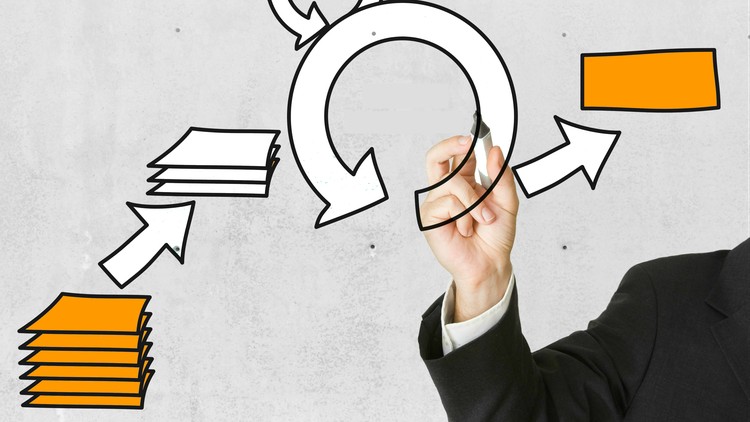
Learn how to manage product backlog as part of an agile scrum team.
Explain what user stories are and how they will make your team or business more efficient
Learn what scrum is and why it is so powerful for producing high quality, user oriented and user friendly digital products.
Learn how to manage a product backlog and generate user stories.
Feel confident in implementing a product backlog for any service, maintenance or support team
Learn how to create a requirements backlog composed of user stories.
Understand the concepts behind the 3 Cs, DEEP and INVEST with respect to agile scrum.
A complete overview of the process of creating product vision and how you can use it to form your product backlog.
How to manage product backlog in four simple steps
Description
*All Glory to GOD for giving me the knowledge and experience to create this course*
COURSE SUMMARY
“Scrum Open, Professional Scrum™, Professional Scrum Product Owner™, (PSPO)™, Professional Scrum Master™, PSM, PSM I, PSM 1, etc. is the protected brand of Scrum . org. Our course and practice exams are neither endorsed by nor affiliated with Scrum . org.”
Three reasons to TAKE THIS COURSE right now!
The unique reasons for taking this course are:
1. Complete, Concise, Confident Overview of Product Backlog Theory – I cover the theory and give you examples of how the theory is used in industry as an Agile Product Manager
2. Confidence in using Agile Scrum – In a very simple way, I teach you the fundamentals of Agile Scrum and Product Backlogs with Agile Product Management and how to use it effectively in industry without going into a class room or spending a lot.
3. You get to ask me questions and see me respond to every single one of them thoughtfully!
Includes Narration from Randal Schaffer and Ted R. Brown.
What is Agile Scrum?
Agile is an iterative time boxed software development approach that focuses on building software incrementally from the beginning of a project rather than delivering it all at once at the end. Scrum is a framework that traces back to early 90s, which provides a framework for managing complex product and software development with iterative and incremental processes. Scrum is a very popular framework for implementing agile project management.
Who should take is course?
Whether you are a developer, Professional Scrum Product Owner (PSPO) or simply someone who wants the answer to the question “what is scrum and how can I use it in my projects”, this is definitely the class for you.
What will I learn?
In this class, you will learn:
• Product backlog and user stories- I give you a complete overview of what product backlog in scrum entails as used in the business work place without having to do a face to face course saving you hundreds if not thousands of dollars.
• Concise overview of agile scrum – Including the scrum theory, the scrum team, the scrum process, product backlog and a lot more.
• The facts based on real industry experience and research – The correct terminology and use of scrum is essential to mastering it. My experience in industry and research into the topic has been used to give you a solid grounding in the most concise way possible.
The course is video based with no supporting document necessary.
How is the course structured?
Each section features an overview of a particular aspect of agile product management of requirements using the product backlog such as its origin, when you can use it and how you can use it in product development. Examples are included throughout the course with excellent quality video and audio. All is based real world experience.
*All Glory to GOD for giving me the knowledge and experience to create this course*
Content
Introduction
Section 2: Creating a Product Vision
Section 3: Creating a Product Backlog Step by Step
Tips 1 -7
Tips 8-14
Tips 15-21
BONUS MATERIALS
Overview
Alright, let’s cut to the chase about ‘Backlog Management+Agile Product Backlog+Backlog Refinement’. If you’ve spent any time in the trenches of product development, you know a well-managed backlog isn’t just a nice-to-have; it’s the beating heart of an efficient team. Conversely, a chaotic, unrefined backlog is a one-way ticket to wasted effort, missed deadlines, and utterly frustrated stakeholders.
This course aims to tackle that chaos head-on, promising to arm you with the principles and practices of a professional Scrum Product Owner. For anyone thinking of dipping their toes into agile or solidifying their existing understanding, this program does a commendable job of demystifying what can often feel like an overwhelming topic. It’s particularly strong on the foundational understanding of Scrum itself, explaining why this iterative framework is so incredibly powerful for churning out high-quality, user-centric, and genuinely user-friendly digital products. It’s not just about speed; it’s about delivering *value* consistently.
Where many courses might get bogged down in theoretical jargon, this one shines by focusing on practical application. A major highlight for me was its deep dive into user stories. Forget complex requirement documents that no one reads; user stories are a game-changer. They frame requirements from the perspective of the end-user, articulating what they want to achieve and why, typically in the format “As a [type of user], I want to [goal] so that [reason].” This simple shift in perspective forces teams to think about actual value and impact, making them incredibly efficient. By understanding the user’s need, teams can prioritize better, estimate more accurately, and ultimately build products that people actually want to use. This course clarifies how to craft these effectively and how they become the fundamental building blocks of your requirements backlog.
Prerequisites
While the course covers a lot from a beginner to advanced perspective on backlog management, I’d say having a basic familiarity with software development lifecycles or even general project management concepts would be beneficial. You don’t need to be a seasoned developer or a certified Scrum Master, but a general understanding of how teams build products helps you contextualize the material faster. That said, if you’re entirely new to agile and Scrum, the initial sections provide enough groundwork to get you up to speed without feeling completely lost.
Skills & Tools
Completing this course will equip you with a suite of highly sought-after job-ready skills crucial for any agile environment. You’ll learn:
- Expertise in crafting compelling user stories that truly capture user needs.
- Techniques for effective product backlog management, including prioritization strategies and continuous refinement.
- A deep understanding of agile principles like the 3 Cs (Card, Conversation, Confirmation), DEEP (Detailed Appropriately, Estimated, Emergent, Prioritized), and INVEST (Independent, Negotiable, Valuable, Estimable, Small, Testable) – these are your golden rules for good user stories and backlogs.
- The process of developing a robust product vision and translating it into actionable backlog items.
- Strategies for facilitating backlog refinement sessions, ensuring your team is always working on the most valuable items.
While the course focuses on conceptual frameworks rather than specific industry-standard tools like Jira or Azure DevOps, the principles taught are universally applicable. You’ll know *what* to do, which then makes learning the specifics of any tool much easier.
Career Benefits & Job Roles
This course offers a significant boost to your career growth, particularly if you’re aiming for or already in roles like Product Owner, Business Analyst, or even an aspiring Scrum Master. Understanding how to manage a product backlog effectively is a core competency for these positions. For Product Owners, it’s non-negotiable. For Business Analysts, it sharpens your requirements gathering and documentation skills within an agile context. For Scrum Masters, it provides insight into supporting your Product Owner and facilitating team understanding.
It can also be a strong foundational step for those considering certification prep for professional Scrum Product Owner (PSPO) or similar agile certifications, as it covers many fundamental concepts tested in these exams. Even for project managers transitioning to agile, the structured approach to requirements and prioritization is invaluable. You’ll gain the confidence to implement effective backlog management for any service, maintenance, or support team, not just traditional software development.
Pros
- Highly Practical & Actionable: This isn’t just theoretical fluff. The course provides clear, step-by-step guidance on how to manage a backlog, generate user stories, and conduct refinement. It focuses on “how-to” rather than just “what is.”
- Demystifies Key Agile Concepts: The explanations of the 3 Cs, DEEP, and INVEST are particularly well-articulated, making complex agile principles easy to grasp and immediately applicable. This is crucial for truly understanding the ‘why’ behind good agile practices.
- Strong Emphasis on User Stories: The detailed focus on what user stories are and how they drive efficiency is a huge plus. It drills down into why this specific format is so powerful for communication and value delivery.
- Holistic Product Vision Integration: I appreciated the segment on creating a product vision and linking it directly to backlog formation. It helps connect the high-level strategy to the day-to-day execution, ensuring alignment.
Cons
- Lacks Dedicated Hands-On Labs/Real-World Projects: While conceptually strong, the course would benefit immensely from more dedicated hands-on labs or simulated real-world projects where learners could practice building and refining a backlog in a practical environment, perhaps using a mock Jira board or similar tool. This would bridge the gap between theory and actual application even further.