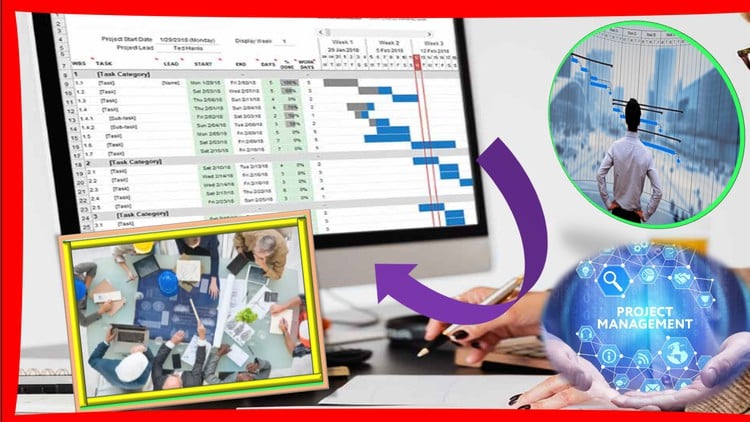
Master Microsoft Project with Real Civil Projects – Planning, Scheduling, Resource & Progress Tracking [2025]
⏱️ Length: 22.8 total hours
⭐ 4.48/5 rating
👥 15,017 students
🔄 September 2025 update
Add-On Information:
“`html
Note➛ Make sure your 𝐔𝐝𝐞𝐦𝐲 cart has only this course you're going to enroll it now, Remove all other courses from the 𝐔𝐝𝐞𝐦𝐲 cart before Enrolling!
- Course Overview
- Dive deep into the practical application of Microsoft Project specifically tailored for the demands of the civil engineering industry.
- Transform complex construction projects into manageable, executable plans with a strong emphasis on robust Work Breakdown Structures (WBS).
- Visualize project timelines, critical paths, and dependencies through dynamic Gantt charts, enabling proactive decision-making.
- Gain mastery in the strategic allocation and management of vital project resources – labor, materials, and equipment – ensuring optimal utilization.
- Develop a comprehensive understanding of financial tracking within projects, from initial cost loading to the critical analysis of budget versus actual expenditure.
- Learn to establish and meticulously manage project baselines, providing a crucial benchmark for performance evaluation and earned value analysis.
- Master the intricacies of defining project timelines by effectively implementing calendars, constraints, and key milestones to represent project lifecycle stages.
- This course is designed for civil engineers who aim to elevate their project management capabilities from fundamental planning to sophisticated tracking and control.
- Leverage Microsoft Project to move beyond simple scheduling and embrace a data-driven approach to construction project success.
- Understand the foundational principles of project management as they directly apply to the unique challenges of civil infrastructure development.
- The September 2025 update ensures you are learning with the latest functionalities and best practices within Microsoft Project.
- With over 15,000 students and a strong 4.48/5 rating, this course is a proven path to enhancing your professional toolkit.
- The extensive 22.8 total hours of content provide a thorough and immersive learning experience.
- Requirements / Prerequisites
- A foundational understanding of civil engineering project phases and typical construction workflows.
- Basic computer literacy and familiarity with operating systems.
- Access to a computer with Microsoft Project installed (version compatibility should be considered, though the course likely covers general principles applicable to recent versions).
- An eagerness to learn and apply structured project management methodologies to real-world civil engineering scenarios.
- No prior experience with Microsoft Project is strictly required, as the course starts from introductory concepts relevant to the domain.
- Skills Covered / Tools Used
- Microsoft Project: Comprehensive proficiency in utilizing its core features for project planning, scheduling, resource management, and reporting.
- Work Breakdown Structure (WBS) Development: Ability to decompose large projects into smaller, manageable work packages.
- Gantt Chart Creation & Analysis: Skill in building and interpreting Gantt charts for visual project representation and progress monitoring.
- Critical Path Method (CPM) & PERT Analysis: Application of these techniques for identifying project timelines and potential delays.
- Resource Allocation & Management: Competency in assigning and tracking manpower, materials, and equipment.
- Cost Management & Budget Tracking: Expertise in loading costs and comparing planned expenditures against actual spending.
- Baseline Management: Proficiency in setting and managing project baselines for performance measurement.
- Earned Value Management (EVM): Ability to analyze project performance using EVM metrics for a clear understanding of project health.
- Project Calendar & Constraint Configuration: Skill in setting up project-specific calendars and applying constraints to tasks.
- Milestone Identification & Tracking: Capability to define and monitor critical project milestones.
- Progress Reporting & Documentation: Development of skills in generating clear and concise project status reports.
- Benefits / Outcomes
- Become a more efficient and effective project manager for civil engineering endeavors.
- Gain a competitive edge in the job market with in-demand project management software skills.
- Improve project delivery timelines and reduce the likelihood of costly delays and budget overruns.
- Enhance communication with stakeholders through clear, visual project plans and status updates.
- Develop the confidence to manage projects of varying scales and complexities within the civil engineering sector.
- Contribute more strategically to project planning and execution from the initial stages.
- Empower yourself to proactively identify and mitigate project risks.
- Strengthen your ability to forecast project performance accurately.
- Achieve greater control over project scope, schedule, and budget.
- The practical, real-world focus ensures that learned skills are immediately applicable to your professional work.
- Build a foundation for further specialization in construction project management.
- PROS
- Highly Practical Focus: Emphasizes real-world civil engineering project application, making learning directly transferable to the workplace.
- Comprehensive Tool Coverage: Delves into the essential functionalities of Microsoft Project relevant to construction.
- Strong User Validation: High rating and significant student numbers indicate a well-received and effective course.
- Up-to-Date Content: The September 2025 update ensures modern practices are covered.
- Structured Learning Path: Covers WBS, Gantt charts, and resource management in a logical progression.
- CONS
- Software Dependency: Requires access to and installation of Microsoft Project, which may be a barrier for some learners if they don’t have a license.
“`
Learning Tracks: English,Office Productivity,Microsoft