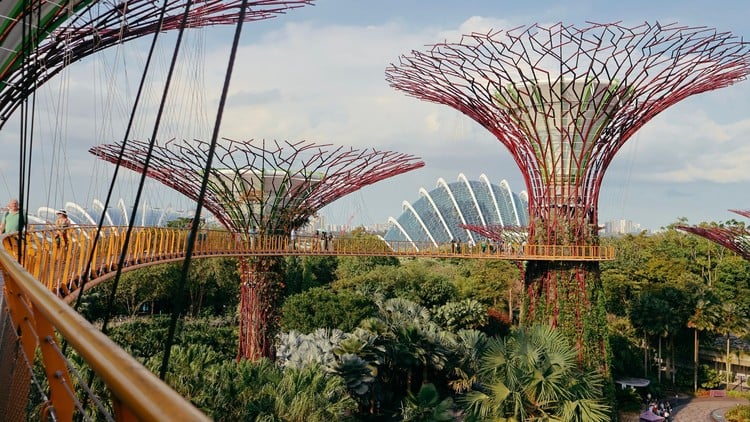
Dive into the world of sustainable architecture and green building practices.
What You Will Learn:
- Learn the Principles of Sustainable Architecture
- Understand Sustainable Architecture Design Strategies
- Discover the Challenges of Sustainable Architecture
- Learn the Definition of Green Buildings
- Apprehend the Benefits of Green Buildings
- Discover Green Materials & Examples
- Learn the Challenges of Green Buildings
The Shift from Aesthetic to Ethical: My Take on Sustainable Architecture
I’ve spent over a decade navigating the intersection of technology and infrastructure, and if there’s one thing I’ve learned, it’s that the “move fast and break things” mantra of the software world doesn’t translate well to the physical world. When you break a building, you’re breaking the environment for the next fifty years. I recently took a deep dive into the Principles of Sustainable Architecture & Green Buildings course, and honestly, it’s the wake-up call the industry needs. We’re moving past the era where “green” was a niche marketing buzzword. Today, if you aren’t designing with a carbon-neutral mindset, you’re essentially building a legacy of debt. This course doesn’t just preach about saving the planet; it treats sustainability as a technical challenge that requires a sophisticated, data-driven response.
What I appreciated most was the refusal to stay in the “theory clouds.” It’s easy to talk about saving the world, but it’s much harder to calculate the thermal bridging of a new composite material or navigate the complex trade-offs of passive solar design. This course bridges that gap. It moves from the beginner to advanced level by starting with the fundamental “why” and quickly escalating into the “how.” It’s about systemic thinking—understanding that a building is a living organism that breathes, consumes, and eventually, expires. If you’re looking for a fluff-filled seminar, this isn’t it. This is a technical deep-dive for those who want to be on the right side of history while building a future-proof career.
Prerequisites
You don’t need to be a licensed architect to get value out of this, but you shouldn’t come in totally cold either. A basic grasp of construction terminology and a general curiosity about environmental science will go a long way. If you’ve ever looked at a blueprint or messed around with a 3D modeling tool, you’ll be fine. It’s designed to be accessible, but the learning curve steepens once you hit the material science modules.
Skills & Tools You’ll Master
This isn’t just about reading PDF docs; it’s about gaining job-ready skills that actually show up in a modern firm’s workflow. You’ll get exposure to the logic behind industry-standard tools and frameworks that are becoming non-negotiable in the AEC (Architecture, Engineering, and Construction) space. By the end of the modules, you’ll be comfortable with:
- Life Cycle Assessment (LCA): Learning how to measure the environmental impact of a building from cradle to grave.
- Energy Modeling Logic: Understanding how to simulate building performance before a single brick is laid.
- BIM (Building Information Modeling) Integration: Seeing how sustainable data fits into a 3D workflow.
- Material Selection: Evaluating the embodied carbon in green materials like cross-laminated timber vs. low-carbon concrete.
- Passive House Strategies: Mastering insulation, airtightness, and high-performance glazing.
Career Benefits & Job Roles
The “green” sector is where the money is moving. Institutional investors and governments are now mandating ESG (Environmental, Social, and Governance) compliance, which has created a massive vacuum for talent. This course serves as an excellent certification prep for those looking to eventually sit for their LEED Green Associate or WELL Building Standard exams. It’s a massive career growth lever. Once you have these principles down, you aren’t just a designer or a project manager; you’re a sustainability consultant. Potential job roles include Sustainability Coordinator, Green Building Analyst, LEED Consultant, or even a Sustainable Urban Planner. In a crowded job market, these specialized skills are what get your resume moved to the top of the pile.
The Pros: Why This Course Hits the Mark
- No-Nonsense Technical Depth: It avoids the “greenwashing” trap. Instead of just saying “plants are good,” it explains the R-value of green roofs and the actual physics of biophilic design.
- Real-World Projects: The curriculum uses real-world projects as case studies. You aren’t looking at “perfect” theoretical buildings; you’re looking at actual structures, their failures, and their successes.
- Holistic Systems Thinking: It teaches you to see the building as part of a larger grid. The sections on water conservation and waste management are eye-opening and change how you view site development.
- Hands-on Labs: The inclusion of hands-on labs for calculating energy loads and material impacts ensures the knowledge actually sticks. It’s not just passive watching; it’s active building.
The Cons: One Honest Critique
If I have one gripe, it’s that the course can occasionally feel a bit heavy on North American and European building codes. While the principles of sustainable architecture are universal, the specific regulatory examples could use more global variety. If you’re working in a highly specific market like Southeast Asia or the Middle East, you’ll need to do some extra legwork to translate these green building standards to your local climate and legislative context.