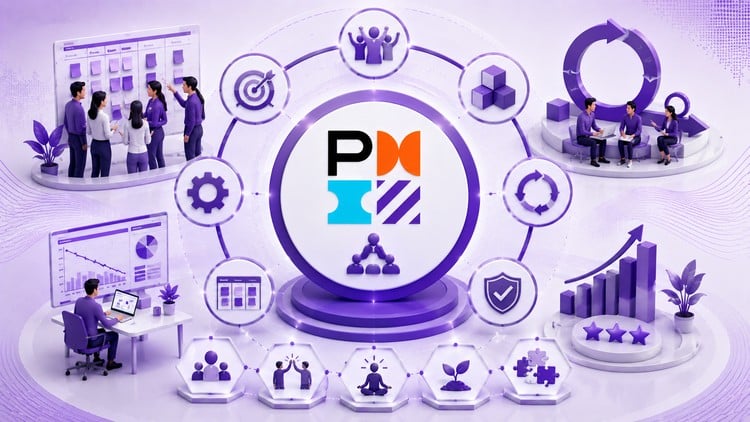
If you want to get a PMI ACP certification, this is for you | Closed to real exam | 700+ students PASSED | Update 2026
What You Will Learn:
- Agile Principles and Mindset
- Value-Driven Delivery
- Stakeholder Engagement
- Team Performance
- Problem Detection and Resolution
Overview
If you have been navigating the tech landscape for as long as I have, you know that the “Agile” buzzword has evolved from a trendy startup phrase into the absolute backbone of modern enterprise operations. I recently spent some time digging into the PMI Agile Certified Practitioner (ACP) Test | Updated 2026, and honestly, it’s about time someone released a prep suite that doesn’t feel like it was written in 2015. Most certification prep materials are notoriously dry, but this updated version feels tuned into the current frequency of the industry.
What sets this specific course apart isn’t just the sheer volume of practice questions; it’s the “vibe” of the logic behind them. We are seeing a massive shift in how the PMI evaluates candidates, moving away from rote memorization toward situational fluency. This course captures that nuance. It doesn’t just ask you “What is a Sprint?”; it throws you into the fire of a failing project and asks how you’d pivot. For a beginner to advanced practitioner, this bridge between theory and the actual chaos of a Monday morning stand-up is what makes it worth the investment. It’s less about passing a test and more about developing job-ready skills that keep you from looking like a deer in headlights during a high-stakes release cycle.
Prerequisites
Don’t just jump into this because you saw a LinkedIn post. The PMI-ACP has some “gatekeeping” for a reason. To get the most out of this course and actually sit for the exam, you should ideally have:
- A secondary degree (high school diploma, associate degree, or the global equivalent).
- At least 2,000 hours of general project experience working on teams (this is the baseline).
- At least 1,500 hours working on Agile project teams or with Agile methodologies (this is in addition to the 2,000 hours of general project experience).
- 21 contact hours of training in Agile practices (which this course helps you check off the list).
Skills & Tools
While the exam focuses heavily on the “mindset,” this course does a solid job of contextualizing industry-standard tools. You aren’t just learning definitions; you’re learning how to apply them within the ecosystems we actually use. You’ll walk away with a deeper understanding of:
- Scrum, Kanban, and Lean: Knowing when to use a pull system versus a time-boxed iteration.
- Backlog Refinement & Prioritization: Using tools like Jira or Azure DevOps logic to manage technical debt and feature creep.
- Adaptive Planning: Moving away from the “Gantt chart obsession” and embracing rolling-wave planning.
- Empirical Process Control: Mastering transparency, inspection, and adaptation through real-world projects simulations.
- Continuous Improvement: Facilitating retrospectives that actually result in change, not just complaining.
Career Benefits & Job Roles
Let’s talk money and career growth. In a crowded job market, having “PMI-ACP” on your resume is a massive signal to recruiters that you aren’t just a “Waterfall PM” who learned how to use a Trello board yesterday. It’s a gold standard for professional development. Common roles that see a direct salary bump from this certification include:
- Agile Project Manager: Leading cross-functional teams in complex software environments.
- Scrum Master: Facilitating high-performing squads and removing blockers.
- Product Owner: Bridging the gap between stakeholder demands and technical execution.
- Agile Coach: Helping legacy organizations transition into modern workflows.
- Delivery Lead: Ensuring that value-driven delivery remains the focus throughout the lifecycle.
Pros
- High-Fidelity Simulation: The questions are “closed to the real exam,” meaning they mimic that tricky PMI phrasing that usually trips people up. It’s the closest thing to hands-on labs for your brain.
- Updated for 2026: It discards the obsolete practices and focuses on the hybrid environments that most of us actually work in today.
- Proven Track Record: With over 700 students already passed, the social proof is there. It’s a “vetted” path, not a experimental one.
- Efficiency: It cuts the fluff. It focuses on the high-probability topics so you aren’t wasting time on Agile principles that rarely appear on the actual test.
Cons
- Intense Difficulty Curve: If you are a complete novice to the tech world, the situational logic might feel overwhelming. This isn’t a “get certified in a weekend” kind of deal; it requires a genuine commitment to unlearning old Waterfall habits.