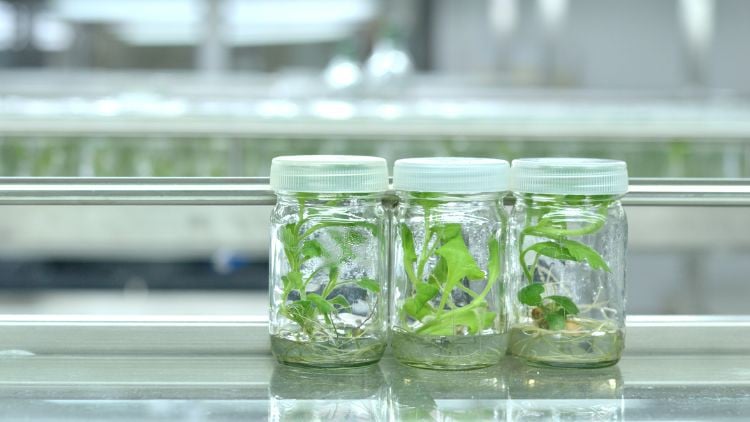
Cultivating Botanical Advancements
⏱️ Length: 1.2 total hours
⭐ 4.13/5 rating
👥 4,950 students
🔄 February 2024 update
Add-On Information:
Note➛ Make sure your 𝐔𝐝𝐞𝐦𝐲 cart has only this course you're going to enroll it now, Remove all other courses from the 𝐔𝐝𝐞𝐦𝐲 cart before Enrolling!
-
Course Overview
- The Plant Cell & Tissue Culture Course offers an intensive exploration into plant cellular manipulation and propagation under controlled conditions. This program demystifies core principles and methodologies underpinning modern plant biotechnology. Participants will journey through the historical context and scientific advancements making in vitro plant culture an indispensable tool in botanical research and horticulture. The course delves into totipotency – the remarkable ability of a single plant cell to regenerate an entire plant – and its implications for mass propagation and genetic improvement. You’ll understand various culture types: meristem culture for virus elimination, callus culture for secondary metabolite production, and organ culture for specific plant part regeneration. Key modules cover explant selection and preparation, precise nutrient media formulation (macro/micronutrients, vitamins, plant growth regulators like auxins/cytokinins), and mastering aseptic techniques to prevent contamination. The curriculum explores cellular differentiation and morphogenesis, examining how environmental cues guide development. Advanced topics include somatic embryogenesis, anther/pollen culture for haploid plant production, and protoplast isolation/fusion techniques for somatic hybridization. This course equips learners with a holistic perspective on designing, executing, and troubleshooting plant tissue culture experiments, paving the way for innovative solutions in plant science.
-
Requirements / Prerequisites
- To ensure productive learning, participants need a basic understanding of fundamental biological concepts, particularly plant anatomy, cell structure, and general physiology. While prior hands-on lab experience isn’t required, curiosity for scientific experimentation and keen interest in botanical sciences will enhance engagement. Access to a stable internet connection and a personal computer is essential for course materials. A commitment to understanding detailed protocols and embracing meticulous sterile laboratory procedures is also beneficial.
-
Skills Covered / Tools Used
- Upon completion, participants will cultivate diverse specialized skills and gain familiarity with essential laboratory instrumentation.
- Skills Covered:
- Aseptic Technique Mastery: Proficient execution of sterile procedures to prevent microbial contamination.
- Media Formulation & Preparation: Accurate measurement/mixing of components for various culture media, including sterilization.
- Explant Selection & Preparation: Skillful isolation/sterilization of plant tissues for in vitro initiation.
- Callus Induction & Maintenance: Techniques for inducing undifferentiated cell masses and maintaining proliferation.
- Micropropagation Strategies: Designing and implementing protocols for rapid clonal plant propagation.
- Organogenesis & Embryogenesis Principles: Understanding methods for inducing shoot/root development and somatic embryo formation.
- Cell Suspension Culture Establishment: Knowledge of techniques for creating/maintaining cell suspensions.
- In Vitro Acclimatization Principles: Protocols for transitioning tissue-cultured plantlets to ex vitro conditions.
- Data Interpretation & Troubleshooting: Analyzing culture results, identifying common problems, and implementing corrective measures.
- Tools Used (Conceptual Understanding):
- Laminar Airflow Hoods & Autoclaves: Understanding their function in sterile environments and for sterilization.
- pH Meters & Balances: Proficiency in precise media preparation.
- Microscopes: For observation of cell morphology, callus development, and contamination.
- Sterile Dissection Tools: Scalpels, forceps, scissors for explant preparation.
- Plant Growth Regulators: Understanding the role and application of auxins/cytokinins.
-
Benefits / Outcomes
- Graduates of this course will emerge with robust advantages, enhancing professional and academic trajectories.
- Enhanced Analytical Skills: Develop a keen eye for detail and analytical prowess critical for scientific experimentation and problem-solving in plant biology.
- Specialized Expertise: Gain highly sought-after expertise in a niche yet rapidly growing field, becoming a valuable asset in plant biotechnology, agriculture, and horticulture.
- Research Foundation: Establish a strong theoretical and practical foundation for pursuing advanced research or academic studies in plant science or crop improvement.
- Contribution to Conservation: Understand how to apply in vitro techniques to propagate endangered plant species and preserve biodiversity.
- Innovation in Agriculture: Acquire insights into developing disease-free planting material, improving crop yields, and creating novel plant varieties.
- Career Advancement: Position yourself for diverse opportunities in R&D, plant nurseries, pharmaceutical companies utilizing plant compounds, or government agricultural agencies.
- Understanding of Plant Development: Deepen comprehension of fundamental plant developmental processes.
- Confidence in Sterile Practices: Build competence and confidence in executing demanding sterile laboratory procedures, a valuable transferable skill.
- Empowerment for Sustainable Solutions: Be equipped with knowledge to contribute to sustainable agricultural practices and resilient plant systems.
-
PROS
- Develops a highly specialized, in-demand skillset within botanical biotechnology.
- Directly applicable knowledge for various scientific, agricultural, and conservation roles.
- Fosters critical thinking and meticulous attention to detail in experimental design.
- Provides a strong theoretical base for understanding complex in vitro plant manipulation.
- Offers an accessible introduction to advanced biotechnological methods.
- Promotes precision and patience, invaluable scientific attributes.
-
CONS
- While comprehensive in theory, the online format offers limited direct hands-on practical experience compared to an in-person laboratory course.
Learning Tracks: English,Teaching & Academics,Science