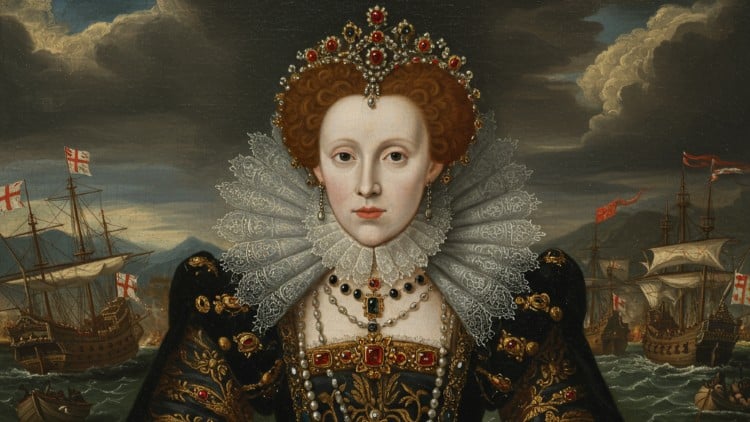
Elizabethan I – easly years including Elizbethan Settlement, Mary – Queen of Scots and The Spanish Armada
⏱️ Length: 4.0 total hours
👥 80 students
🔄 August 2025 update
Add-On Information:
Note➛ Make sure your 𝐔𝐝𝐞𝐦𝐲 cart has only this course you're going to enroll it now, Remove all other courses from the 𝐔𝐝𝐞𝐦𝐲 cart before Enrolling!
- Course Overview
- Elizabeth’s Unique Position as a Female Monarch: Explore the unprecedented challenges and opportunities faced by Elizabeth I as a female ruler in a deeply patriarchal 16th-century society. This section will delve into how she navigated gender expectations, asserted her authority over powerful male courtiers and European monarchs, and crafted a unique image of strength and political acumen. We will investigate the propaganda surrounding her “virgin queen” status and its strategic importance in maintaining both domestic stability and international standing, offering insights into the complex interplay of gender, power, and political survival in the early modern period.
- The Evolution of English National Identity: Examine how Elizabeth’s reign, particularly during its early years, contributed significantly to the forging of a distinct English national identity. This involves looking beyond purely political and religious factors to consider cultural shifts, the nascent sense of island nationhood against continental powers like Spain, and the development of a unique English Protestant character. We will explore how events like the threat of invasion and internal religious conformity fostered a collective sense of belonging and destiny among her subjects, laying groundwork for future national narratives.
- Interplay of Domestic Politics and European Power Struggles: Understand the intricate relationship between internal English affairs and the broader geopolitical landscape of 16th-century Europe. This period was not insular; domestic policies, succession questions, and religious settlements were constantly influenced by and reacted to the ambitions of powerful Catholic monarchs like Philip II of Spain and the political maneuvering of France and the Holy Roman Empire. The course will illustrate how Elizabeth’s court became a nexus where international diplomacy directly shaped English stability and survival, demanding astute leadership to balance internal demands with external pressures.
- The Power of Royal Image and Propaganda: Investigate how Elizabeth I and her government meticulously crafted and disseminated a powerful royal image as a crucial tool for governance and control. This includes analyzing the symbolism in portraits, coins, public ceremonies, and official proclamations, all designed to project strength, piety, wisdom, and an unwavering commitment to her realm. We will discuss how this early form of state propaganda was instrumental in consolidating loyalty, silencing dissent, and presenting a unified front both at home and abroad, offering a fascinating look at the art of political communication in a pre-modern era.
- Influence of the Renaissance on Elizabethan Culture and Thought: Discover how the intellectual and artistic currents of the European Renaissance permeated Elizabethan England, shaping the court, education, and wider cultural landscape during her early reign. This goes beyond political history to touch upon advancements in literature, science, exploration, and the arts, and how these influenced the worldview of Elizabethans, including the Queen herself. Understanding this cultural context provides a richer backdrop to the political decisions and societal developments of the time, revealing an era of intellectual ferment alongside intense political and religious struggle.
- Requirements / Prerequisites
- Foundational Knowledge of Tudor History: While not strictly mandatory, a basic understanding of the preceding Tudor monarchs—Henry VIII, Edward VI, and Mary I—would significantly enhance your comprehension of Elizabeth I’s reign. Familiarity with the English Reformation’s origins and the succession crises that plagued her siblings will provide crucial context for understanding the religious and political challenges Elizabeth inherited and the difficult decisions she faced from her accession.
- Engagement with Primary Sources and Historical Interpretations: A willingness to actively engage with original historical documents, such as letters, official decrees, and contemporary accounts, is essential. Furthermore, students should be prepared to critically evaluate different historical interpretations and academic debates surrounding key events and figures of the period, fostering a deeper, more nuanced understanding beyond singular narratives.
- Interest in English State Development and Monarchy: A genuine curiosity about the evolution of the English state, the powers and limitations of its monarchy, and the complex relationship between rulers and ruled is highly beneficial. This course offers an excellent opportunity to explore how governmental structures and the concept of sovereignty developed during a formative period, impacting the nation’s future trajectory.
- Commitment to Critical Thinking and Analytical Writing: Success in this course relies heavily on your ability to think critically about historical evidence, identify patterns, analyze cause and effect, and formulate coherent, well-supported arguments in written form. Students will be encouraged to move beyond rote memorization to develop sophisticated historical analysis skills, preparing them for higher academic demands.
- Enthusiasm for Historical Inquiry: While no specific prior academic qualifications beyond general secondary education are strictly required, an inherent enthusiasm for historical inquiry, a desire to understand the past, and a readiness to explore complex societal and political issues are paramount. This passion will drive deeper learning and more meaningful engagement with the rich tapestry of Elizabethan England.
- Skills Covered / Tools Used
- Source Analysis: Develop sophisticated abilities in deciphering and evaluating the reliability, utility, and inherent bias of a wide array of contemporary documents, including state papers, personal letters, parliamentary records, and period maps. This skill moves beyond surface-level reading to critically assess authors’ motives, intended audiences, and the specific historical context, enabling you to extract meaningful evidence and interpret deeper historical implications from primary and secondary sources.
- Causation and Consequence: Master the identification and analysis of the intricate web of events, decisions, and circumstances that led to major historical turning points, such as the Spanish Armada or the various plots against Elizabeth. You will learn to trace both the immediate and long-term impacts of these events on English society, politics, and its international standing, thereby constructing a comprehensive understanding of historical processes rather than merely isolated incidents.
- Historical Argumentation: Cultivate the expertise to construct compelling and well-supported historical essays and analytical responses. This involves developing a clear, defensible thesis, marshalling relevant historical evidence effectively, structuring coherent paragraphs, and engaging thoughtfully with different historical perspectives to present a nuanced and persuasive argument, essential for success in historical studies.
- Comparative Analysis: Enhance your capacity to examine and contrast different aspects of Elizabethan society, policy, or figures – for instance, comparing approaches to religious conformity versus the reality of dissent, or the economic conditions of the gentry against the struggles of the poor. This skill fosters a deeper understanding of the complexities, similarities, and unique characteristics inherent in historical periods, moving beyond simplistic narratives.
- Chronological Understanding: Establish a robust and detailed timeline of key events and developments across Elizabeth’s early reign (1558-1588). This systematic approach is crucial for placing events in their proper sequence, understanding the progression of historical changes, identifying turning points, and appreciating the evolving challenges and responses over three critical decades of English history, providing a foundational framework for all other historical analysis.
- Benefits / Outcomes
- Enhanced Historical Empathy: Cultivate a profound appreciation for the diverse challenges, motivations, and perspectives of people living in a fundamentally different historical context. This goes beyond mere factual recall, enabling you to understand the human element behind historical events and fostering a more nuanced, compassionate understanding of past societal structures and individual choices.
- Critical Thinking Acuity: Sharpen your ability to rigorously evaluate diverse forms of information, identify inherent biases in sources, question assumptions, and form independent, evidence-based judgments. These highly transferable analytical skills are invaluable for academic success across disciplines and for navigating the complexities of information in contemporary life.
- Contextual Understanding of Modern Britain: Gain invaluable insights into the historical roots of many contemporary British political institutions, the enduring religious landscape, and key aspects of national identity. Recognizing how Elizabeth’s reign laid crucial foundational elements helps connect the past directly to the present, making history tangible and relevant to understanding modern society.
- Improved Communication Skills: Refine your capacity to articulate complex historical concepts, arguments, and interpretations with clarity, precision, and persuasiveness, both in written academic assignments and through engaged discussions. This development in effective communication is a vital asset, preparing you for higher education, professional environments, and civic engagement.
- Appreciation for Primary Sources: Develop a profound respect for the integrity and vital role of original historical documents and artifacts as direct windows into the past. Understanding how these sources are collected, analyzed, and used to construct historical narratives instills a rigorous sense of historical methodology and an awareness of the ongoing nature of historical inquiry.
- PROS
- Pivotal Period Foundation: Provides a comprehensive and foundational understanding of a critical and transformative period in English history, essential for any student pursuing further historical studies or simply wishing to grasp the origins of modern Britain.
- Advanced Skill Development: Excellently designed to develop advanced analytical, evaluative, and interpretive skills, which are not only crucial for success in history but are also highly valued across all academic disciplines and future career paths.
- Engaging Narrative: Offers a rich, dramatic, and inherently engaging narrative filled with political intrigue, intense religious conflict, significant cultural flourishing, and powerful personalities, making the learning process both stimulating and memorable.
- Examination Preparation: Specifically tailored to thoroughly prepare students for the demands and specific question styles of the EdExcel GCSE History examination on ‘Elizabeth I in England, 1558-88’, ensuring confidence and competence in the assessment.
- Modern Relevance: Connects the historical context of Elizabeth’s reign to present-day understanding of governance, the complexities of religious and state relations, and the evolution of national identity, providing valuable perspective on contemporary issues.
- CONS
- The course’s intense and detailed focus on a specific, relatively short time frame (1558-1588) might initially feel restrictive for students who prefer a broader chronological sweep of history, potentially requiring an adjustment for those accustomed to wider historical overviews.
Learning Tracks: English,Teaching & Academics,Other Teaching & Academics