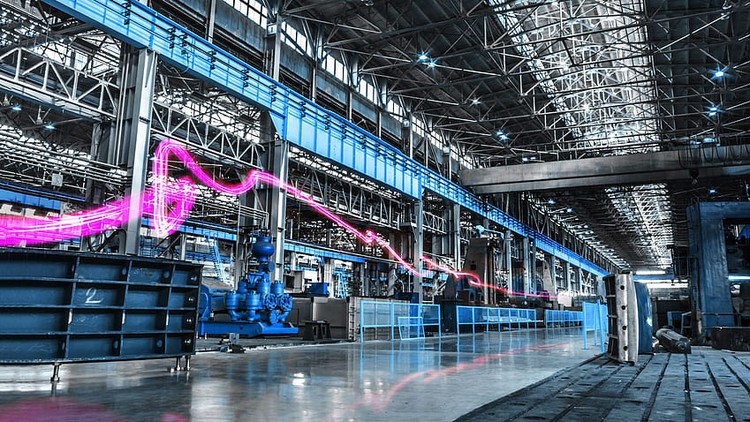
Comprehensive 14+ Hours Course Coving all the Essential Topics of Manufacturing Processes for Engineering Degree.
What you will learn
Gain an understanding of the Importance & Classification of Plastics, Properties of Polymer Melts, and Inspection of Plastic Parts made by Molding Processes.
Learn about Compression, Transfer, Blow, and Injection Molding Processes for manufacturing plastic products.
Develop knowledge on Metal Forming Processes such as Rolling, Forging, Extrusion, Wire & Bar Drawing, Cutting, and Bending Processes.
Acquire knowledge on Types, Advantages & Disadvantages of Metal Machining Processes.
Get familiar with Turning, Boring, Drilling, Milling, and Grinding Processes that are used for Metal Machining.
Understand the Types of Metal Casting Processes,Heating of Metals for Pouring into Molds & its Analysis, Behavior of Molten Metals and Alloys on Solidification.
Learn about Sand Casting, Permanent Mold Casting, Die Casting, Inspection Methods for Metal Casting & ll kinds of Metal Casting Defects, and their Solutions.
Gain knowledge about the Physics of Welding, Thermal Analysis of Fusion Welding, and Types of Welding such as Arc, Resistance, Oxy-Fuel and Pressure Welding.
Description
In today’s rapidly evolving world, knowledge and skills are essential to thrive in any industry. The manufacturing industry, in particular, requires a diverse set of skills and knowledge to remain competitive and stay ahead of the curve. From plastic molding and metal forming to metal machining, metal casting, and welding processes, the manufacturing industry involves a vast array of complex processes that require a deep understanding of their principles, theories, and applications.
Gaining knowledge and skills in these critical areas is essential for those who aspire to work in the manufacturing industry. It not only enhances their employability but also opens up new career opportunities. However, enrolling in individual courses to gain expertise in each of these areas can be time-consuming and costly. That’s where the importance of a comprehensive course comes in. By enrolling in a comprehensive course that covers all of these critical topics, individuals can gain practical hands-on experience and develop the necessary skills and knowledge needed to succeed in the manufacturing industry.
These five courses cover a range of essential topics and offer hands-on experience to prepare students for success. The Plastic Molding Fundamentals – SPE Certification Program course provides a comprehensive overview of the plastic molding process, including identifying common defects and implementing quality control measures. The Metal Forming Processes -Bulk Deformation & Sheet Metalworking course covers a range of metal-forming processes and their applications, offering excellent career prospects in various industries. The Fundamentals of Metal Machining Techniques & Machine Tools course covers the art of metal machining, providing a comprehensive understanding of the metal machining process and the skills needed to succeed in the industry. The Metal Casting: Techniques, Materials, and Product Design-AFS course explore the fundamentals of metal casting, including casting defects and their solutions, inspection methods, and product design considerations. Lastly, the Fundamentals of Welding Processes course provides learners with a solid understanding of power density, heat balance, and the different types of welding, making it perfect for beginners or experienced welding professionals.
Enrolling in all five courses separately can be time-consuming and costly. However, you can get all of these courses just by enrolling in one course that covers all of these topics. This not only saves time and money but also provides a more comprehensive learning experience. By enrolling in this comprehensive course, you will gain a thorough understanding of all these essential topics and acquire the skills and knowledge needed to succeed in the manufacturing industry.
Content
Plastic Molding Fundamentals – SPE Certification Program
Metal Forming Processes -Bulk Deformation&Sheet Metalworking
Fundamentals of Metal Machining Techniques & Machine Tools
Metal Casting: Techniques, Materials, and Product Design-AFS
Fundamentals of Welding Processes
Overview
Alright, fellow engineers, let’s talk shop about “Fundamentals of Manufacturing Processes for Engineers.” If you’re anything like me, you’ve probably realized that understanding *how* things are made is just as crucial as knowing *what* to design. This 14+ hour course isn’t just another theoretical ramble; it’s a deep dive into the practical realities of transforming raw materials into finished products. What truly impressed me is how comprehensively it tackles both the venerable world of metals and the ever-evolving landscape of plastics. It’s structured to give you a robust foundation, bridging the gap between abstract design concepts and the tangible challenges of actual production. Think of it as getting a behind-the-scenes pass to the factory floor, without leaving your desk. It’s perfect for anyone looking to solidify their understanding from a beginner to advanced level, providing that critical context often missing in pure design-focused curricula.
Prerequisites
Here’s the deal: while the course is titled “Fundamentals,” having a basic engineering background will definitely put you at an advantage. You don’t need to be a seasoned manufacturing veteran, but a foundational understanding of material properties, basic physics, and chemistry will make the concepts click faster. If you’ve had an intro to materials science or engineering mechanics, you’re in a great spot. That said, even if your background is a bit lighter, a genuine curiosity about “how stuff is made” is probably your most important prerequisite. The instructors do a good job of building from the ground up, but don’t expect them to teach you calculus or thermodynamics from scratch.
Skills & Tools
Completing this course means you’ll walk away with more than just head knowledge. You’ll develop a critical eye for process selection, understanding the intricacies of why one manufacturing method might be chosen over another for specific materials or geometries. You’ll gain proficiency in identifying key parameters in processes like various molding techniques for plastics or the nuanced differences between types of metal forming. This isn’t about learning specific software, but rather mastering the conceptual “tools” that underpin modern manufacturing. You’ll understand the operation of key industry-standard tools like lathes, mills, presses, and injection molding machines – knowledge that’s invaluable whether you’re specifying parts in CAD/CAM or troubleshooting on the production line. This understanding translates directly into job-ready skills, preparing you to engage confidently with manufacturing challenges.
Career Benefits & Job Roles
Investing 14+ hours into this content is a smart move for your career growth. The knowledge gained here is directly applicable across a multitude of engineering disciplines. For aspiring Manufacturing Engineers, Process Engineers, or Production Engineers, this course provides an indispensable toolkit. Quality Control Engineers will find the sections on inspection and material behavior particularly useful. Even Product Design Engineers will benefit immensely by understanding the manufacturability of their designs, enabling them to create more efficient and cost-effective products. This comprehensive overview is also fantastic for those looking into certification prep for professional engineering licenses or specialized manufacturing certifications. The insights into various processes are crucial for tackling real-world projects, giving you a competitive edge in a job market that values practical application as much as theoretical knowledge.
Pros
- Unmatched Breadth & Depth: The course does an exceptional job covering an incredibly wide array of manufacturing processes – from plastic molding (compression, injection, blow, transfer) to metal forming (rolling, forging, extrusion) and machining (turning, milling, grinding), all the way to metal casting fundamentals. This holistic view is rare and incredibly valuable, offering a truly beginner to advanced understanding.
- Practical Application Focus: It’s clear this course is designed with the real world in mind. The emphasis on properties of polymer melts, behavior of molten metals, and the advantages/disadvantages of various processes ensures you’re not just memorizing facts but understanding their implications for actual manufacturing scenarios. This builds crucial job-ready skills.
- Strong Foundation for Future Learning: For engineers looking to specialize, this course provides a rock-solid foundation. Knowing the fundamentals of so many processes makes it easier to dive deeper into specific areas, understand new technologies, or even engage in advanced topics like process optimization or additive manufacturing. It’s a key step for long-term career growth.
- Clear & Concise Explanations: Despite the complexity of the topics, the course manages to break them down into digestible segments. The structure is logical, making it easy to follow the progression from basic material understanding to intricate process mechanics, reinforcing the concepts effectively.
Cons
- Limited Hands-on Labs or Simulations: Let’s be real, manufacturing is inherently a hands-on field. While the theoretical coverage is excellent, the course description doesn’t explicitly mention any hands-on labs, interactive simulations, or virtual factory tours. For a truly immersive experience, especially in a 14+ hour course, some form of virtual practical application would have significantly enhanced the learning retention and made the transition to real-world projects even smoother. This means learners will need to seek out practical experiences elsewhere to fully solidify their understanding.