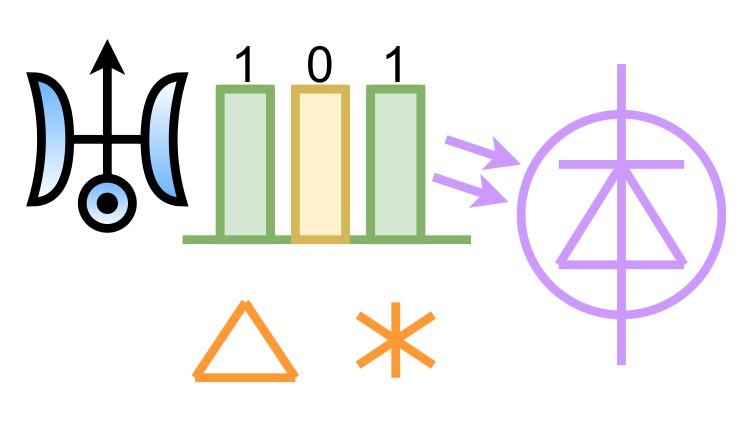
STM32, Embedded C, ARM Cortex-M4, GPIO, EXTI, Timers, RCC, NVIC, Makefile, STM32F4Discovery, NEC protocol, Interrupts
Why take this course?
🎉 Dive into the World of Embedded Systems with STM32 & NEC Protocol! 🛠️
områд просторі між програмним забезпеченням та апаратними ресурсами відкривається перед вами на курсі “STM32 Interrupt-Driven NEC Decoder”. Цей курс створений з метою поєднати практичні знання в областях ембіджедед систем і введеного програмування STM32 мікроконтролерів.
Course Highlights:
- Complete NEC Protocol Breakdown: Master the NEC protocol and understand how it is used to communicate with infrared remote controls.
- STM32 Microcontroller Mastery: Dive deep into the features of STM32F4Discovery board, learning about GPIO, EXTI, timers, RCC, NVIC, and more.
- Hands-On Learning: Follow a real-world project to create an interrupt-driven NEC decoder on the STM32 microcontroller.
- Essential Tools Setup: Learn how to set up your development environment with the GNU ARM toolchain and ST-LINK programmer.
- In-Depth Peripheral Exploration: Discover the inner workings of critical peripherals and their registers, including GPIO, RCC, timers, external interrupts, and the NVIC.
Курс складається з наступних ключових моментів:
📚 Introduction to STM32F4Discovery & Development Environment Setup:
- Installation of GNU ARM toolchain and ST-LINK programmer.
- Overview of the STM32F4Discovery board capabilities and connections.
🚀 NEC Protocol Explained:
- Learn how the NEC protocol works and what makes it unique among infrared communication protocols.
- Understand the signal structure of a typical NEC remote control.
🛠️ Essential Peripherals Configuration:
- Detailed explanation of GPIO, reset and clock control, external interrupts, timers, and the NVIC configuration.
- Step-by-step guidance on configuring these peripherals for the NEC protocol decoder application.
🔧 Programming with Embedded C & Makefile:
- Master the Embedded C language as you write code for the STM32 microcontroller.
- Learn how to create and use a Makefile for compiling your projects.
🔬 Real-World Application: Decoding NEC Protocol with STM32:
- Implement the NEC protocol decoder on the STM32F4Discovery board.
- Test and validate the functionality of your design with real infrared remote controls.
By completing this course, you will:
✅ Understand the complete workflow of an embedded systems project: from setting up your development environment to deploying your application on hardware.
✅ Gain hands-on experience with STM32 microcontrollers, especially the STM32F4Discovery board.
✅ Learn how to decode the NEC protocol using interrupt-driven programming techniques.
✅ Develop a solid foundation in embedded C programming and using Makefiles for project compilation.
✅ Acquire knowledge of ARM Cortex-M4 architecture as it relates to GPIO, EXTI, timers, RCC, and NVIC.
Join us on this journey to unlock the potential of embedded systems with STM32 technology and the NEC protocol! 👨💻✨
Overview: Beyond the HAL “Magic”
Let’s be honest: if you’ve spent any time in the STM32 ecosystem, you’ve probably been tempted to just lean on the Hardware Abstraction Layer (HAL). It’s fast, it’s convenient, and it hides the complexity. But if you want to call yourself a true Firmware Engineer, you eventually have to stop hiding. This course, “STM32 Bare-Metal Interrupt Programming: IR NEC Decoder,” is exactly where the training wheels come off.
The focus here isn’t just on making an LED blink; it’s about decoding the NEC protocol from scratch using External Interrupts (EXTI) and Timers. This isn’t just another tutorial; it’s a deep dive into the ARM Cortex-M4 architecture where you learn to talk directly to the silicon. We’re talking about manually configuring the Reset and Clock Control (RCC) unit and handling the Nested Vectored Interrupt Controller (NVIC) without a single library call doing the heavy lifting for you. It’s gritty, it’s detailed, and it’s one of the best ways to transition from a hobbyist to a professional who actually understands interrupt latency and register-level state machines.
Prerequisites
Before you jump into the deep end, you need to have a solid handle on Embedded C. If you don’t know what a pointer is or how bitwise operations work, you’re going to have a hard time. You don’t need to be a guru, but familiarity with the basic STM32 MCU architecture is helpful. Ideally, you should have an STM32F4Discovery board (or something similar) and an IR receiver/remote combo ready to go. This is a hands-on lab style course, so watching it passively is a waste of your time.
Skills & Tools
This course packs a punch when it comes to industry-standard tools and low-level concepts. You’ll be working with:
- Bare-Metal Programming: Writing code that interacts directly with memory-mapped registers.
- The Makefile: Learning how to build your own toolchain flow instead of clicking a “Magic Play” button in an IDE.
- GPIO & EXTI: Master the art of configuring pins for edge-triggered interrupts.
- General Purpose Timers: Using counters to measure timing intervals with microsecond precision.
- NEC Protocol: A deep dive into pulse-distance encoding and how to translate raw signals into data.
- Debugging: Learning how to troubleshoot interrupt-driven systems where timing is everything.
Career Benefits & Job Roles
If you’re looking for career growth in the Embedded Systems space, bare-metal mastery is your golden ticket. Companies building medical devices, automotive ECUs, or high-performance IoT sensors don’t want “library wrappers”—they want engineers who can optimize for power and speed. Completing real-world projects like an IR decoder demonstrates that you can handle complex Firmware Development tasks.
This course is excellent certification prep for technical interviews. When a hiring manager asks you how the NVIC handles priority grouping or how to clear a pending interrupt flag, you won’t just recite a textbook; you’ll talk about the time you spent debugging your EXTI handler. Typical job roles that value these skills include:
- Firmware Engineer
- Embedded Software Developer
- Systems Architect
- Hardware-Software Integration Specialist
Pros
- Unfiltered Technical Depth: I love that this course doesn’t shy away from the datasheet. You spend quality time looking at STM32 reference manuals, which is exactly what you’ll do in a real job-ready environment.
- Logical Progression: It moves logically from GPIO setup to Interrupt configuration, and finally to the logic of the NEC protocol. It builds your confidence incrementally from beginner to advanced levels.
- Toolchain Independence: By focusing on Makefiles and ARM Cortex-M fundamentals, the skills you learn here are transferable to almost any MCU vendor, not just STMicroelectronics.
Cons
The only real drawback is the “Hardware Wall.” If you don’t have the specific STM32F4Discovery board or the exact IR sensor modules mentioned, you might find yourself struggling to map the pinouts or timing values to your specific setup. A bit more guidance on adapting the code for different STM32 families (like the L4 or G0) would have been the icing on the cake, but for a bare-metal course, some self-reliance is expected.