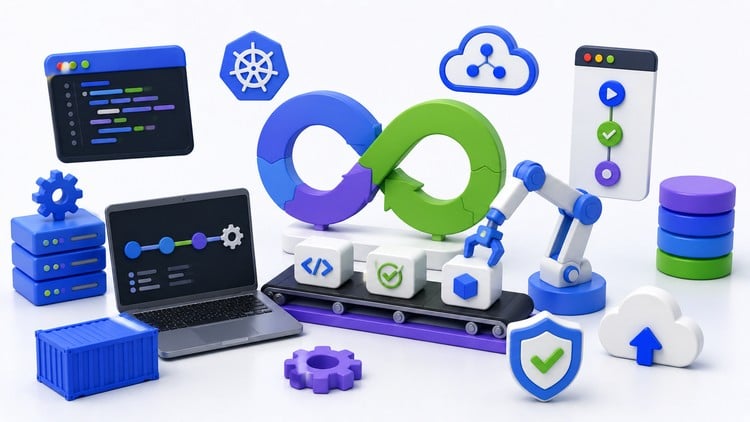
Validate your DevOps skills with 200 unique questions covering Docker, Kubernetes, Jenkins, Terraform, and CI/CD.
What You Will Learn:
- Architect continuous integration and continuous deployment (CI/CD) pipelines using Jenkins and GitLab CI.
- Manage containerized microservices and cluster orchestration using Docker and Kubernetes.
- Provision and scale cloud resources efficiently using Infrastructure as Code (IaC) tools like Terraform and Ansible.
- Execute advanced deployment strategies, including Blue/Green and Canary releases, to ensure zero-downtime updates.
The Reality of DevOps Validation: An Honest Deep-Dive
Let’s be real for a second: the DevOps landscape is currently flooded with “experts” who can follow a YouTube tutorial but crumble the moment a production environment throws a 500 error. I’ve spent over a decade in the trenches of infrastructure, and if there’s one thing I’ve learned, it’s that knowing where to click in a UI isn’t the same as understanding the underlying architecture. This is exactly why I decided to put the DevOps & CI/CD Pipeline Mastery: Practice Certification through its paces. We aren’t just talking about another “Intro to Cloud” course here; we are talking about a rigorous 200-question gauntlet designed to bridge the gap between beginner to advanced levels.
What struck me most about this curriculum isn’t just the sheer volume of questions, but the pedagogical approach. Instead of focusing on rote memorization, the course pushes you to think like a Site Reliability Engineer (SRE). It moves past the “what” and forces you to confront the “why” of industry-standard tools. In a market where certification prep can often feel like a cash grab, this feels more like a sanity check for your job-ready skills. It asks the hard questions about state management in Terraform and the nuances of pod networking in Kubernetes—the kind of stuff that actually determines whether you survive an on-call rotation.
Prerequisites for the Ambitious
Before you jump into this, let’s manage expectations. This isn’t a course where you can walk in cold and expect to pass. To get the actual value out of these hands-on labs and practice scenarios, you need a baseline. In my opinion, you should have at least a working knowledge of the Linux command line—if you don’t know how to grep a log file or manage permissions, you’re going to struggle. You also need a conceptual grasp of the Software Development Life Cycle (SDLC). This course is for the practitioner who has played with Docker containers on their local machine but is now ready to orchestrate them at scale. It’s for those who understand that CI/CD is a philosophy, not just a set of Jenkins scripts.
Mastering the Modern Tech Stack
The curriculum is a “who’s who” of the modern infrastructure world. You’ll be diving deep into container orchestration and infrastructure as code (IaC). Here is a breakdown of the core pillars covered:
- Jenkins & GitLab CI: Architecting robust pipelines that handle everything from unit testing to automated staging.
- Docker & Kubernetes: Managing microservices, scaling clusters, and understanding the lifecycle of a containerized application.
- Terraform & Ansible: Provisioning cloud resources and managing configuration without manual intervention.
- Deployment Strategies: Mastering the high-stakes logic of Blue/Green and Canary releases to ensure zero-downtime updates.
Career Benefits & Job Roles
If you’re looking for career growth, this is where the rubber meets the road. The tech industry is currently desperate for professionals who can actually execute real-world projects. Completing this level of validation puts you on the radar for high-paying roles such as DevOps Engineer, Cloud Architect, and Systems Automation Engineer. These positions aren’t just about technical skill; they are about proving to a hiring manager that you can reduce lead time for changes and improve service reliability. Having these job-ready skills backed by a 200-question mastery course is a massive differentiator during the technical interview stage.
Pros: Why This Course Stands Out
- Scenario-Based Logic: The questions aren’t just “What is a Dockerfile?” Instead, they present real-world projects scenarios where you have to troubleshoot a failing Kubernetes deployment or optimize a Terraform state file.
- Breadth of Tooling: It covers the holy trinity of DevOps: CI/CD, IaC, and Orchestration. It doesn’t just stick to one vendor, giving you a well-rounded perspective of industry-standard tools.
- High-Pressure Preparation: The 200-question format builds the mental stamina required for official certification prep (like the CKA or Terraform Associate exams), making the actual exams feel like a breeze by comparison.
Cons: An Honest Reality Check
If I have one gripe, it’s that this is a practice certification course, meaning it focuses heavily on assessment. While the explanations for the answers are detailed, it shouldn’t be your only source of learning if you’ve never touched a terminal before. It assumes you are willing to go off and build a test environment on AWS or Azure to verify what you’re learning. It’s a tool for validation and mastery, not a hand-holding tutorial for absolute novices who aren’t ready to do the heavy lifting themselves.