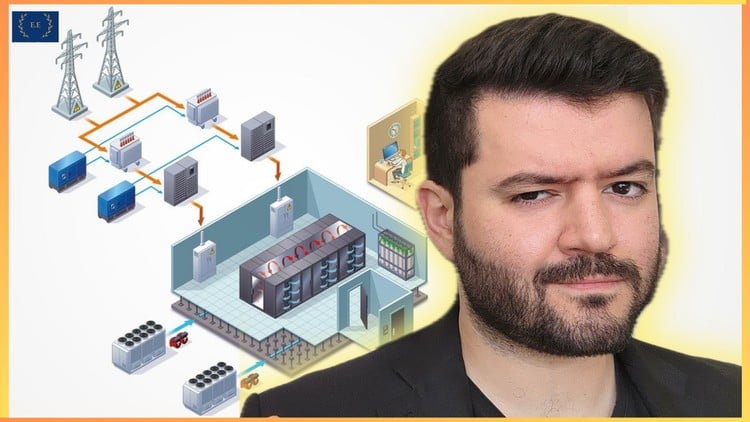
Data Center Electrical Design Engineering/Data Center Electrical Infrastructure/Data Center Power Infrastructure (A-Z)
⏱️ Length: 3.0 total hours
⭐ 4.44/5 rating
👥 5,303 students
🔄 April 2025 update
Add-On Information:
Note➛ Make sure your 𝐔𝐝𝐞𝐦𝐲 cart has only this course you're going to enroll it now, Remove all other courses from the 𝐔𝐝𝐞𝐦𝐲 cart before Enrolling!
- Course Overview
- Core Electrical Principles: Establishes a foundational understanding of electrical theory and its specific application within mission-critical data center environments.
- End-to-End Power Journey: Traces the entire electrical path, from the utility grid connection, through various distribution systems, and finally to the critical IT loads.
- Resilience Architecture: Explores diverse design philosophies, redundancy levels (e.g., N+1, 2N), and system topologies crucial for maximum power uptime and fault tolerance.
- Efficiency Optimization: Focuses on methodologies, key metrics like Power Usage Effectiveness (PUE), and cutting-edge technologies for sustainable and cost-effective power utilization.
- Compliance & Safety Standards: Discusses essential national and international electrical codes, industry best practices, and critical safety protocols for electrical infrastructure.
- Scalability & Future Trends: Addresses the dynamic challenge of scaling power systems to meet growing data demands and integrating emerging data center technologies like liquid cooling.
- Risk Identification & Mitigation: Teaches how to systematically pinpoint potential electrical vulnerabilities, single points of failure, and proactive mitigation strategies.
- Interdisciplinary Integration: Unveils the critical, interdependent link between electrical systems, IT infrastructure, cooling solutions, and overall facility management.
- Operational Life Cycle: Covers aspects from initial power infrastructure planning and component selection to ongoing maintenance, monitoring, and upgrade considerations.
- Requirements / Prerequisites
- Basic Electrical Concepts: A fundamental understanding of electrical units (volts, amps, watts), circuit components, and basic AC/DC principles is highly recommended.
- IT Infrastructure Awareness: General familiarity with the functions of servers, storage, networking hardware, and their role within a data center context.
- No Prior DC Electrical Design Required: This course is designed to be accessible, serving as a comprehensive introduction for individuals new to specialized data center electrical engineering.
- Analytical Mindset: A readiness to engage with technical specifications, systematic problem-solving approaches, and interpreting complex system diagrams.
- Commitment to Learning: Willingness to actively study course materials, participate in conceptual exercises, and absorb industry-specific terminology.
- Reliable Internet Access: A stable connection and a suitable device (computer, tablet) to seamlessly access all video content, quizzes, and supplementary course materials.
- Desire for Specialization: A strong interest in developing expertise in the critical and highly demanded niche of data center power infrastructure.
- Professional Development Focus: Ideal for individuals seeking to expand their professional capabilities and understand the backbone of digital operations.
- Skills Covered / Tools Used
- Power Path Analysis: Develop the ability to trace and understand the intricate flow of electricity through diverse data center power distribution systems.
- Protection System Selection: Gain skill in evaluating and applying appropriate overcurrent protection devices, surge suppressors, and protective relaying for critical loads.
- Load Sizing & Forecasting: Acquire practical knowledge for accurately calculating current and future power demands of various IT equipment and facility infrastructure.
- Voltage Management Techniques: Understand and apply methods to ensure stable, clean, and consistent voltage delivery essential for sensitive electronic components.
- Backup Power Fundamentals: Competence in distinguishing between and applying various battery technologies (e.g., VRLA, Li-ion) and standby generator systems.
- Electrical Safety Procedures: Familiarity with critical industry safety protocols, including Lockout/Tagout (LOTO) procedures, arc flash awareness, and safe work practices.
- Single-Line Diagram Interpretation: Proficiency in reading, understanding, and deriving essential system information from complex electrical single-line diagrams (SLDs).
- Power Monitoring Concepts: Exposure to the principles behind modern Data Center Infrastructure Management (DCIM) tools and Power Monitoring Units (PMUs) for performance tracking.
- PDU & RPP Functionality: Grasping the operational differences and application of Power Distribution Units (PDUs) and Remote Power Panels (RPPs) within the data hall.
- Benefits / Outcomes
- Enhanced Career Prospects: Acquire highly sought-after expertise vital for advancing in roles within data center design, electrical engineering, operations, and facility management.
- Improved System Uptime: Learn to design, implement, and manage robust power systems that minimize downtime and ensure continuous, uninterrupted data center operation.
- Significant Cost Reduction: Gain the knowledge to implement effective power-saving measures, thereby substantially lowering operational expenditures and improving PUE.
- Expert Risk Mitigation: Develop the ability to proactively identify and address critical electrical vulnerabilities and single points of failure, safeguarding invaluable assets.
- Compliance & Best Practice Mastery: Confidently navigate and ensure adherence to essential national and international electrical codes, standards, and industry best practices.
- Strategic Planning Contributor: Empower yourself to actively participate in and lead crucial power infrastructure planning, upgrade, and expansion initiatives.
- Specialized Resume Asset: Differentiate your professional profile with a focused, technical skill set that is exceptionally valued by employers in the data center industry.
- Foundation for Advanced Roles: Establish a strong knowledge base for pursuing more advanced certifications, specialized electrical engineering positions, or leadership roles.
- Holistic Infrastructure View: Gain a comprehensive understanding of how electrical power intricately integrates with cooling, IT, and physical security for overall data center performance.
- PROS
- Hyper-Focused Curriculum: Offers an in-depth, specialized exploration of data center electrical and power systems, ensuring no superficial coverage of this critical topic.
- Rapid Skill Acquisition: The concise 3-hour total duration provides substantial, actionable knowledge quickly, making it ideal for busy professionals seeking efficient upskilling.
- Industry-Proven Quality: Boasts a high 4.44/5 rating from over 5,300 students, unequivocally confirming its effectiveness, instructional quality, and learner satisfaction.
- Up-to-Date Content: Recently updated in April 2025, guaranteeing that the course content aligns with the very latest industry trends, technologies, and regulatory requirements.
- Immediate Career Impact: Equips learners with specialized, highly in-demand skills directly applicable to real-world job functions across various data center roles.
- Broad Applicability: Perfectly suited for a diverse audience, including IT professionals, facility managers, electrical engineers, and project managers involved in data center operations.
- Foundation for Advanced Study: Lays a robust and essential groundwork for individuals aspiring to pursue further certifications or deeper specialization in data center design or operations.
- A-Z Comprehensive Scope: Despite its brevity, the course provides an ‘A-Z’ overview of data center power infrastructure, covering key components and considerations.
- CONS
- Limited Hands-On Simulation: The condensed 3-hour duration inherently restricts opportunities for extensive practical simulations or in-depth software tool engagement.
Learning Tracks: English,IT & Software,Network & Security