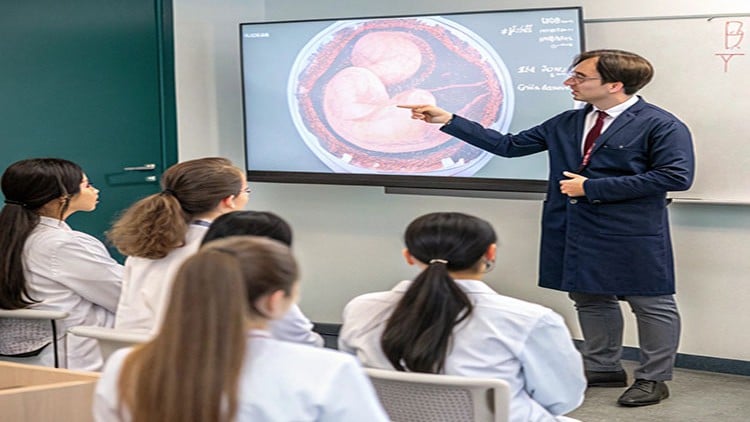
Bridging Science and Clinical Practice
Why take this course?
🩺 Clinical Embryology: A Practical Approach 🦸♂️👣
Course Description:
Embark on a captivating educational journey with our course, “Clinical Embryology: A Practical Approach.” This online experience delves into the marvelous realm of human embryology, offering a comprehensive understanding of how a single cell evolves into the complex architecture of a human being. 🌱➡️🧔♂️
What You’ll Learn:
- Key Developmental Stages: Explore the critical stages of embryonic development, from fertilization to birth.
- Cellular Differentiation and Organogenesis: Understand the mechanisms behind how cells specialize and form complex organ systems.
- Genetic and Environmental Factors: Examine the influence of genetics and environmental factors on prenatal development and the implications for healthcare.
- Clinical Relevance: Apply your knowledge to real-world scenarios, enhancing clinical practice in various health fields.
Course Highlights:
- Foundation for Healthcare Professionals: Whether you’re a student in medical, nursing, or allied health, or a seasoned healthcare professional, this course lays down the essential groundwork for understanding human development.
- Blend of Theory and Practice: A practical approach combines theoretical knowledge with clinical applications to deepen your comprehension of embryology’s complexities.
- Real-World Applications: Learn how to apply principles of embryology to prenatal diagnosis, assisted reproductive technologies, and more.
- Comprehensive Coverage: From gametogenesis to fetal maturation, our course provides a thorough exploration of human development.
- Innovative Teaching Techniques: Engaging multimedia content, interactive modules, and expert lectures make learning an immersive experience.
Course Topics 📚:
- Gametogenesis: Dive into the formation of sperm and oocytes, understanding their importance in reproduction.
- Fertilization & Early Embryonic Development: Explore the intricacies of cleavage, implantation, and gastrulation, setting the stage for life.
- Organogenesis: Discover how major organ systems like the heart, brain, and muscles take shape during embryogenesis.
- Fetal Development: Analyze fetal growth, maturation, and the critical role of placental function in supporting fetal development.
- Teratology: Investigate congenital anomalies and their etiologies, enhancing your ability to diagnose and manage these conditions.
- Clinical Embryology: Grasp the practical aspects of prenatal diagnosis and assisted reproductive technologies through a clinical lens.
- Molecular and Cellular Mechanisms: Delve into gene expression, signaling pathways, and stem cells to understand the cellular underpinnings of development.
Who Should Take This Course?
This course is perfect for healthcare students, aspiring embryologists, clinicians, and researchers who wish to expand their knowledge in clinical embryology or review the subject matter to solidify their understanding. It’s an ideal resource for anyone looking to bridge science with clinical practice.
Enroll now and transform your understanding of human development, enhancing your professional expertise with a strong foundation in Clinical Embryology! 🎓⚫️👩🏫
-
Course Overview
- This comprehensive course, “Clinical Embryology: From Concept To Practice,” offers an immersive journey into the intricate world of human reproduction and assisted reproductive technologies (ART). Designed to bridge the gap between fundamental scientific principles and real-world clinical application, it meticulously covers the biological processes from gamete formation and maturation through fertilization, early embryonic development, and implantation. Participants will gain a robust theoretical foundation in reproductive biology, endocrinology, and genetics, critically integrated with the practical methodologies and advanced laboratory techniques essential for a successful career in clinical embryology. We explore the scientific rationale behind every step, ensuring a deep conceptual understanding that underpins practical proficiency.
-
Requirements / Prerequisites
- Candidates should possess a foundational understanding of biology, cell biology, genetics, and human physiology, typically evidenced by a bachelor’s degree in a life science, biomedical science, medicine, or a related field. While prior direct experience in an embryology laboratory is not strictly mandatory, a strong academic record, genuine interest in reproductive science, and a commitment to rigorous scientific inquiry are essential. This course is ideal for aspiring embryologists, laboratory technicians, medical residents specializing in obstetrics and gynecology, and research scientists seeking to specialize in ART.
-
Skills Covered / Tools Used
- Skills Covered:
- Mastery of human gamete handling, preparation, and assessment techniques.
- Proficiency in conventional In Vitro Fertilization (IVF) and Intra-Cytoplasmic Sperm Injection (ICSI) procedures.
- Expertise in embryo culture systems, evaluation, and grading for viability and developmental potential.
- Application of advanced cryopreservation techniques (vitrification) for oocytes, sperm, and embryos.
- Understanding of preimplantation genetic testing (PGT) principles and biopsy techniques.
- Competence in maintaining stringent quality control, assurance, and safety protocols within an ART laboratory.
- Aseptic laboratory techniques and contamination prevention strategies.
- Ethical decision-making frameworks pertinent to clinical embryology.
- Tools Used:
- State-of-the-art inverted microscopes and stereo microscopes for gamete and embryo manipulation.
- Precision micromanipulators for ICSI and embryo biopsy.
- Specialized CO2 and tri-gas incubators for optimal embryo culture environments.
- Cryo-storage systems, including liquid nitrogen tanks and controlled-rate freezers.
- Laminar flow hoods and biosafety cabinets for sterile procedures.
- Centrifuges, pH meters, and osmometers for media preparation and quality checks.
- Specialized dishes, pipettes, and culture media designed for ART.
- Skills Covered:
-
Benefits / Outcomes
- Career Readiness: Graduates will be well-prepared for entry-level positions as junior embryologists, clinical laboratory scientists, or research assistants in ART clinics and research institutions.
- Enhanced Expertise: Develop a profound, integrated understanding of the science and practice of human reproduction and ART.
- Practical Competence: Acquire hands-on proficiency in the critical laboratory techniques that define modern clinical embryology.
- Ethical Acumen: Cultivate a strong awareness of the ethical considerations, regulatory frameworks, and patient-centric care philosophies inherent in this sensitive field.
- Professional Development: Lay a solid foundation for continuous learning, advanced specialization, and potential certification in clinical embryology.
- Impactful Contribution: Gain the skills to directly contribute to helping individuals and couples achieve their dream of parenthood.
-
PROS
- High demand for skilled professionals in a rapidly expanding global healthcare sector.
- Direct and profound impact on individuals’ lives, offering immense personal and professional satisfaction.
- Engages with cutting-edge biological science and innovative medical technologies.
- Offers a highly specialized career path with opportunities for continuous learning and research.
- Involves working in a dynamic and intellectually stimulating clinical environment.
-
CONS
- The role often involves a high degree of responsibility and can be emotionally demanding due to the sensitive nature of patient outcomes.