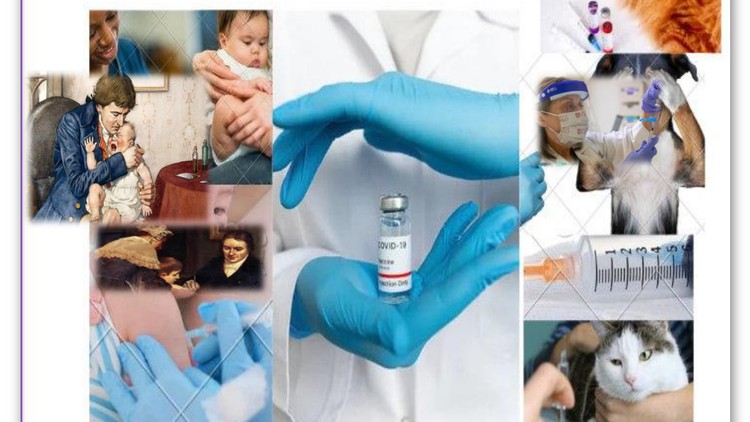
vaccine and vaccination
What you will learn
vaccine history
type of vaccine
vaccine schedule
vaccine production
Description
vaccine, suspension of weakened, killed, or fragmented microorganisms or toxins or other biological preparation, such as those consisting of antibodies, lymphocytes, or messenger RNA (mRNA), that is administered primarily to prevent disease.
human B cell
A vaccine can confer active immunity against a specific harmful agent by stimulating the immune system to attack the agent. Once stimulated by a vaccine, the antibody-producing cells, called B cells (or B lymphocytes), remain sensitized and ready to respond to the agent should it ever gain entry to the body. A vaccine may also confer passive immunity by providing antibodies or lymphocytes already made by an animal or human donor. Vaccines are usually administered by injection (parenteral administration), but some are given orally or even nasally (in the case of flu vaccine). Vaccines applied to mucosal surfaces, such as those lining the gut or nasal passages, seem to stimulate a greater antibody response and may be the most effective route of administration. (For further information, see immunization.
the first vaccines
Edward Jenner: smallpox vaccination
The first vaccine was introduced by British physician Edward Jenner, who in 1796 used the cowpox virus (vaccinia) to confer protection against smallpox, a related virus, in humans. Prior to that use, however, the principle of vaccination was applied by Asian physicians who gave children dried crusts from the lesions of people suffering from smallpox to protect against the disease. While some developed immunity, others developed the disease. Jenner’s contribution was to use a substance similar to, but safer than, smallpox to confer immunity. He thus exploited the relatively rare situation in which immunity to one virus confers protection against another viral disease. In 1881 French microbiologist Louis Pasteur demonstrated immunization against anthrax by injecting sheep with a preparation containing attenuated forms of the bacillus that causes the disease. Four years later he developed a protective suspension against rabies.
Vaccine effectiveness
historical mass vaccination programs in the United States
After Pasteur’s time, a widespread and intensive search for new vaccines was conducted, and vaccines against both bacteria and viruses were produced, as well as vaccines against venoms and other toxins. Through vaccination, smallpox was eradicated worldwide by 1980, and polio cases declined by 99 percent. Other examples of diseases for which vaccines have been developed include mumps, measles, typhoid fever, cholera, plague, tuberculosis, tularemia, pneumococcal infection, tetanus, influenza, yellow fever, hepatitis A, hepatitis B, some types of encephalitis, and typhus—although some of those vaccines are less than 100 percent effective or are used only in populations at high risk. Vaccines against viruses provide especially important immune protection, since, unlike bacterial infections, viral infections do not respond to antibiotics
Vaccine types
How the polio vaccine changed the world
The challenge in vaccine development consists in devising a vaccine strong enough to ward off infection without making the individual seriously ill. To that end, researchers have devised different types of vaccines. Weakened, or attenuated, vaccines consist of microorganisms that have lost the ability to cause serious illness but retain the ability to stimulate immunity. They may produce a mild or subclinical form of the disease. Attenuated vaccines include those for measles, mumps, polio (the Sabin vaccine), rubella, and tuberculosis. Inactivated vaccines are those that contain organisms that have been killed or inactivated with heat or chemicals. Inactivated vaccines elicit an immune response, but the response often is less complete than with attenuated vaccines. Because inactivated vaccines are not as effective at fighting infection as those made from attenuated microorganisms, greater quantities of inactivated vaccines are administered. Vaccines against rabies, polio (the Salk vaccine), some forms of influenza, and cholera are made from inactivated microorganisms. Another type of vaccine is a subunit vaccine, which is made from proteins found on the surface of infectious agents. Vaccines for influenza and hepatitis B are of that type. When toxins, the metabolic by-products of infectious organisms, are inactivated to form toxoids, they can be used to stimulate immunity against tetanus, diphtheria, and whooping cough (pertussis).
Learn how vaccines enhance the human immune system to fight against harmful pathogens
history
in the late 20th century, advances in laboratory techniques allowed approaches to vaccine development to be refined. Medical researchers could identify the genes of a pathogen (disease-causing microorganism) that encode the protein or proteins that stimulate the immune response to that organism. That allowed the immunity-stimulating proteins (called antigens) to be mass-produced and used in vaccines. It also made it possible to alter pathogens genetically and produce weakened strains of viruses. In that way, harmful proteins from pathogens can be deleted or modified, thus providing a safer and more-effective method by which to manufacture attenuated vaccines.
Vaccinology is the science and engineering of developing vaccines to prevent infectious diseases.
Vaccines contain antigens that stimulate the immune system to produce an immune response that is often similar to that produced by the natural infection. With vaccination, however, the recipient is not subjected to the disease and its potential complications
Who invented vaccinology?
Dr Edward Jenner
Dr Edward Jenner created the world’s first successful vaccine. He found out that people infected with cowpox were immune to smallpox. In May 1796, English physician Edward Jenner expands on this discovery and inoculates 8-year-old James Phipps with matter collected from a cowpox sore on the hand of a milkmaid
for centuries, humans have looked for ways to protect each other against deadly diseases. From experiments and taking chances to a global vaccine roll-out in the midst of an unprecedented pandemic, immunization has a long history.
Vaccine research can raise challenging ethical questions, and some of the experiments carried out for the development of vaccines in the past would not be ethically acceptable today. Vaccines have saved more human lives than any other medical invention in history.
Scroll on to take a journey through the last millennium to see how these extraordinary discoveries and achievements have changed our lives.
1400s to 1700s
From at least the 15th century, people in different parts of the world have attempted to prevent illness by intentionally exposing healthy people to smallpox– a practice known as variolation (after a name for smallpox, ‘la variola’). Some sources suggest these practices were taking place as early as 200 BCE.
in 1721, Lady Mary Wortley Montagu brought smallpox inoculation to Europe, by asking that her two daughters be inoculated against smallpox as she had observed practice in Turkey.
In 1774, Benjamin Jesty makes a breakthrough. Testing his hypothesis that infection with cowpox – a bovine virus which can spread to humans – could protect a person from smallpox
In May 1796, English physician Edward Jenner expands on this discovery and inoculates 8-year-old James Phipps with matter collected from a cowpox sore on the hand of a milkmaid. Despite suffering a local reaction and feeling unwell for several days, Phipps made a full recovery.
Two months later, in July 1796, Jenner inoculates Phipps with matter from a human smallpox sore in order to test Phipps’ resistance. Phipps remains in perfect health, and becomes the first human to be vaccinated against smallpox. The term ‘vaccine’ is later coined, taken from the Latin word for cow, vacca.
Read more about the history of Smallpox vaccination.
The 1800s
In 1872, despite enduring a stroke and the death of 2 of his daughters to typhoid, Louis Pasteur creates the first laboratory-produced vaccine: the vaccine for fowl cholera in chickens.
In 1885, Louis Pasteur successfully prevents rabies through post-exposure vaccination. The treatment is controversial. Pasteur has unsuccessfully attempted to use the vaccine on humans twice before, and injecting a human with a disease agent is still a new and uncertain method.
Pasteur is not a medical doctor. But, despite the risk, he begins a course of 13 injections with patient Joseph Meister, each containing a stronger dose of the rabies virus. Meister survives and later becomes the caretaker of Pasteur’s tomb in Paris.
In 1894, Dr Anna Wessels Williams isolates a strain of the diphtheria bacteria that is crucial in the development of an antitoxin for the disease.
novel vaccine
Recombinant DNA technology has also proven useful in developing vaccines to viruses that cannot be grown successfully or that are inherently dangerous. Genetic material that codes for a desired antigen is inserted into the attenuated form of a large virus, such as the vaccinia virus, which carries the foreign genes “piggyback.” The altered virus is injected into an individual to stimulate antibody production to the foreign proteins and thus confer immunity. The approach potentially enables the vaccinia virus to function as a live vaccine against several diseases, once it has received genes derived from the relevant disease-causing microorganisms. A similar procedure can be followed using a modified bacterium, such as Salmonella typhimurium, as the carrier of a foreign gene.
Gardasil human papillomavirus vaccine
Vaccines against human papillomavirus (HPV) are made from virus like particles (VLPs), which are prepared via recombinant technology. The vaccines do not contain live HPV biological or genetic material and therefore are incapable of causing infection. Two types of HPV vaccines have been developed, including a bivalent HPV vaccine, made using VLPs of HPV types 16 and 18, and a tetravalent vaccine, made with VLPs of HPV types 6, 11, 16, and 18.
Another approach, called naked DNA therapy, involves injecting DNA that encodes a foreign protein into muscle cells. The cells produce the foreign antigen, which stimulates an immune response.
Vaccines based on RNA have been of particular interest as a means of preventing diseases such as influenza, cytomegalovirus infection, and rabies. Messenger RNA (mRNA) vaccines are advantageous because the way in which they are made allows them to be developed more quickly than vaccines made via other methods. In addition, their production can be standardized, enabling rapid scale-up for the manufacture of large quantities of vaccine. Novel mRNA vaccines are safe and effective; they do not contain live virus, nor does the RNA interact with human DNA.
advantage and dis advantage
Benefits of vaccination
Find out from Dr. Tina Tan of Northwestern University why adult vaccination against various types of diseases is important
See all videos for this article
In addition to the development of memory B cells, which are capable of triggering a secondary immune response upon exposure to the pathogen targeted by a vaccine, vaccination is also beneficial at the population level. When a sufficient number of individuals in a population are immune to a disease, as would occur if a large proportion of a population were vaccinated, herd immunity is achieved. That means that if there is random mixing of individuals within the population, then the pathogen cannot be spread throughout the population. Herd immunity acts by breaking the transmission of infection or by lessening the chances of susceptible individuals coming in contact with a person who is infectious. Herd immunity provides a measure of protection to individuals who are not personally immune to the disease—for instance, individuals who, because of their age or underlying medical conditions, cannot receive vaccines or individuals who received vaccines but remain susceptible. Herd immunity played an important role in the successful eradication of smallpox, and it is vital in preventing the spread of diseases such as polio and measles.
Adverse reactions
Vaccination carries some risk of reaction, though adverse effects typically are very rare and very mild. The most common reactions to vaccines include redness and soreness around the vaccination site. More severe adverse reactions, such as vomiting, high fever, seizure, brain damage, or death, are possible for some vaccines. Such reactions are exceptionally rare, however—occurring in less than one in a million people for most vaccines. Severe reactions also tend to affect only certain populations, such as persons whose immune systems are compromised by preexisting disease (e.g., HIV/AIDS) or who are undergoing chemotherapy.
Claims have been made that vaccines are responsible for certain adverse health conditions, particularly autism, speech disorders, and inflammatory bowel disease. Some of those claims focused on thimerosal, a mercury-containing compound used as a preservative in vaccines. Some people believed that autism was a form of mercury poisoning, caused specifically by thimerosal in childhood vaccines. Those claims have been discredited. Still, misinformation and fear generated by false claims about associations between autism and vaccines had a significant impact on individuals’ perceptions about vaccine safety. In addition, most individuals in countries where vaccination is widespread have never personally experienced vaccine-preventable disease. Thus, the focus of concern for some people shifted from the negative effects of vaccine-preventable disease to the possible negative effects of the vaccines themselves.
Complacency about vaccine-preventable diseases, combined with concerns over the effects of vaccination, led to decreasing levels of vaccination coverage in some areas of the world. As a consequence, not only were individuals susceptible to vaccine-preventable diseases, but, at population levels, vaccination rates dropped low enough to cause losses of herd immunity, thereby allowing outbreaks of disease. Such outbreaks brought high costs to societies, especially in terms of health and medical care, disability and economic strain, and loss of life. In the 20th century in Japan, England, and Russia, for example, numbers of children vaccinated against whooping cough dropped sufficiently low so as to enable outbreaks of disease that involved thousands of children and resulted in hundreds of deaths
Content
Introduction
history of vaccines
Types of vaccines
immunology make difference
immunodeficiency state
T cell role
memory cells
herd immunity
prevention of disease
factors affect vaccine protection
vaccine schedules
vaccine safety
future of vaccine
Course Review: Vaccines & Immunization: History, Types, Safety & Immunity
Alright, let’s dive into this course: ‘Vaccines & Immunization: History, Types, Safety & Immunity’. As someone who’s spent years navigating the tech landscape, I’m always looking for those courses that offer genuine career growth and equip you with job-ready skills. This one caught my eye because, frankly, understanding vaccines is more critical than ever, and while it’s not directly in my usual coding sphere, the underlying scientific principles and historical context have a surprising amount of crossover appeal, especially if you’re eyeing roles in health tech or bioinformatics.
Overview
This course promises a comprehensive journey through the world of vaccines, and it largely delivers. It’s not just a dry recitation of facts; it delves into the fascinating vaccine history, tracing the evolution from early inoculations to the cutting-edge mRNA platforms we see today. What I appreciated most was the exploration of the types of vaccines, breaking down the complex science behind attenuated, inactivated, subunit, and toxoid vaccines into digestible chunks. They also tackled the often-misunderstood aspects of vaccine safety, presenting evidence-based information that cuts through the noise. The section on vaccine production was particularly insightful, giving a peek behind the curtain of what goes into bringing these life-saving tools to market – a process that, like software development, requires meticulous planning, stringent quality control, and adherence to industry-standard tools and methodologies.
Prerequisites
For this course, you don’t need to be a seasoned virologist. However, a foundational understanding of basic biology and perhaps some high school-level chemistry will definitely make the material click faster. If you’re coming from a purely tech background, don’t let the science deter you; the instructors do a commendable job of explaining complex biological concepts clearly. Think of it as learning a new API – you need to understand the endpoints and how they interact.
Skills & Tools
While this isn’t a hands-on lab in the traditional tech sense, the skills you’ll gain are analytical and critical thinking focused. You’ll learn to evaluate scientific claims, understand epidemiological data, and appreciate the intricate biological mechanisms that underpin immunity. The course implicitly introduces you to concepts that are foundational for anyone looking to work with health data or in fields that require understanding complex biological systems, which could involve real-world projects in health tech startups or research institutions. No specific industry-standard tools are taught in terms of software, but the knowledge itself becomes your powerful tool for understanding.
Career Benefits & Job Roles
This course offers a unique advantage, especially for tech professionals looking to pivot or specialize. It’s excellent preparation if you’re aiming for roles in health tech, data science for healthcare, or even roles in regulatory affairs for life sciences. Imagine being a software engineer building platforms for clinical trials or a data analyst interpreting public health trends – this knowledge becomes invaluable. It can be a solid component of your certification prep if you’re targeting specific areas within bioinformatics or public health informatics. It’s not a direct path to a developer role, but it significantly enhances your profile for specialized positions where scientific literacy is a major plus.
Pros
- Comprehensive Curriculum: Covers a broad spectrum of topics from historical context to modern applications, providing a well-rounded understanding.
- Accessible Science Communication: Complex biological and immunological concepts are explained in a clear and engaging manner, suitable for a varied audience.
- Valuable for Interdisciplinary Careers: Provides crucial context for those in tech looking to move into or collaborate with the health and life sciences sectors.
- Critical Thinking Development: Equips learners with the ability to critically assess information related to public health and medical interventions.
Cons
My main critique, and it’s an honest one, is that while the course provides fantastic theoretical knowledge, it lacks practical, hands-on labs or opportunities to work with actual datasets. For someone accustomed to coding exercises or building actual projects, the theoretical nature might feel a bit passive. While the information is crucial, applying it in a tangible way within the course itself would have elevated it from great information to a truly job-ready skills bootcamp.