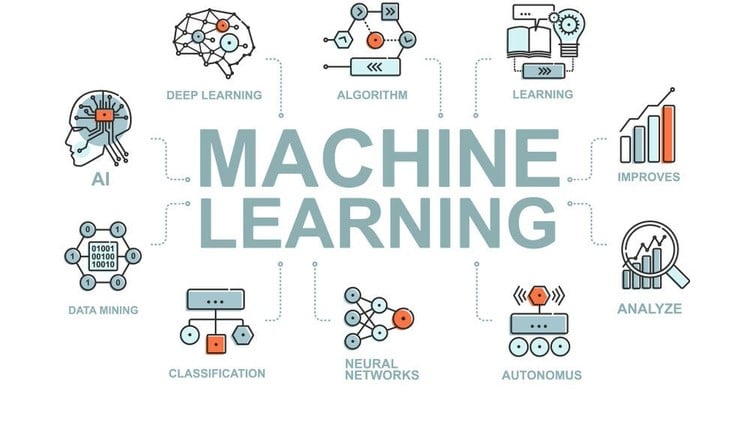
Master Supervised Machine Learning & AI: Regression, Classification, Model Evaluation, and Ensemble Methods
👥 36 students
Add-On Information:
Note➛ Make sure your 𝐔𝐝𝐞𝐦𝐲 cart has only this course you're going to enroll it now, Remove all other courses from the 𝐔𝐝𝐞𝐦𝐲 cart before Enrolling!
- Course Overview
- This ‘Certified Supervised Machine Learning’ course is meticulously designed to transform aspiring data professionals and AI enthusiasts into skilled practitioners capable of developing robust predictive models. Supervised Machine Learning stands as the bedrock of modern AI, enabling systems to learn from labeled data to make accurate predictions or classifications. This program delves deep into the theoretical underpinnings and practical applications of these essential techniques, moving beyond mere concepts to foster genuine mastery. You will explore how supervised learning algorithms power intelligent systems across various industries, from healthcare diagnostics and financial fraud detection to personalized recommendation engines and autonomous vehicle perception. The curriculum is structured to provide a comprehensive journey, starting with fundamental statistical and algorithmic principles and progressing to advanced model optimization and ensemble strategies.
- Embark on a transformative educational experience that emphasizes hands-on implementation and critical thinking. This certification signifies your proven ability to not only understand complex machine learning concepts but also to practically apply them to real-world datasets, solve challenging problems, and critically evaluate the performance of your models. The course aims to equip you with the full lifecycle management of supervised learning projects, from initial data exploration and preprocessing to model deployment and continuous improvement. By focusing on both the ‘how’ and the ‘why,’ we ensure you develop an intuitive understanding of supervised learning, preparing you for the dynamic landscape of AI and machine learning.
- Requirements / Prerequisites
- Foundational Programming Skills: Proficiency in Python is essential, including an understanding of data structures, object-oriented concepts, and basic scripting. Familiarity with numerical computing libraries such as NumPy and data manipulation with Pandas will be highly beneficial for seamless progression through practical exercises and projects. This foundational programming capability ensures you can effectively implement and customize machine learning algorithms.
- Basic Mathematics: A solid grasp of linear algebra concepts, including vectors, matrices, and their operations, along with calculus fundamentals suchates derivatives and gradients, is crucial. These mathematical underpinnings are vital for understanding the mechanics behind various machine learning algorithms, particularly in optimization and feature transformations, enabling a deeper comprehension of model behavior.
- Statistical Understanding: Familiarity with descriptive statistics (mean, median, mode, variance, standard deviation), probability distributions, hypothesis testing, and inferential statistics will provide a strong analytical framework. This statistical foundation aids significantly in comprehending data characteristics, making informed decisions about model assumptions, interpreting results effectively, and understanding evaluation metrics.
- Conceptual Aptitude: An inquisitive mind with a strong logical reasoning ability and a keen interest in problem-solving using data-driven approaches is highly recommended. While specific prior machine learning experience isn’t strictly required, a passion for technology, data analysis, and an eagerness to learn complex algorithmic concepts will significantly enhance the learning experience and overall success in the course.
- Skills Covered / Tools Used
- Data Preprocessing & Feature Engineering: Master techniques for cleaning, transforming, and preparing raw, messy data for optimal model consumption. This includes robust methods for handling missing values, effectively encoding categorical variables, scaling and normalizing numerical features, and creating new, more informative features to significantly enhance model performance and interpretability.
- Core Supervised Learning Algorithms: Gain an in-depth exploration and practical implementation expertise across a wide array of foundational and advanced algorithms. This encompasses linear models such as Linear Regression for continuous predictions and Logistic Regression for binary classification, tree-based methods like Decision Trees and powerful Random Forests, instance-based learning with K-Nearest Neighbors (KNN), and advanced approaches like Support Vector Machines (SVMs) for complex decision boundaries.
- Model Evaluation & Validation: Develop a comprehensive understanding of critical metrics and rigorous strategies to assess model performance and generalizability. Topics include key classification metrics such as accuracy, precision, recall, F1-score, ROC curves, and AUC, alongside regression metrics like Mean Squared Error (MSE), Root Mean Squared Error (RMSE), and R-squared. You will also master robust validation techniques such as k-fold cross-validation to prevent overfitting and ensure real-world applicability.
- Hyperparameter Tuning & Optimization: Learn systematic approaches for fine-tuning model parameters to achieve optimal performance and generalization. This involves practical application of methods like Grid Search and Random Search, and an introduction to more advanced optimization algorithms, ensuring your models are meticulously tailored to specific datasets and problem contexts.
- Ensemble Learning Methods: Delve into the transformative power of combining multiple individual models to improve predictive accuracy, robustness, and stability significantly. This includes mastering techniques such as Bagging (e.g., Random Forests), various forms of Boosting (e.g., AdaBoost, Gradient Boosting Machines (GBM), XGBoost, LightGBM), and an introduction to Stacking.
- Practical Tooling & Libraries: Engage in extensive hands-on application using industry-standard Python libraries. This includes comprehensive use of Scikit-learn for model building, preprocessing, and evaluation; NumPy for efficient numerical operations; Pandas for powerful data manipulation and analysis; and Matplotlib/Seaborn for creating insightful data visualizations and understanding model behavior.
- Benefits / Outcomes
- Become a Certified Supervised ML Practitioner: Earn a valuable, industry-recognized certification validating your comprehensive expertise in the core principles and advanced practical applications of supervised machine learning, significantly enhancing your professional credibility and marketability in the AI landscape.
- Develop Robust Predictive Models: Gain the practical ability to confidently design, implement, and deploy effective regression and classification models to solve complex, real-world problems across diverse industries, from finance and marketing to healthcare and manufacturing.
- Master Data-Driven Decision Making: Cultivate a strong analytical mindset, enabling you to extract actionable insights from raw data, critically evaluate model performance, understand their limitations, and make informed, data-backed decisions based on robust statistical and machine learning principles.
- Enhance Career Prospects in AI/ML: Position yourself competitively for high-demand roles such as Machine Learning Engineer, Data Scientist, AI Developer, or Predictive Modeler, equipped with a comprehensive set of practical skills and a solid theoretical foundation highly sought after in the rapidly evolving tech sector.
- Build a Strong Project Portfolio: Through numerous hands-on exercises, practical assignments, and a potential capstone project, you will construct a compelling portfolio that demonstrably showcases your practical capabilities in data preprocessing, model selection, implementation, evaluation, and optimization, proving your readiness for industry challenges.
- PROS
- Comprehensive Curriculum: The course offers an exhaustive deep dive into supervised learning, covering foundational concepts to advanced ensemble techniques, ensuring a well-rounded understanding suitable for diverse applications.
- Practical, Hands-on Approach: Emphasis on practical implementation using industry-standard tools and libraries (Scikit-learn, Pandas, NumPy) ensures that learners gain immediately applicable skills.
- Valuable Certification: Earning the ‘Certified Supervised Machine Learning’ credential significantly boosts professional credibility and opens doors to advanced career opportunities in the rapidly expanding AI/ML domain.
- Expert-Led Instruction: Learn from experienced instructors who provide real-world insights, best practices, and guidance through complex topics, fostering a deeper understanding beyond textbook knowledge.
- Strong Foundation for Advanced AI: This course provides the essential building blocks for further exploration into advanced AI topics like deep learning, reinforcement learning, and specialized machine learning applications.
- CONS
- Requires Significant Time Commitment: The depth and breadth of the course material necessitate a substantial time investment for effective learning, practice, and project completion, which might be challenging for some.
Learning Tracks: English,IT & Software,Other IT & Software