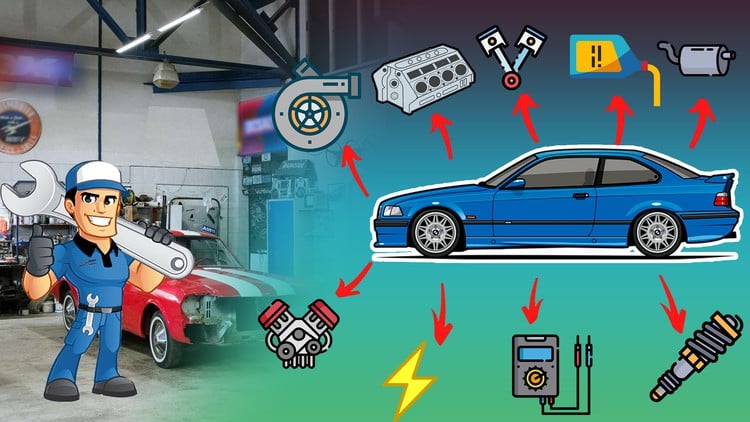
Learn the Car Repair from Beginner to Professional Level ! Car Mechanic, Car Tuning, Electrician, Automotive Engineering
⏱️ Length: 8.1 total hours
⭐ 3.83/5 rating
👥 76,618 students
🔄 May 2025 update
Add-On Information:
Note➛ Make sure your 𝐔𝐝𝐞𝐦𝐲 cart has only this course you're going to enroll it now, Remove all other courses from the 𝐔𝐝𝐞𝐦𝐲 cart before Enrolling!
- Course Overview
- The CRETC+ certification program transforms automotive enthusiasts into proficient car repair technicians and specialized electricians, covering intricate mechanical and advanced electrical systems.
- This curriculum offers a holistic understanding, integrating mechanical diagnostics with electrical troubleshooting. Learners progress from foundational concepts to complex system analyses, preparing for diverse automotive challenges.
- CRETC+ emphasizes practical application through simulated scenarios. Its ‘Certificated’ aspect signifies recognized competency, a valuable credential for employment or personal skill enhancement.
- This unique course blends traditional car repair with automotive electrical engineering, enabling mastery of complete vehicle maintenance and fault finding, including critical electronic components.
- Requirements / Prerequisites
- Basic Computer Literacy: Navigate online platforms, access digital resources, and submit assignments.
- Eagerness to Learn: Strong interest in automotive technology; no prior professional experience required.
- Stable Internet Connection: Essential for seamless access to all course materials and modules.
- Problem-Solving Aptitude: Ability to approach technical challenges logically for effective diagnostics.
- Note-Taking Capabilities: Tools for recording information will aid retention of technical content.
- Skills Covered / Tools Used
- Advanced Diagnostic Procedures: Learn to interpret OBD-II Diagnostic Trouble Codes (DTCs), analyze live data streams, and perform guided fault finding for various vehicle malfunctions.
- Automotive Electrical System Analysis: Gain proficiency in reading complex wiring diagrams, conducting circuit continuity and voltage drop tests, and identifying electrical shorts or open circuits including Body Control Modules (BCM) and Powertrain Control Modules (PCM).
- Braking System Mastery: Comprehensive knowledge of hydraulic braking systems (disc/drum), Anti-lock Braking Systems (ABS), and Electronic Stability Control (ESC); covers inspection, component replacement, and fluid bleeding procedures.
- Vehicle Fluid Systems Management: Understand types, inspection, replacement schedules, and implications of incorrect usage for engine oil, coolant, transmission fluid, brake fluid, and power steering fluid.
- HVAC System Fundamentals: Grasp the principles of automotive climate control, diagnose common Heating, Ventilation, and Air Conditioning issues, and identify key components (compressors, condensers, evaporators).
- Exhaust System Diagnostics: Identify common exhaust leaks, understand catalytic converter function and failure modes, and learn basic repair strategies for mufflers and exhaust pipes to meet emissions standards.
- Fuel System Components & Operation: Insight into fuel delivery systems including fuel pumps, injectors, fuel filters, and pressure regulators, alongside common issues like fuel delivery problems or injector clogs.
- Battery, Starting, & Charging System Troubleshooting: In-depth understanding of 12V automotive battery, alternator, and starter motor operations; diagnosing no-start conditions, parasitic drains, and charging system malfunctions.
- Safety Protocols & Workshop Best Practices: Emphasizing essential safety measures, including proper lifting techniques, Personal Protective Equipment (PPE) usage, and responsible handling of hazardous materials.
- Essential Hand Tools & Specialty Equipment: Familiarization with a wide array of tools critical for automotive repair, such as multimeters for electrical diagnostics, various wrench sets, sockets, torque wrenches, circuit testers, and an introduction to specialized diagnostic scan tools.
- Benefits / Outcomes
- Certified Competency: Earn a valuable ‘CRETC+’ certificate, significantly enhancing your resume and demonstrating recognized expertise to potential employers or clients in the automotive sector.
- Career Advancement: Open doors to roles like Automotive Technician, Car Electrician, Diagnostic Specialist, or prepare for more advanced certifications in specific vehicle systems.
- Personal Vehicle Maintenance Empowerment: Gain the confidence and practical skills to perform most routine maintenance and minor repairs on your own vehicle, saving significant costs and ensuring vehicle longevity.
- Comprehensive Skill Set: Acquire dual proficiency in both mechanical and electrical automotive systems, making you a versatile and highly sought-after professional in an industry increasingly reliant on integrated electronics.
- Enhanced Problem-Solving: Develop a systematic, efficient approach to vehicle diagnostics, enabling you to accurately identify and resolve complex automotive issues.
- Foundation for Future Learning: Establishes a strong theoretical and practical base for pursuing advanced studies in automotive engineering, specialized repair, or emerging EV/hybrid technologies.
- Industry Relevance: Stay current with modern automotive technologies and repair methodologies, ensuring your skills remain applicable and valuable in today’s evolving vehicle landscape.
- PROS
- Dual Specialization Advantage: Uniquely combines critical mechanical repair skills with essential automotive electrical expertise, offering a comprehensive and highly relevant professional profile.
- Accessible & In-Depth: Designed to guide learners from fundamental concepts to advanced professional techniques, making it suitable for a wide range of skill levels, from beginner to aspiring professional.
- Industry-Recognized Certification: Provides a formal ‘CRETC+’ certificate, validating learned skills and significantly boosting career prospects or personal credibility.
- Flexible Online Learning: Offers the convenience and flexibility to learn at your own pace and location, fitting around existing commitments and potentially saving on traditional schooling costs.
- Proven Engagement & Content: With over 76,000 students and regular updates, the course demonstrates its effectiveness, relevance, and broad appeal within the automotive learning community.
- Strong Practical Focus: Emphasizes understanding not just ‘how’ but ‘why’ automotive systems operate, fostering true diagnostic capability and critical thinking.
- CONS
- Limited Direct Hands-On Experience: As an online course, it inherently cannot provide direct physical practice with tools or vehicles, which is crucial for mastering certain fine motor skills and tactile diagnostic techniques. Practical application in a real workshop environment will still be necessary to fully consolidate learning.
Learning Tracks: English,Personal Development,Career Development