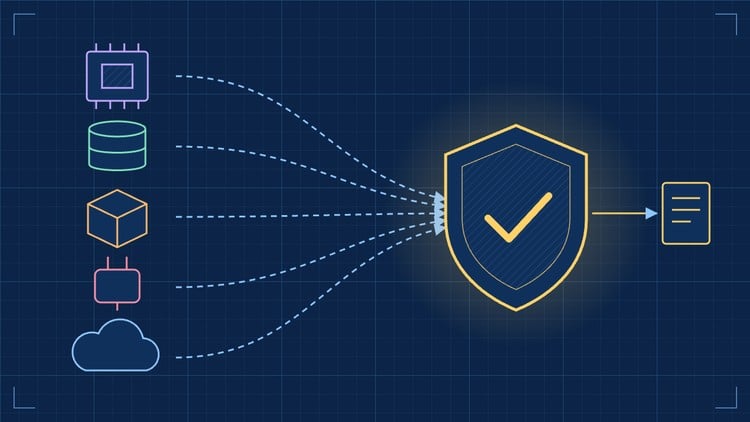
Secure third-party models, datasets, MCP servers and AI vendors, with hands-on labs on free tools you can run locally
What You Will Learn:
- Explain why model files can run code when they load, and choose safer formats and loaders
- Scan, pin, sign and verify models, and explain what a signature does not prove
- Protect training data with quarantine, hashes and provenance records
- Harden AI libraries and pipelines after real compromises such as LiteLLM and PyTorch nightly
- Vet MCP servers, skills and plugins, and detect a tool that changes after approval
- Build and validate an AI bill of materials in CycloneDX
- Assess AI vendors and check model licences
- Run one intake gate that combines all of it
Overview: Beyond the Prompt Injection Hype
If you have been following the AI hype cycle, you have likely been bombarded with tutorials on prompt injection. While interesting, that is just the tip of the iceberg. I recently sat through the AI Supply Chain Security: Models, Data, Tools and Vendors course, and it was a reality check. Most security professionals are treating AI models like static data files, but this course hammers home a terrifying truth: a model file is often just a serialized piece of code waiting to execute with the permissions of your service account.
What I appreciated most about this curriculum was its refusal to get bogged down in the “theoretical ethics” of AI. Instead, it dives straight into the plumbing. We are talking about the “black box” problem from a DevSecOps perspective. The course moves fast from the “why” to the “how,” specifically focusing on the Model as Code paradigm. We’ve spent the last decade securing NPM and PyPI packages, but the AI supply chain is currently a Wild West where people are downloading multi-gigabyte “pickle” files from Hugging Face without a second thought. This course provides a blueprint for building a “trust but verify” gate for every model, dataset, and tool that enters your environment.
Prerequisites
This isn’t a course for someone who has never touched a terminal. To get the most out of these real-world projects, you should have:
- A baseline understanding of Linux command-line basics (you’ll be running scanners and local tools).
- A working knowledge of Python (specifically how libraries are imported and how virtual environments work).
- Familiarity with JSON and YAML, as you will be digging into AI Bill of Materials (AI BOM) structures.
- A basic grasp of the software development lifecycle (SDLC) is helpful, though the course does a great job of scaling from beginner to advanced security concepts.
Skills & Tools
The curriculum is packed with industry-standard tools that you can actually use in a production environment without a massive enterprise budget. You’ll spend a lot of time in hands-on labs working with:
- Safetensors: Learning how to migrate away from insecure formats like Pickle.
- CycloneDX: Building and validating a machine-readable AI Bill of Materials (AI BOM).
- Model Signing & Verification: Using cryptographic signatures to ensure the model you downloaded hasn’t been tampered with.
- MCP (Model Context Protocol) Servers: Testing and vetting the security of tools that allow LLMs to interact with your local data.
- Hugging Face Hub Security: Using scanners to detect malicious payloads in weights.
- Provenance Tracking: Implementing hashes to ensure training data integrity.
Career Benefits & Job Roles
We are currently seeing a massive shift in the job market. Companies are no longer just hiring “AI Researchers”; they are desperate for AI Security Engineers and Security Architects who understand how to harden these pipelines. Completing this course is excellent certification prep for those looking to pivot into specialized security roles.
The job-ready skills you gain here—like building an intake gate for AI vendors—are exactly what CISOs are looking for right now to mitigate third-party risk. This is career growth fuel for anyone in AppSec, DevSecOps, or Compliance. Being the person in the room who can explain why a model’s license might accidentally open the company up to legal risk, while simultaneously explaining the technical risk of a PyTorch nightly compromise, makes you an invaluable asset.
Pros
- Local-First Learning: All the hands-on labs use free tools you can run locally. You don’t need a $10,000 GPU or a massive AWS bill to learn how to scan and verify models.
- Real-World Breach Analysis: The course uses recent, high-profile compromises (like the PyTorch nightly and LiteLLM incidents) as case studies. This keeps the content grounded in reality rather than hypotheticals.
- The “Intake Gate” Project: The final section, where you combine all the skills to build a unified intake gate, is a brilliant piece of hands-on labs design. It gives you a tangible artifact you can discuss in job interviews.
- MCP Focus: Staying ahead of the curve, the inclusion of Model Context Protocol (MCP) security is huge. It’s a very new area that most other courses are completely ignoring.
Cons
- High Density: I’ll be honest—the section on CycloneDX and building AI Bill of Materials can feel a bit dry and technical. It’s a lot of schema-heavy work that might feel tedious if you aren’t already passionate about supply chain compliance. It’s a “eat your vegetables” kind of module—essential for your career growth, but definitely not the most exciting part of the course.