Unlocking the Science of Separation
What you will learn
Note➛ Make sure your 𝐔𝐝𝐞𝐦𝐲 cart has only this course you're going to enroll it now, Remove all other courses from the 𝐔𝐝𝐞𝐦𝐲 cart before Enrolling!
Chromatography is an essential technique for separating, identifying and analyzing the components of complex mixtures in a range of fields.
Chromatography is a critical tool for researchers and scientists in various fields such as pharmaceuticals, environmental science, forensic science, and More.
It can open up job opportunities in a range of fields, including analytical chemistry, quality control, pharmaceuticals, biotechnology, and food science.
By learning chromatography, you can develop practical skills that can be applied in laboratory settings, improving your laboratory competence.
Add-On Information:
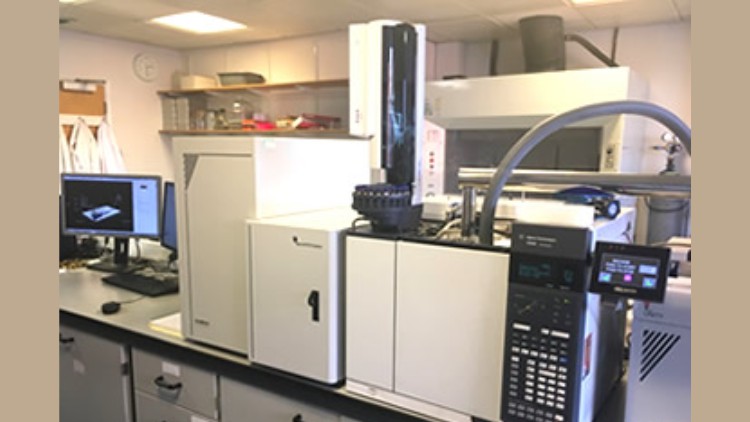
- Master the foundational principles of gas chromatography (GC), the cornerstone of volatile and semi-volatile compound analysis.
- Gain hands-on proficiency in operating and troubleshooting modern GC systems, from injector types to detector configurations.
- Understand the critical role of the stationary phase and mobile phase in achieving effective chromatographic separation and achieving the desired resolution.
- Develop expertise in selecting appropriate GC columns and optimizing operating parameters like temperature programming and carrier gas flow rates for specific analytes.
- Explore the diverse range of GC detectors, including FID, TCD, ECD, and MS, and learn how to choose the most suitable detector for sensitivity and selectivity.
- Acquire the skills to interpret complex GC chromatograms, identify peaks, and quantify analytes with accuracy and precision.
- Learn the intricacies of sample preparation techniques tailored for GC analysis, ensuring optimal introduction and minimal interference.
- Delve into the theory behind peak shape and band broadening, understanding how factors like column efficiency and system dead volume impact analytical results.
- Investigate the application of GC in identifying unknown compounds through spectral matching and retention time analysis.
- Explore advanced GC techniques such as headspace GC, solid-phase microextraction (SPME), and derivatization for enhanced sample analysis.
- Understand the principles of method validation for GC, ensuring reliability and reproducibility in quantitative analyses.
- Discover how GC contributes to essential quality control processes, safeguarding product integrity and compliance.
- Explore the synergy between GC and mass spectrometry (GC-MS) for definitive compound identification and structural elucidation.
- Gain insights into the calibration strategies and quantitative analysis methods employed in GC for accurate measurement.
- PROS:
- Provides highly sought-after practical laboratory skills.
- Opens doors to diverse career paths in analytical science.
- Enhances problem-solving abilities in complex analytical challenges.
- CONS:
- Requires significant hands-on practice to achieve true mastery.
English
language