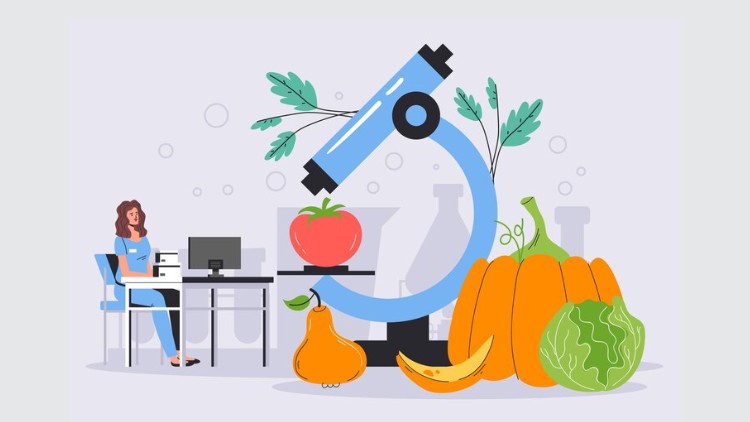
A Multidisciplinary Approach to Food Science
What you will learn
Note➛ Make sure your 𝐔𝐝𝐞𝐦𝐲 cart has only this course you're going to enroll it now, Remove all other courses from the 𝐔𝐝𝐞𝐦𝐲 cart before Enrolling!
Comprehensive understanding of the chemical processes and reactions in food.
Exploration of food components and their transformations during processing and digestion.
Analysis of the impact of food biochemistry on nutritional value and sensory qualities.
Application of food biochemistry principles to product development and quality control.
Integration of scientific knowledge with practical skills relevant to the food industry.
Add-On Information:
-
- Course Title: Food Biochemistry
- Course Caption: A Multidisciplinary Approach to Food Science
-
- Unraveling Macromolecular Dynamics: Explore the intricate interplay of proteins, carbohydrates, lipids, and water at a molecular level, understanding their impact on food texture, stability, and sensory attributes.
- Flavor Genesis: Investigate enzymatic and non-enzymatic pathways (e.g., Maillard reaction) that generate diverse volatile compounds responsible for desirable flavors, aromas, and off-notes.
- Enzyme Functionality: Analyze the dual role of enzymes in food, differentiating how they drive beneficial processes (fermentation) or contribute to undesirable changes (spoilage, browning).
- Molecular Preservation: Explore the biochemical basis of food deterioration (lipid oxidation, microbial spoilage) and how preservation technologies chemically extend shelf life and maintain quality.
- Bioavailability & Health: Understand the bioavailability, bioactivity, and metabolic fate of specific food components (antioxidants, phytochemicals) and their profound impact on human health outcomes.
- Additives & Safety: Decipher the biochemical roles of food additives and critically examine the formation and mitigation of natural toxins, allergens, and processing-induced contaminants.
- Sustainable Innovation: Evaluate the biochemical implications of novel food production, from alternative proteins and cellular agriculture to waste valorization and circular economy principles.
- Analytical Techniques: Gain exposure to modern biochemical methodologies and instrumentation for qualitative and quantitative analysis of food components, vital for research and industrial innovation.
- PROS:
- Versatile Career Paths: Opens doors to diverse roles in R&D, quality assurance, food safety, and nutrition science across various sectors of the food industry.
- Enhanced Problem-Solving: Develops a strong analytical mindset to address complex challenges related to food quality, safety, and novel product development.
- Interdisciplinary Expertise: Integrates knowledge from chemistry, biology, and engineering, providing a holistic understanding crucial for modern food science.
- Impact on Global Health: Equips you with the scientific foundation to contribute to improving food security, nutritional quality, and public health worldwide.
- CONS:
- Requires Strong Foundation: Demands a solid background in organic chemistry, general biology, and biochemistry, which can be challenging for some students.
English
language