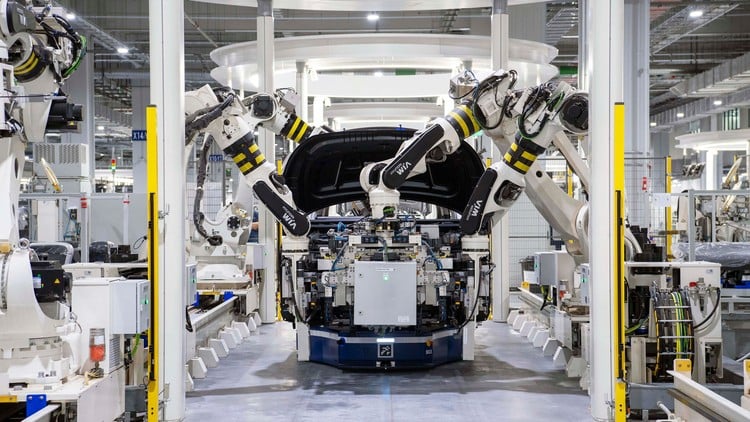
A short course on how to future-proof your career
What You Will Learn:
- What are the job market trends?
- How is technology impacting the job market?
- What skills should employees learn to adapt to market evolution?
- How are businesses adapting to world transformation?
Overview
I’ve been in the tech game for over a decade, and if there’s one thing that keeps me up at night, it’s the sheer velocity of change. We aren’t just looking at incremental updates anymore; we’re looking at a total structural overhaul of how “work” functions. I recently sat through The Future of Work: Job Trends Toward 2030, and honestly, it’s the wake-up call most people don’t know they need. While many courses focus on the “what” of technology, this one tackles the “how”—specifically, how we survive the collision of AI, automation, and a shrinking skills half-life.
The core insight I walked away with isn’t that robots are taking our jobs (a tired trope), but that the career growth trajectory has shifted from a ladder to a lattice. The course argues that by 2030, the most valuable currency won’t be your static degree, but your job-ready skills and your ability to unlearn outdated workflows. It moves past the buzzwords and looks at the “Human-Machine Collaboration” model. It’s about future-proofing by becoming the person who manages the algorithm, rather than the person replaced by it. It’s a cynical but necessary look at the reality that “business as usual” died around 2020, and we’re just now seeing the smoke clear.
Prerequisites
One of the best things about this curriculum is that it’s designed for everyone from beginner to advanced professionals. You don’t need to be a Python wizard or a data scientist to get value here. However, you do need a baseline level of digital literacy and an open mind. If you’re emotionally attached to the 9-to-5 cubicle model, this course will be uncomfortable. It’s less about technical debt and more about “mental debt”—purging the idea that your current role will look the same in five years. No specific software licenses are required, but a LinkedIn profile and a curiosity about industry-standard tools are highly recommended.
Skills & Tools
The syllabus is surprisingly dense for a short course. It moves beyond theory and pushes you toward hands-on labs that simulate 2030 workplace scenarios. Here’s the toolkit you’ll start building:
- Strategic AI Integration: Learning how to use generative tools not just for emails, but for real-world projects and complex problem-solving.
- Data Literacy & Interpretation: You don’t need to be a coder, but you must understand what the data is telling you. This is a non-negotiable job-ready skill.
- Adaptive Leadership: How to manage distributed, asynchronous teams—a massive trend for the 2030 horizon.
- Personal Branding & Digital Presence: Using industry-standard tools like Notion, Slack, and AI-driven CRM platforms to stay visible in a remote world.
- Soft Skill Arbitrage: Doubling down on empathy, negotiation, and complex ethics—things AI still struggles to replicate.
Career Benefits & Job Roles
If you’re looking for certification prep that actually carries weight in an interview, this provides a solid foundation. Employers are currently desperate for “Change Agents”—people who can bridge the gap between old-school operations and new-tech efficiency. Completing this course positions you for several emerging job roles that didn’t exist five years ago:
- Workflow Automation Specialist: Streamlining business processes using low-code/no-code tools.
- AI Prompt Engineer / Operations Manager: Overseeing the output of automated systems to ensure quality and brand alignment.
- Remote Work Consultant: Helping businesses adapting to the hybrid transformation optimize their culture and tech stack.
- Lifelong Learning Coordinator: A new HR-adjacent role focused on internal upskilling and career growth.
Pros
- High-Level Relevance: It bypasses the fluff and focuses on job-ready skills that are applicable the Monday morning after you finish the course.
- Expert Insights: The instructors aren’t just academics; they are industry veterans who have seen how world transformation actually hits the bottom line.
- Real-World Projects: The inclusion of hands-on labs ensures you aren’t just watching videos—you’re building a portfolio of future-proof strategies.
Cons
If I’m being 100% honest, the pace can feel a bit relentless. For a “short course,” it tries to cover a massive amount of ground, which means some of the deeper technical dives into industry-standard tools feel a bit rushed. You’ll get the “what” and the “why,” but for the “how-to” on specific software, you might find yourself needing a secondary deep-dive or a specialized certification prep course later on. It’s a map, not a step-by-step GPS for every single niche.