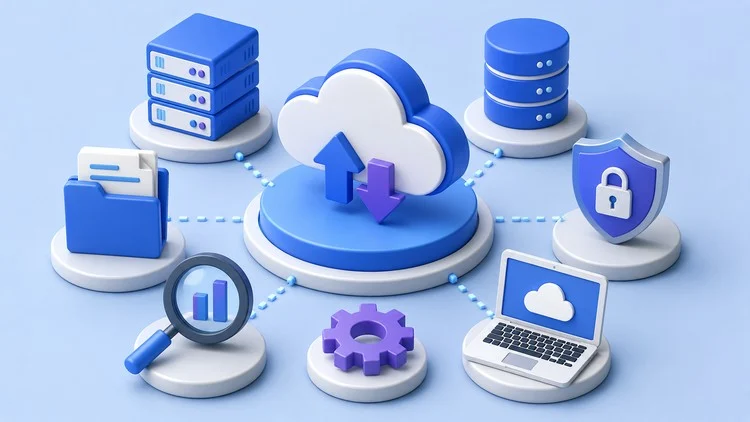
Master fundamental cloud concepts, IaaS, Serverless, Security, and DevOps for AWS, Azure, and GCP foundational exams.
👥 61 students
Overview: Beyond the Marketing Hype
Let’s be honest for a second: the cloud computing landscape is a chaotic mess of acronyms and vendor-specific jargon. If you are trying to break into the industry, it is easy to get caught in the “AWS vs. Azure” crossfire and lose sight of the underlying architecture that actually matters. That is why I took a deep dive into the Cloud Computing Foundations: General Practice Tests. Unlike those surface-level quizzes you find on random forums, this course acts as a high-pressure stress test for your mental framework of the cloud.
The real value here isn’t just in memorizing which button to click in a specific console; it is about developing a vendor-neutral mindset. Whether you are prepping for the AWS Certified Cloud Practitioner, Microsoft Azure Fundamentals (AZ-900), or the Google Cloud Digital Leader exam, these tests force you to reconcile the differences between IaaS, PaaS, and SaaS in a way that translates to actual real-world projects. I’ve seen too many candidates pass a certification but crumble when asked how a NoSQL database actually scales differently than a relational one. This course targets those specific knowledge gaps.
The difficulty curve is well-calibrated. It starts by grounding you in the Shared Responsibility Model—a concept that many beginners gloss over until they accidentally leak an S3 bucket—and scales up into complex DevOps practices and serverless computing logic. It’s an aggressive reality check for anyone who thinks they’ve mastered the basics just by reading a whitepaper.
Prerequisites: What You Actually Need
While this is billed as a “Foundations” course, I wouldn’t recommend jumping in completely cold. To get the most out of these certification prep materials, you should have:
- A basic understanding of networking (IP addresses, subnets, and DNS).
- A general awareness of what a server is and why businesses are moving away from on-premises hardware.
- Ideally, about 5-10 hours of introductory reading or video content on any major cloud provider.
- The patience to read the “Explanations” section after every wrong answer—that is where the real learning happens.
Skills & Tools: Building Your Technical Stack
This isn’t just a list of questions; it’s a roadmap for mastering industry-standard tools and methodologies. By the time you finish the final test, you will have sharpened your proficiency in:
- Cloud Infrastructure: Distinguishing between Compute, Storage, and Networking across AWS, Azure, and GCP.
- Containerization: Understanding Docker and the orchestration logic required for modern microservices.
- Security & Governance: Mastering IAM (Identity and Access Management), resource tagging for cost optimization, and encryption at rest vs. in transit.
- Modern DevOps: Developing an intuition for CI/CD pipelines and how Infrastructure as Code (IaC) changes the deployment game.
- Data Management: Choosing between Object, Block, and File storage based on specific use cases.
Career Benefits & Job Roles
In today’s market, having job-ready skills means being adaptable. Companies are increasingly moving toward Hybrid Cloud and multi-cloud strategies to avoid vendor lock-in. Completing these tests signals to employers that you aren’t just a “one-cloud pony.”
This course is a direct catalyst for career growth in roles such as:
- Junior Cloud Architect: Helping design scalable, resilient systems.
- Cloud Support Engineer: Troubleshooting complex infrastructure issues across various platforms.
- DevOps Associate: Bridging the gap between development and operations with Serverless and Containerization knowledge.
- IT Project Manager: Gaining the technical vocabulary to lead engineering teams effectively.
Pros: Why This Course Stands Out
- High-Quality Explanations: The “Why” is more important than the “What.” Each answer provides a detailed breakdown of why the correct choice is right and, more importantly, why the distractors are wrong. This is crucial for deep conceptual retention.
- Vendor-Agnostic Context: By testing you on the principles that govern all major providers, it prevents you from becoming overly dependent on a single ecosystem’s terminology.
- Realistic Exam Simulation: The phrasing of the questions mimics the tricky, scenario-based format found in official industry-standard exams. It builds the “exam stamina” you need for the real deal.
- Focus on Security: Most foundation courses treat security as an afterthought. These tests hammer home Cloud Security and governance, which is the #1 priority for enterprise employers right now.
Cons: The Honest Truth
If there is one drawback, it is that these are strictly practice tests. If you are the type of learner who needs hands-on labs to understand a concept, you will need to supplement this course with a sandbox environment. It tests your knowledge of how to build, but it doesn’t give you the virtual tools to actually build it. You’ll need to open an AWS or Azure free-tier account on your own to verify the logic you learn here.
Final Verdict: If you are serious about a career in the cloud, stop guessing and start measuring. This course is an essential checkpoint for anyone moving from beginner to advanced levels of cloud fluency.