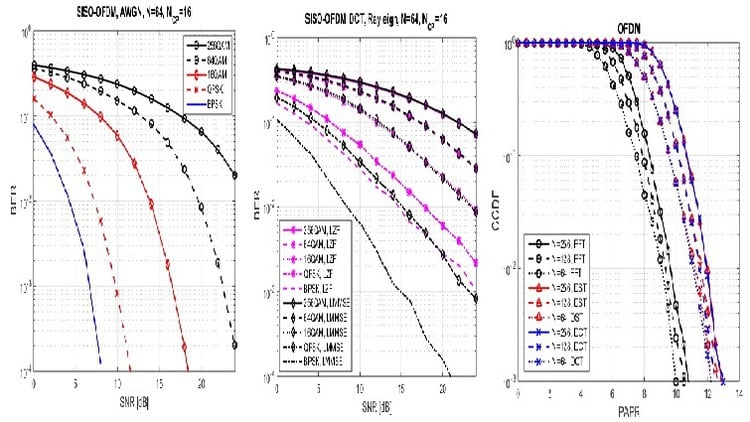
A step by step the Matlab codes for BER/CFO/PAPR estimations of different Comm. systems like OFDM and NOMA Comm. systems
⏱️ Length: 5.0 total hours
⭐ 4.36/5 rating
👥 14,971 students
🔄 June 2021 update
Add-On Information:
Note➛ Make sure your 𝐔𝐝𝐞𝐦𝐲 cart has only this course you're going to enroll it now, Remove all other courses from the 𝐔𝐝𝐞𝐦𝐲 cart before Enrolling!
-
Course Overview
- This comprehensive course dives deep into the practical application of MATLAB for simulating and analyzing critical aspects of modern wireless communication systems.
- Meticulously designed, it bridges the gap between theoretical concepts and real-world implementation through powerful simulation tools.
- You’ll explore foundational digital communication principles, translating complex mathematical models into actionable MATLAB code.
- The curriculum emphasizes hands-on coding, guiding you through systematic development of simulation environments to assess system performance.
- Gain a robust understanding of how to characterize and optimize various communication system parameters for efficiency, reliability, and robustness.
- Provides a clear pathway from basic system setup to advanced performance evaluation, covering crucial metrics and their computational estimation.
- An essential resource for building a strong practical foundation in wireless communication system design and analysis using industry-standard software.
- Unravel the intricacies of different multiple access techniques and their practical implementation challenges in a simulated environment.
- Cultivate an analytical mindset to interpret simulation results and draw meaningful conclusions about system behavior.
- Perfect for enhancing skillset for R&D roles, academic pursuits, or advanced project development in wireless technology.
-
Requirements / Prerequisites
- A foundational understanding of digital communication systems, including modulation, demodulation, and basic signal processing.
- Familiarity with MATLAB programming fundamentals: syntax, variable manipulation, loop structures, and function creation.
- Prior exposure to linear algebra concepts, particularly matrix operations.
- Basic knowledge of probability and random processes for channel modeling and error rate calculations.
- Access to a working installation of MATLAB software (R2018a or newer recommended).
- A keen interest in wireless communication engineering and practical implementation.
- No advanced mathematical background beyond university-level engineering mathematics is strictly required.
-
Skills Covered / Tools Used
- MATLAB Programming Mastery: Develop advanced coding proficiency tailored for communication system simulations, including efficient array manipulation.
- Systematic Simulation Design: Learn to structure complex simulation environments for various wireless communication scenarios, ensuring reproducibility.
- Channel Modeling Techniques: Gain expertise in accurately modeling diverse wireless channels, including noise-limited and multi-path fading environments.
- Performance Metric Evaluation: Master calculation and interpretation of key performance indicators like error rates and spectral efficiency in simulated systems.
- Interference Mitigation Strategies: Understand and implement techniques to counter common impairments such as frequency offsets and noise.
- Advanced Multiple Access Simulation: Develop ability to simulate and analyze performance of sophisticated multiple access schemes.
- Data Visualization and Analysis: Utilize MATLAB’s powerful plotting tools to effectively present simulation results and derive insights.
- Debugging and Optimization: Acquire practical skills in identifying and resolving issues within simulation code.
- Wireless System Design Principles: Apply theoretical knowledge to practical design choices, such as selecting appropriate modulation schemes.
- Tools: Primarily MATLAB and its built-in toolboxes relevant to communication systems and signal processing.
-
Benefits / Outcomes
- Practical Implementation Expertise: Confidently translate theoretical wireless communication concepts into working MATLAB code, a highly sought-after industry skill.
- Enhanced Problem-Solving Abilities: Develop a systematic approach to analyze, simulate, and solve complex problems in wireless system design.
- Strong Portfolio Development: Build a collection of functional MATLAB scripts and simulation projects for showcasing to employers or for academic research.
- Career Advancement Opportunities: Position yourself for roles in wireless R&D, telecommunications, signal processing, and academic research.
- Deepened Theoretical Understanding: Reinforce your understanding of underlying communication theory by actively implementing and observing its effects.
- Confidence in System Analysis: Gain ability to independently evaluate and optimize various wireless communication systems under different channel conditions.
- Foundation for Advanced Research: Prepare for advanced studies by mastering tools and techniques for system prototyping and analysis.
- Proficiency in Industry-Relevant Software: Become highly proficient in MATLAB for simulation and data analysis in engineering.
-
PROS
- Hands-on Coding Focus: Emphasizes practical MATLAB implementation over abstract theory, making learning highly applicable.
- Modern System Coverage: Includes contemporary communication systems like NOMA, relevant to current industry trends and research.
- Step-by-Step Guidance: Structured approach ensures learners can build complex simulations from the ground up.
- Real-world Relevance: Focuses on critical performance metrics (BER, CFO, PAPR) directly applicable to robust wireless system design.
- Strong Practical Foundation: Provides essential skills for simulating various channel impairments and mitigation techniques.
-
CONS
- Introductory Depth: As a 5-hour course, mastery of all advanced topics will require significant additional self-study and practice beyond the course material.
Learning Tracks: English,Teaching & Academics,Engineering