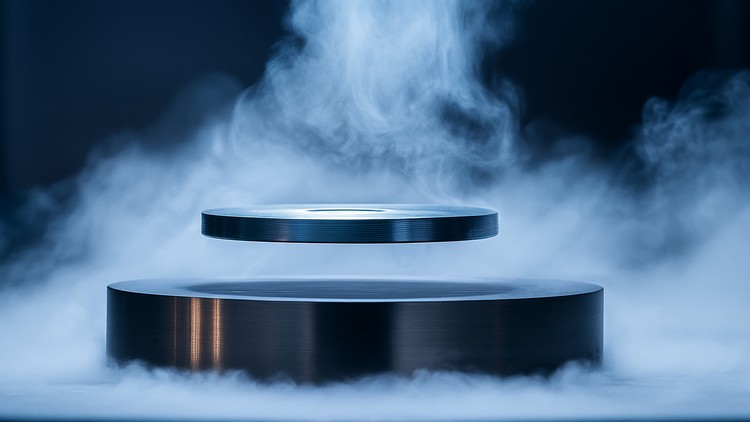
“Explore the Quantum Physics Behind Zero Resistance and Next-Gen Technologies”
What you will learn
Understand the Core Concepts of Superconductivity
Explore the Quantum Mechanics Behind Superconductors
Analyze the Electrical, Thermal, and Magnetic Properties of Superconductors
Identify and Evaluate Real-World Applications of Superconductivity
Alright, folks, if you’re like me, constantly scanning the horizon for the next big thing in materials science and engineering, then ‘Superconductivity: The Quantum Revolution in Materials’ needs to be on your radar. This isn’t just another theoretical deep dive; it’s a genuine exploration into one of the most transformative phenomena in modern physics, offering a practical lens on future technologies. I’ve seen my share of courses promising the moon, but this one actually delivers on its promise to demystify zero resistance and its implications for everything from energy grids to quantum computing.
Overview
This course goes beyond merely defining superconductivity; it meticulously unpacks the underlying quantum mechanics that govern it. What truly sets it apart is its ability to bridge the gap between abstract physics and tangible engineering challenges. You’re not just memorizing equations; you’re understanding *why* certain materials behave as they do at critical temperatures and magnetic fields. The instructors do an excellent job of illustrating complex concepts with clear analogies and compelling visualizations, making the intricate world of Cooper pairs and Meissner effects surprisingly accessible. It’s a comprehensive journey from the foundational theories of BCS to the cutting edge of high-temperature superconductors, exploring both the triumphs and the persistent mysteries in the field. This perspective is invaluable for anyone aiming for genuine
Prerequisites
Let’s be real: this isn’t a walk in the park for the academically faint-hearted. While the course structure supports learning from a
Skills & Tools
Upon completion, you’ll walk away with a robust analytical toolkit. You’ll develop a keen understanding of material properties at extreme conditions, crucial for roles in
Career Benefits & Job Roles
- This course offers significant
career growth potential, equipping you withjob-ready skills highly sought after in emerging sectors. - It’s particularly beneficial for those eyeing roles as a
Materials Scientist ,Research Engineer , orQuantum Engineer in industries like renewable energy, medical imaging (MRI), high-speed rail (maglev), and advanced electronics. - Understanding superconductivity is becoming increasingly vital for anyone working in
quantum computing hardware development, where exotic materials are key to qubit stability. - For those in
semiconductor or power transmission, the insights into energy efficiency and loss reduction are directly applicable to improving existing infrastructure and designing next-generation systems.
Pros
- Exceptional Clarity on Complex Topics: The instructors excel at breaking down notoriously difficult concepts like quantum tunneling and phase transitions into digestible, logically flowing segments. This is key for truly understanding the “quantum revolution” aspect.
- Strong Emphasis on Real-World Applications: Unlike many theoretical courses, ‘Superconductivity’ consistently links theory to
real-world projects and existing technologies. This practical relevance makes the learning highly engaging and immediately applicable, showing you *where* superconductivity is making an impact, from fusion reactors to fault current limiters. - Thorough Coverage from Basics to Advanced Research: The course progression is thoughtfully designed, taking you from the fundamental principles to the frontiers of current research in high-temperature superconductivity and topological superconductors. It provides a holistic view, valuable for both foundational understanding and future specialization.
- Fosters Critical Thinking for Future Innovation: Beyond specific facts, the course encourages a deep, analytical mindset. It challenges you to think about the limitations and potential breakthroughs, preparing you not just to understand existing tech but to contribute to the innovation cycle in
advanced materials andenergy efficiency .
Cons
- My only honest gripe is that while the course includes thought-provoking problem sets and theoretical exercises, I felt it could benefit from more direct exposure to simulated
hands-on labs or virtual experiments that allow users to manipulate parameters and observe outcomes in a controlled environment. Given the high cost and complexity of real-world cryogenic setups, robust simulations would bridge the gap between theory and practical experimental design even further, making it feel more like usingindustry-standard tools rather than just understanding their output.