Master Statistical Inference & Hypothesis Testing for Data Science: P-values, Confidence Intervals, A/B Testing Sampling
⭐ 1.00/5 rating
👥 1,132 students
🔄 October 2025 update
Add-On Information:
Note➛ Make sure your 𝐔𝐝𝐞𝐦𝐲 cart has only this course you're going to enroll it now, Remove all other courses from the 𝐔𝐝𝐞𝐦𝐲 cart before Enrolling!
- Course Overview
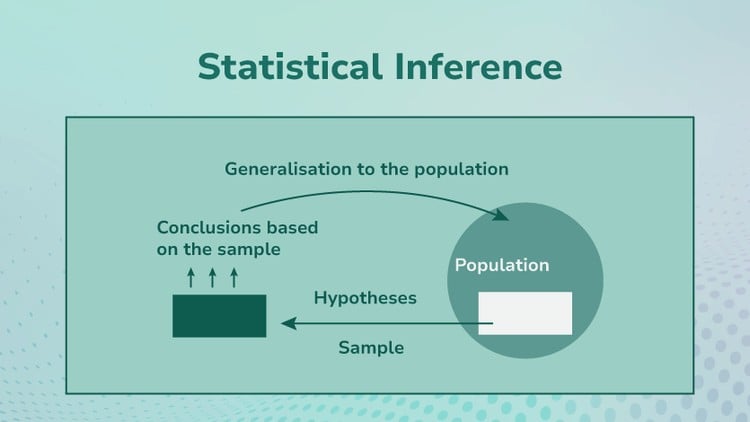
- This course offers a rigorous yet practical exploration of Statistical Inference and Hypothesis Testing, specifically engineered for data science applications. It equips you to transform raw data into confident, data-driven decisions, extending beyond mere descriptive analysis.
- Master the essential principles for drawing valid conclusions about populations from sample data, understanding both the ‘how’ and ‘why’ behind critical statistical methods. This curriculum demystifies complex concepts, making them directly actionable in real-world data science scenarios.
- Learn to expertly formulate hypotheses, select the most appropriate statistical tests, and meticulously interpret results, ensuring your analytical conclusions are statistically sound and hold practical significance. We emphasize the assumptions and limitations inherent in various inferential techniques.
- From foundational sampling distributions to advanced A/B testing methodologies, this course cultivates an analytical mindset crucial for any data scientist aspiring to deliver impactful, defensible insights.
- Requirements / Prerequisites
- Basic Statistical Literacy: Familiarity with descriptive statistics (mean, median, standard deviation) and fundamental probability concepts (e.g., normal distribution).
- Programming Fundamentals: Elementary proficiency in Python (NumPy, Pandas) or R for data manipulation is beneficial, as practical exercises are code-based.
- Analytical Curiosity: A keen interest in data-driven problem-solving and a willingness to apply statistical reasoning.
- Standard Computing Environment: Access to a computer with internet, and Python (e.g., Anaconda/Jupyter) or R (RStudio) installed.
- Skills Covered / Tools Used
- Core Inferential Concepts:
- Construct and interpret Confidence Intervals for diverse parameters (means, proportions).
- Grasp the Central Limit Theorem (CLT) and its practical implications for sampling distributions.
- Formulate precise null and alternative hypotheses, understand P-values, and set significance levels.
- Analyze Type I and Type II errors, evaluate statistical power, and differentiate between statistical and practical significance.
- Distinguish between and apply parametric and non-parametric tests based on data characteristics.
- Utilize Resampling Methods (Bootstrapping) for robust parameter estimation and confidence interval construction.
- Key Hypothesis Testing Techniques:
- Implement and interpret Z-tests for means and proportions.
- Perform various T-tests: one-sample, independent two-sample, and paired-sample.
- Conduct ANOVA (Analysis of Variance) to compare means across multiple groups, including post-hoc analysis.
- Apply Chi-Squared tests for categorical data (goodness-of-fit and independence).
- Use F-tests for comparing population variances.
- A/B Testing & Experimentation Mastery:
- Design and execute rigorous A/B tests, considering randomization and control groups.
- Determine optimal sample sizes for A/B tests to achieve sufficient statistical power.
- Interpret A/B test results using P-values and Confidence Intervals to make sound decisions.
- Identify and avoid common pitfalls in experimental design, ensuring valid test outcomes.
- Primary Tools:
- Python: `SciPy.stats`, `Statsmodels`, `NumPy`, `Pandas`, `Matplotlib`, `Seaborn` for all statistical analysis and visualization.
- Jupyter Notebooks: For interactive coding and project implementation.
- Core Inferential Concepts:
- Benefits / Outcomes
- Confident Decision-Making: Confidently design and execute statistical tests to derive reliable, actionable insights for strategic decision-making.
- A/B Testing Expertise: Master the complete A/B testing lifecycle, driving product and marketing optimization through validated conclusions.
- Critical Analytical Skills: Develop the ability to critically evaluate research and analyses for statistical rigor and validity.
- Effective Communication: Clearly articulate complex statistical findings to both technical and non-technical stakeholders.
- Stronger DS Foundation: Build an essential statistical base for advanced data science topics like machine learning validation and causal inference.
- Career Advancement: Enhance your profile with highly sought-after statistical inference and experimentation skills in the data science job market.
- PROS
- Real-World Relevance: Focuses on practical data science challenges, ensuring immediate applicability of learned concepts.
- Hands-On Python Practice: Extensive coding exercises using industry-standard Python libraries reinforce theoretical understanding.
- Comprehensive & Clear: Covers essential inferential techniques in an accessible manner, suitable for data professionals.
- Direct A/B Testing Skillset: Provides crucial expertise in designing and interpreting A/B tests, a vital skill for product and growth roles.
- Empowers Critical Thinking: Encourages deep understanding to avoid common statistical misinterpretations and biases.
- CONS
- Requires Dedicated Practice: Mastery necessitates consistent effort in applying concepts to diverse datasets beyond course materials.
Learning Tracks: English,IT & Software,Other IT & Software