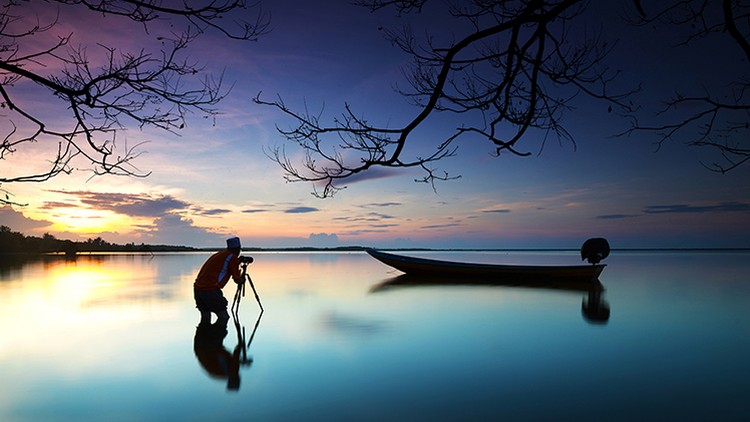
Become pro photographer – Understand camera gear, lighting + composition, portrait, stock photography sell photo online
What you will learn
You will know how to shoot amazing photos and will make your friends and family wow!
You will know how to earn money through photography
You will know when to shoot photos in natural lighting, how to utilize at best
You will know how to compose better photo shots
You will know how every things works inside DSLR with learn by example approach
You will learn how to take portratit shots, landscape shots, black and white photo shots, macro shots
Description
=== Students reviews on this course ===
“I had a great love for this course. Through this photography course, I learned so many new things that I never heard of. The teaching method is very simple and beautiful which can be learned easily by anyone.” — Naveen Yes
“Awesome all are understanding and point to point” — Naman Verma
“It was great course. I now have a better understanding as to which camera to purchase.” — Norman Joseph Edwards
“It’s a very nice course for the new ones who want to learn about photography , each and every thing are explained. You must take this course.” — Ananya Jain
This online photography course will help you to learn how to shoot amazing and wow images, those will make you far different from average photographer and you will know how to make money through photography.
1. This course explains and helps to learn tricky and hard DSLR concepts pretty easy way. For example,
- How DSLR image taking process works, through easy animation
- How view finder works, through easy animation
- Why you should shoot in RAW Format ??
- What is ISO?
- What is Aperture?
- Understanding Shutter Speed with Cool Explanation.
- Cheat Sheet # Shutter speed and it’s use cases.
- Chart # Sensor Size of Various Camera
- Deep understanding of APS-C
- Chart # Creative Mode Dial
- Chart # Parts of DSLR (Nikon View)
- Chart # Part of DSLR (Canon View)
2. You will master in lighting (Both natural and studio light)
- Why lighting important in Photography?
- Understanding natural light
- Problems to shoot a photo in Mid-Day
- Photography at Blue Hour
- Photography at Golden Hour
- You will understand direction light, how to compose light better to take a better shoot
- 9 important points of photography
- Reflector to shoot amazing photos
- Cheat Sheet # Reflector
- Diffuser to get rid of harsh light and harsh shadows
3. Shoot Cool Macro Photos
- What is Macro Photography
- Benefits of Macro Photography
- Live view to get sharp AND crispy images
- Larger depth of field to get more detail
- Use the focusing rail to save time and perfect the focus
- Use Manual focus, instead of auto focus
- Diffuser / Umbrella for better macro shots
- Wind: Killer of Macro Photos
- Macro Targeted Flash
- Better tripod to get rid of the blurriness
- Higher ISO; Reason for Noisy and Grainy Photo
4. Black and white photography
- Why black and white photography
- Power of black and white photography
- Black and White Photography vs. Color Photography
- Cool tips and Tricks for black and white photography
- Create a vintage looking shot with Photoshop
- Create Black and White with Warm Tone
- High-Key Black & White Portrait Effect in Photoshop
- Creating Black & White Effect using Hue/Saturation Tool in Photoshop
5. Mastering composition in Photography – Compose Cool Photos
- You will learn what components make a picture great
- Why composition in Photography?
- What makes a picture great?
- Placement of subject technique
- Separation of subject technique
- Balance of elements technique
- Linear perspective
- Height perspective
- Overlap perspective
- Aerial perspective
- Fill the frame technique
- Pattern technique
- Leading lines technique
- Rule of thirds technique
- Golden ration technique
6. Here, in this course, you will learn how to make money in stock photography through step by step guideline
- You will learn the success theory of stock photography
- You will learn how to analyze the stock photography market
- How to earn from multiple stock photography sites
- How to increase image acceptance ratio
- What components makes create a better photo for the selling perspective
7. Portrait Photography
- What is Portrait Photography?
- Key concepts of a portrait photography.
- Indoor # portrait photography setup
- Analysis of bad portrait shots, how to over come those?
- Common mistakes in portrait photography
- Cheat Sheet # Portrait Lighting
8. Deep analysis on Lenses
- Chart # Know your lense
- DSLR Lens analysis
- Special purpose lens
- Benefits of a prime lens
- Lens market share
- Nikon lens terms
- Canon lens terms
9. Filters & Stabilization
- Types of filters and which one do you need
- Polarization filter: when you need
- Example photo shoot with Polarization filter
- Neural density filter: when you need
- Example photo shoot with Neural density (ND) filter
- When you should use a Tripod?
- If you don’t have, then what to do?
10. Long exposure photography
- Introduction to Long exposure photography
- ND filter guide for long exposure shots
- What equipment needed for long exposure shots
- Analysis of several long exposure shots
- Tips for better long exposure shots
11. Photo Editing in Photoshop
- Create a vintage-looking image in Photoshop
- Crete Black and White Photo with Warm Tone in Photoshop
- High-Key Black & White Portrait Effect in Photoshop
- Creating Black & White effect using Hue/Saturation in Photoshop
- Create amazing color pop in Photoshop
- Cool sharpening in Photoshop
- How to create an amazing matte effect in Photoshop
- Add reflections to sunglasses with Photoshop
- How to create HDR effect in Photoshop
Content
Introduction to Course
Photography Basics – Understand with easy and funny examples
Mastering Lighting in Photography – Shoot Amazing Photos
Shoot cool Macro Photos
Become pro in Black and White Photography
Mastering composition in Photography – Compose your photos better
Stock Photography: Earn 200k per Year by selling photos online
Portrait Photography – Shoot wow Portrait Photos
Which camera & gear you should buy? A deep analysis
Long exposure photography
Photo Editing in Photoshop
The Reality of Stepping Off “Auto” Mode: An Honest Overview
As someone who has spent the better part of two decades navigating the tech landscape, I’ve seen my fair share of “masterclasses” that promise the moon but deliver a grainy crescent. However, Practical Photography for Absolute Beginners: 9 Courses in 1 actually hits a sweet spot that most tech-heavy tutorials miss. We often get bogged down in the specs—the megapixels and the sensor sizes—but this course treats photography like a beginner to advanced pipeline that focuses on the output rather than just the hardware.
The “9 in 1” branding might sound like marketing hyperbole, but it’s actually a clever way to compartmentalize the learning curve. Instead of throwing you into the deep end of manual settings, it breaks down the industry-standard tools and techniques into digestible chunks. It’s less like a dry university lecture and more like a series of hands-on labs where the goal is to stop “taking pictures” and start “making images.” If you’ve ever felt the frustration of seeing a beautiful sunset and having your smartphone turn it into a muddy orange blob, this course is the bridge between that frustration and professional-grade results. It’s about gaining the job-ready skills needed to handle a camera with the same muscle memory you use for a keyboard.
What You Actually Need Before Hitting Play
Don’t fall into the trap of thinking you need a $5,000 rig to start. While the course leans heavily into the DSLR and mirrorless ecosystem, the prerequisites are refreshingly minimal:
- A Camera with Manual Controls: Ideally a DSLR or Mirrorless body, but even a high-end smartphone with a “Pro” app can help you grasp the basics of the exposure triangle.
- Basic Computing Skills: You’ll need to know your way around a file system for the stock photography and editing portions.
- A Creative Itch: This isn’t just about technical settings; it’s about having the patience to wait for the right light.
- Zero Prior Knowledge: Seriously, it’s built for the “absolute beginner,” so don’t feel intimidated if you don’t know your ISO from your elbow.
The Toolkit: Skills & Industry-Standard Tools
The curriculum moves fast from theory to real-world projects. You aren’t just learning what a button does; you’re learning why you’d press it in a specific scenario. The course covers:
- The Exposure Triangle: Master the holy trinity of Aperture, Shutter Speed, and ISO to achieve that creamy “bokeh” background.
- Lighting Mastery: Moving beyond “natural light” as a buzzword and learning how to manipulate it for portrait shots and landscape shots.
- Compositional Frameworks: Learning the Rule of Thirds, Leading Lines, and Golden Ratio to make your shots “pop.”
- Monetization Tools: An intro to the platforms where you can actually sell photos online and turn a hobby into a side hustle.
- Post-Processing Logic: Understanding the workflow that takes a RAW file and turns it into a portfolio-worthy piece.
Career Benefits & Job Roles
Let’s talk career growth. Even if you don’t plan on becoming the next Annie Leibovitz, the visual literacy gained here is a massive asset in the modern digital economy. In a world driven by “content,” being the person who can produce high-quality visual assets is a major level-up. For those looking for certification prep for a creative career, this course serves as a solid foundation for the following roles:
- Freelance Photographer: Covering events, portraits, or local real estate.
- Social Media Manager: Creating high-end, original content instead of relying on tired stock assets.
- Stock Photo Contributor: Building a passive income stream by licensing your macro shots and travel photography.
- Digital Marketer: Better understanding how visual composition drives engagement and conversion.
The Pros: Why This Course Works
- Holistic Approach: It doesn’t just teach you how to shoot; it teaches you how to earn. The inclusion of stock photography modules gives you a clear path to ROI (Return on Investment).
- Learn by Example: The “inside the DSLR” segments are fantastic. Seeing the mechanics through hands-on labs style demonstrations makes the physics of light much easier to grasp than reading a manual.
- Genre Diversity: Most courses stick to one niche. This one bounces from black and white photo shots to macro shots, keeping the engagement high and preventing burnout.
- Low Entry Barrier: It manages to be technical without being elitist. The instructor talks to you like a peer, not a gatekeeper.
The Cons: An Honest Critique
- The “9 in 1” Pacing: Because it tries to cover so much ground—from gear to career growth—some of the more advanced editing techniques feel a bit rushed. If you’re looking for a deep-dive into the minutiae of high-end Photoshop retouching, you might find those specific segments a bit surface-level compared to the excellent camera-handling sections.