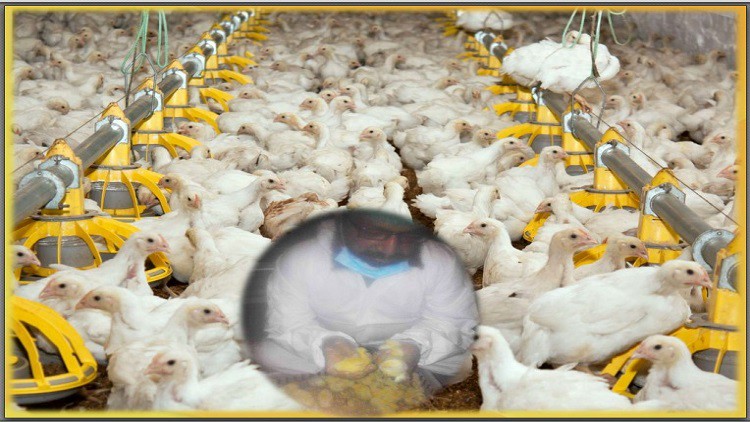
Broiler farm management profit extra income
What you will learn
chick management day old chick quality -chick arrival -environmental control
provision of feed and water supply of nutrient-feeding program -drinking system -feeding system
health disease surveillance disease investigation – disease recognition biosecurity-vaccination
housing and environment ventilation system lighting programs
Description
Poultry sciences
study the genetics, embryology
physiology of the bird, nutrition
diseases, poultry
poultry products
economics and business.
This knowledge may be applied to the management of flocks
I Try to give a simple over view
of these sciences and it is application
I tried to unveil the mystery of poultry industry in series of courses
before start poultry farming
Ask yourself 3 question before thinking of start poultry farming
what is my purpose of raising chicken
what are my resources
where I will locate my project
Site selection where location
farm layout the construction
simple business plan
how to begin
From where we get the one day old chick
simple idea about broiler breeders
simple idea about hatchery
Day old chick quality
receiving chicks
preparing house for receiving chicks
adjusting temperatures
adjusting ventilation
Feeding and nutrition
poultry digestive system
nutrient requirements
feeding programs for broiler
lighting programs
keeping the flock healthy
cleaning and disinfection
biosecurity
vaccination
Housing
ventilation
in open houses
system in closed houses
Economic of broiler farming
cost of broiler farm
preprocessing
caching for slaughter
Prior to placement, commercial broiler farms should be prepared to receive new chicks. If litter has been recycled, it may be turned, treated, and/or otherwise managed to reduce ammonia, pathogen ,and insect load. Houses will be heated to provide adequate temperature for the chicks and feed and water lines may be primed so that they are at room temperature prior to placement. Temperature maybe uniform within houses or a temperature gradient may be provided to allow chicks to better
adjust their individual temperatures. If a temperature gradient is provided, feeders and waterers should be placed so that birds can adjust their temperature and still have easily access to feed and water. In general, chicks are placed at a ground temperature of approximately 90-95°F (32.2-35°C) and temperature is decreased as the birds age at approximately 5°F (2.8°C)/week until the temperature is around 70°F (21°C). However, this greatly varies based on the management system and breed of bird so temperature should be adjusted based on flock behavior . Many commercial broiler houses have some or extensive environmental control and the ability to implement standard program flock profiles for temperature and ventilation. Chickens in these environments Temperature & ventilation Uniformity of ventilation is ideal to improve flock performance. Poor ventilation may pro-mote excessive litter moisture and increase the exposure of the chickens to enteric pathogens. Poor ventilation may cause excessive ammonia levels, which could be detrimental to the health and welfare of animals and employees Excessive ammonia at the level of the chicks may be less detectable to a standing human and high levels can cause health problems such as corneal ulceration, conjunctivitis, and inflammation/deciliation of the trachea thereby predisposing birds to respiratory pathogens. Broiler processing Based on market needs, broilers will be processed at a target weight or age determined by the individual company. Loading chickens into transport vehicles to move to processing may be done at night or early morning to decrease physical and heat stress during loading. At the processing plant, misting or fans may help keep birds cool and reduce mortality while birds are waiting to be processed. In colder regions, heating systems may be needed. Handling of birds at processing, including unloading and shackling, should be done in a way to minimize trauma to the birds, which would not only be a welfare concern but would lead to increased condemnations. Birds should be rendered unconscious and/or euthanizedin a manner that does not cause undue stress, increase condemnations, or adversely affect food safety.
Content
Introduction
chick management
provision of feeding and water supply
lighting program
litter management
simple anatomy
health and disease surveilace
monitor health status and normal behaviour
housing and environment ventilation system lighting programs
poultry equipment
economic of broiler farming
pre- processing management
Overview: The “Full-Stack” Approach to Poultry Management
Let’s get one thing straight: most people think broiler farming is about throwing some grain at birds and waiting for them to get fat. If that’s your mental model, you’re going to go broke before the first flock matures. I’ve spent years in the tech space optimizing workflows, and when I pivoted into exploring ag-tech and intensive farming, I looked for a course that treated a farm like a high-performance system. Modern Broiler Farming: Health, Growth & Profitability is exactly that. It doesn’t just teach you how to keep birds alive; it teaches you how to optimize a biological machine for maximum ROI.
What I appreciated most about this curriculum was the move away from “trial and error” toward a data-driven methodology. It treats extra income generation not as a lucky break, but as the result of tight broiler farm management. You’re looking at the farm through the lens of a systems architect. You aren’t just a farmer; you’re managing a complex environment where tiny fluctuations in temperature or humidity can wipe out your margin. This course bridges the gap between traditional husbandry and the modern, high-efficiency systems required to actually make a profit in today’s volatile market.
Prerequisites: Who Should Enroll?
Don’t worry, you don’t need a degree in veterinary science or a background in heavy machinery to get started. This course is designed to take you from beginner to advanced levels relatively quickly. However, a basic understanding of business logic—specifically how inputs affect outputs—is a massive plus. If you’re looking for job-ready skills, you need to bring a meticulous mindset. Whether you are a complete novice looking for a career growth opportunity in agribusiness or an existing farm owner looking to modernize a legacy operation, the entry barrier is low, but the ceiling for mastery is high.
Skills & Tools: Mastering the Industry Standard
This is where the course really earns its keep. It moves past the “what” and dives deep into the “how,” utilizing industry-standard tools that you’d find on any top-tier commercial farm. You aren’t just reading text; you’re engaging with hands-on labs (simulated and practical) that cover:
- Precision Environmental Control: Learning to calibrate automated ventilation systems and lighting programs that mimic natural cycles to reduce bird stress.
- Nutritional Modeling: It’s not just “feed.” You learn to analyze the supply of nutrient-feeding programs and how to adjust the drinking system for optimal uptake.
- Biosecurity Protocols: This is your “firewall.” You’ll learn disease surveillance and vaccination schedules that act as the primary defense against total system failure.
- Data-Driven Health Recognition: Developing the eye for disease recognition and the analytical skills for a disease investigation before an outbreak goes viral.
Career Benefits & Job Roles
Completing this course isn’t just about starting your own backyard project; it’s about certification prep for a serious career in the agricultural sector. The industry is starving for people who understand the technical side of poultry. By focusing on real-world projects, the course prepares you for roles such as:
- Farm Operations Manager: Overseeing large-scale facilities with a focus on efficiency and profitability.
- Technical Consultant: Helping smaller farms transition from manual to automated ventilation systems and modern housing and environment setups.
- Supply Chain Specialist: Understanding chick management and day old chick quality to optimize the start of the production cycle.
- Biosecurity Auditor: A high-demand role ensuring that commercial farms meet health and safety regulations.
Pros: Why This Course Stands Out
- ROI-Focused: Every module is tied back to the bottom line. It’s about extra income and profit, not just academic theory.
- Systems-Thinking: It teaches you to see the connection between environmental control and nutrient-feeding, showing how one affects the other.
- Actionable Frameworks: You walk away with actual checklists for chick arrival and disease surveillance that you can implement on day one.
Cons: The Honest Truth
The only real “downside” is the sheer volume of data. If you’re looking for a “passive income” scheme where you don’t have to get your hands dirty, this isn’t it. The hands-on labs and real-world projects require a significant time investment. It’s a rigorous deep-dive that might feel overwhelming for someone who isn’t ready to treat their farm like a professional business. It demands a “tech-pro” level of attention to detail, especially when it comes to the ventilation system and lighting programs math.