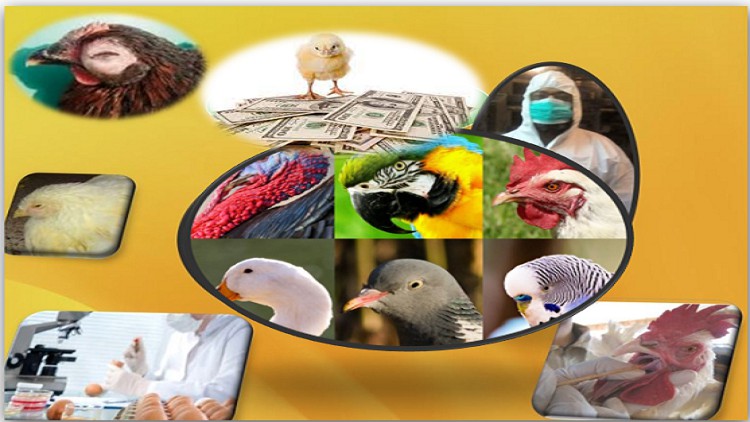
bacterial diseases of poultry
What you will learn
introduction
how to investigate a sick flock problem
surveillance of diseases
bacterial diseases hindering satisfying performance
Description
aclear example of poultry disease hinder satisfying poultry production is collibacillosis
This is the localized or systemic infection caused by avian pathogenic Escherichia Coli (APEC). It manifests in diverse ways such as acute fata septicemia, subacute pericarditis, airsaculitis, salpingitis/ peritonitis, cellulitis and lymphocytic depletion of bursa and thymus.
This infection is seen worldwide in chickens, turkeys, etc. Morbidity varies, mortality is 5-20%. The infectious agent is moderately resistant in the environment, but is susceptible to disinfectants and to temperature of 80*c.
ECONOMIC IMPORTANCE OF COLIBACCILOSIS
Colibacillosis causes elevated morbidity and mortality leading to economic losses in the poultry farms especially around the peak of egg production, reduced FCR and carcass condemnation at processing in broilers.
In Layers
There is sudden mortality with the absence of typical clinical signs due to the stress factors associated with egg production and systemically accompany by decrease in egg production and increase of poor-quality eggs.
In Breeders
When contamination of eggs with E. Coli lead to decrease hatchability and when there is in ovo contamination during incubation of eggs, this will also lead to production of poor-quality chicks with poor livability.
In Broilers
When there is systemic infection, this will lead to poor FCR (feed conversion ratio) and increased mortality, skin infection will cause inflammation of subcutaneous tissue which will lead increase condemnation of carcass at processing level.
in 9 section I discuss the most important bacterial diseases affect poultry
section 1 introduction
section 2 how to investigate afield problem
section3 disease survailance necropsy – lab dignosis
section4 chalamidiosis the most important zoonotic disease
section5 infectious coryza
section6 salmonolosis
section 7 fowl cholera
section8 mycoplasmosis
section9 colibacillsis
Content
Introduction
How to investigate a sick flock problem
Disease surveillance
chalamidiosis
infectious coryza
salmonolosis
fowl cholera
mycoplasmosis
colibacillosis
Overview
Let’s be honest: in the poultry industry, you’re either staying ahead of the bacterial curve or you’re losing thousands of birds—and even more in revenue. I’ve sat through plenty of dry, academic lectures that spend way too much time on the history of Salmonella and not enough on what to do when your flock’s performance starts tanking. Practical Poultry Bacteriology is a refreshing departure from that trend. This isn’t just a slide deck; it’s a deep dive into the operational realities of avian health.
What I appreciated most was the shift away from “textbook” scenarios to real-world projects that actually mirror what happens on a commercial farm. The course bridges the gap between the lab bench and the broiler house. It’s built for the professional who needs to know why a specific strain is resistant or how a surveillance program failed to catch an outbreak before it became a crisis. It covers the nuances of bacterial pathogenesis without getting bogged down in minutiae that doesn’t help you in the field. If you’re looking for a fluff-filled introductory course, this isn’t it. This is about building job-ready skills for people who are responsible for the biosecurity and productivity of massive operations.
Prerequisites
While the course advertises itself as spanning from beginner to advanced levels, you’re going to struggle if you don’t have a baseline understanding of animal physiology or basic microbiology. You don’t need a PhD, but having a handle on general farm management or a background in veterinary sciences is a massive plus. If you’ve never looked at a diagnostic report before, you might want to brush up on basic pathology terms first. That said, the instructors do a solid job of onboarding those who are moving from general agriculture into specialized poultry roles.
Skills & Tools
This is where the course really earns its keep. You aren’t just reading; you’re learning how to utilize industry-standard tools for diagnostics and data interpretation. Key skills covered include:
- Diagnostic Interpretation: Moving beyond just reading a “positive” result to understanding bacterial load and virulence factors.
- Necropsy Fundamentals: Hands-on labs (via high-res video modules) that show exactly what to look for during a field post-mortem.
- Data-Driven Surveillance: Using software tools to track disease trends across multiple sites to predict outbreaks.
- Antimicrobial Sensitivity Testing (AST): Learning how to choose the right intervention based on lab results rather than guesswork.
- Biosecurity Auditing: Designing and implementing real-world projects that stress-test a facility’s defenses against bacterial ingress.
Career Benefits & Job Roles
In terms of career growth, this course is a signal to employers that you understand the economic stakes of flock health. It serves as excellent certification prep for those looking toward specialized avian health credentials. I’ve seen colleagues move from general farm labor into Quality Assurance (QA) Managers or Technical Service Representatives for major integrators after mastering this material.
Typical job roles that benefit from this training include:
- Poultry Production Manager: Overseeing the health and output of large-scale broiler or layer operations.
- Field Veterinarian: Providing hands-on labs insights and diagnostic support to independent growers.
- Biosecurity Officer: Developing protocols to shield facilities from Campylobacter, E. coli, and other high-risk pathogens.
- Laboratory Technician: Specialized roles in diagnostic labs focused on avian bacteriology.
Pros
- Practical Application: Everything taught is directly applicable to improving flock performance and reducing mortality rates. It’s highly focused on the “how” and the “why” of bacterial management.
- Industry-Standard Tools: You get exposed to the same diagnostic frameworks used by top-tier poultry integrators, ensuring you are job-ready from day one.
- Expert Insight: The instructors clearly have “dirt under their fingernails”—they speak from experience, not just from journals, which makes the conversational tone of the course much more engaging.
- Comprehensive Range: It effectively navigates the spectrum from beginner to advanced, ensuring that even seasoned pros walk away with new surveillance strategies.
Cons
- Intensity of Content: The sheer volume of data regarding bacterial strains can be overwhelming. If you aren’t disciplined with your study habits, the transition from the introduction to the complex surveillance modules can feel like a vertical learning curve. It’s not a course you can just “passive-watch” on a Sunday afternoon.