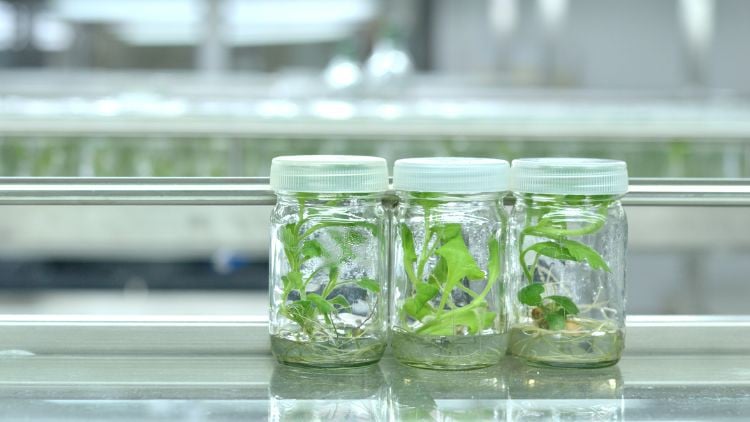
Cultivating Botanical Advancements
⏱️ Length: 1.2 total hours
⭐ 4.13/5 rating
👥 4,678 students
🔄 February 2024 update
Add-On Information:
Note➛ Make sure your 𝐔𝐝𝐞𝐦𝐲 cart has only this course you're going to enroll it now, Remove all other courses from the 𝐔𝐝𝐞𝐦𝐲 cart before Enrolling!
- Course Overview
- Introduce the foundational principles of plant biotechnology, focusing on the in vitro manipulation of plant cells, tissues, and organs.
- Explore historical milestones and scientific breakthroughs shaping plant cell and tissue culture into a cornerstone of modern botanical science.
- Delve into the concept of plant totipotency, understanding its biological basis and its role in regenerating entire plants from single cells.
- Gain insights into diverse methodologies for establishing and maintaining sterile plant cultures, emphasizing critical aseptic techniques to prevent contamination.
- Examine the intricate composition and roles of various culture media components, including nutrients, carbon sources, and crucial plant growth regulators.
- Discover the profound influence of plant hormones like auxins and cytokinins on cell division, differentiation, and morphogenesis, dictating developmental pathways in vitro.
- Understand the design and operation of controlled environment facilities, such as growth chambers, essential for optimal plant development and experimental success.
- Obtain a comprehensive understanding of different explant types (e.g., meristems, nodes, leaves) used for initiating cultures and their specific considerations.
- Investigate various modes of plant regeneration, including direct and indirect organogenesis, and somatic embryogenesis, discerning their applications.
- This course provides a gateway to understanding the incredible versatility and potential of manipulating plant systems at a cellular level.
- Requirements / Prerequisites
- A basic understanding of fundamental biological concepts, including cell structure, plant anatomy, and general genetics, will significantly enhance your learning experience.
- Familiarity with laboratory safety protocols and sterile working conditions is advantageous, though core aseptic techniques will be thoroughly introduced.
- No prior hands-on experience in plant tissue culture is strictly required, as the course is designed to guide learners from foundational principles to advanced concepts.
- Access to a reliable internet connection and a device capable of streaming video content and accessing course materials is necessary for optimal participation.
- A curious mind and a passion for plant science, botany, horticulture, or agricultural innovation are highly recommended to fully engage with the course content.
- While not mandatory, having access to relevant scientific literature or an interest in exploring research papers can complement the course material effectively.
- Skills Covered / Tools Used
- Mastery of Aseptic Techniques: Develop proficiency in maintaining a sterile work environment, including surface sterilization and working in laminar flow hoods to prevent microbial contamination.
- Media Preparation & Sterilization: Learn to accurately weigh, dissolve, adjust pH, and sterilize complex plant tissue culture media, understanding each component’s function.
- Explant Selection & Preparation: Acquire skills to select appropriate plant material (explants), perform precise dissection, and initiate cultures from various plant parts.
- Subculturing & Proliferation: Practice techniques for transferring cultures to fresh media, promoting vigorous growth, and multiplying plantlets efficiently for micropropagation.
- Rooting & Acclimatization: Gain expertise in inducing root formation on in vitro shoots and successfully transitioning delicate plantlets to ex vitro conditions.
- Problem Identification & Troubleshooting: Develop critical thinking to identify common tissue culture issues like contamination or vitrification, and devise effective solutions.
- Microscopy & Observation: Utilize microscopes to observe cellular differentiation, embryogenesis, and early stages of organogenesis, enhancing understanding of developmental processes.
- Data Recording & Analysis: Learn to systematically record observations, track growth parameters, and interpret results to optimize culture conditions.
- Basic Laboratory Equipment Operation: Become familiar with safe and effective operation of essential lab tools including autoclaves, pH meters, balances, and micropipettes.
- Strategic Application of Plant Growth Regulators: Understand how to select and apply different types and concentrations of plant hormones to achieve desired morphogenetic responses.
- Benefits / Outcomes
- Enhanced Career Prospects: Become a more competitive candidate for roles in plant biotechnology, agricultural research, horticulture, and conservation.
- Foundation for Advanced Study: Build a strong conceptual and practical base for higher education or specialized research in plant molecular biology or genetic engineering.
- Contribute to Global Challenges: Equip yourself to contribute to solutions for food security, sustainable agriculture, and biodiversity conservation.
- Acquire Specialized Skills: Develop an in-demand skill set in sterile plant manipulation, propagation, and cell culture, applicable in various lab and industrial settings.
- Foster Entrepreneurial Spirit: Gain insights that could inspire and support new plant-based ventures, like commercial micropropagation labs.
- Develop Experimental Design Acumen: Progress from protocol understanding to critically evaluating and designing your own tissue culture experiments for specific goals.
- PROS
- Comprehensive & Foundational: Delivers both theoretical principles and practical aspects, ideal for diverse learning levels.
- Flexible & Self-Paced: Offers anytime, anywhere access, seamlessly integrating into busy schedules.
- Highly Rated & Current: Boasts a strong 4.13/5 rating and a February 2024 update, ensuring relevance and quality.
- Efficient & Impactful: Delivers significant learning outcomes within a concise 1.2-hour duration.
- Broad Career Applicability: Skills and knowledge are highly transferable across scientific, agricultural, and industrial sectors.
- CONS
- Limited Hands-On Experience: As an online course, it cannot fully replicate the practical, tactile laboratory experience crucial for mastering advanced aseptic techniques and experimental nuances.
Learning Tracks: English,Teaching & Academics,Science