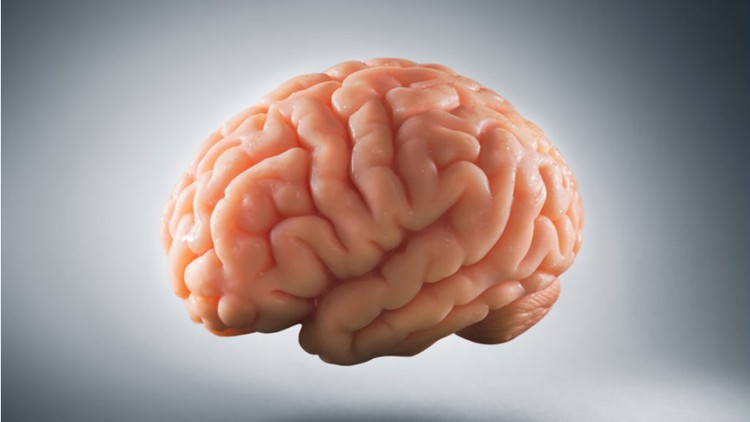
Human Nervous System
Why take this course?
🫐 Unlock the Mysteries of Your Mind and Body: Nervous System Course by Komal Mahajan
Course Headline: Dive into the Intricacies of the Human Nervous System
Course Description:
Embark on an enlightening journey through the complex and fascinating world of the nervous system with our comprehensive online course. Nervous System by Komal Mahajan is meticulously crafted to provide you with a thorough understanding of both the structure and function of this critical system that governs our very thoughts and movements.
🎓 What You’ll Learn:
- Detailed Anatomy Lessons: Gain an in-depth knowledge of the central and peripheral nervous systems, and how they interact to manage all bodily functions.
- Brain and Spinal Cord Exploration: Discover the gross anatomy of the human brain and spinal cord, and understand their role within the context of the autonomic, sensory, visual, auditory, somatosensory, and olfactory systems.
- Complex System Dynamics: Learn about the neurovascular unit, including lectures on the vasculature, ventricles, and cerebrospinal fluid (CSF), which are crucial for maintaining homeostasis within the nervous system.
- Neuron and Neurotransmitter Interactions: Explore the fascinating world of neurons, axons, synapses, and neurotransmitters that enable communication within the nervous system.
- Glial Support Systems: Understand the vital roles of glial cells, which provide support and nutrition to neurons and modulate neuroimmune interactions.
- Central vs. Peripheral: Distinguish between the central nervous system (CNS) – encompassing the brain, spinal cord, and retina – and the peripheral nervous system (PNS), which includes sensory neurons, ganglia, and the network of nerves connecting them to the CNS.
Key Topics Covered:
- Nervous System Development: Trace the development of the nervous system from conception through to maturity.
- Anatomy of the Adult Nervous System: Examine the gross anatomy and functional divisions of the human brain and spinal cord in adults.
- Specialized Cells and Junctions: Learn how neurons communicate by sending signals via axons and releasing neurotransmitters at synapses.
- The Role of Glial Cells: Discover the importance of non-neuronal cells within the nervous system.
- Central vs. Peripheral Systems: Gain clarity on the differences and interactions between the CNS and PNS.
Why Take This Course?
- Expert-Led Learning: Komal Mahajan, an experienced instructor, guides you through complex topics with ease.
- Interactive Content: Engage with high-quality videos, quizzes, and interactive exercises to solidify your understanding of the nervous system.
- Accessible Anytime, Anywhere: Learn at your own pace from the comfort of your home or on the go with our mobile-friendly platform.
- Join a Community of Learners: Connect with peers who share your interest in human anatomy and physiology, fostering a supportive learning environment.
Transform Your Knowledge:
Whether you’re a student, healthcare professional, or simply curious, this course offers a wealth of knowledge that will empower you to understand and appreciate the complexities of the nervous system. 🌊🧠 Enroll now and start your journey to mastering one of the most fascinating systems in the human body!
Overview: Decoding the Body’s Most Complex Architecture
As someone who has spent the better part of fifteen years debugging distributed systems and optimizing network latency, I’ve always viewed the human body as the ultimate engineering challenge. When I signed up for this Nervous System course, I wasn’t looking for a dry biology lecture. I wanted to understand the “system architecture” of human consciousness and motor control. What I found was a deep dive into what I’d call the most sophisticated bio-electrical network in existence. This isn’t just about memorizing names; it’s about understanding the logic of signal transduction, from the beginner to advanced levels of neurological complexity.
The course doesn’t just skim the surface. It forces you to look at the brain and spinal cord as a centralized processing unit (CPU) and the peripheral nervous system as a series of high-speed data buses extending to the edge—your organs and limbs. The most fascinating aspect for me was the transition from theoretical neurobiology to real-world projects involving clinical case studies. We didn’t just study the limbic system; we analyzed how it overrides logic during a stress response, which is essentially a biological “kernel panic.” For any tech professional moving into HealthTech or Biotechnology, this systemic view is an absolute game-changer.
Prerequisites: What You Need Under the Hood
You don’t need a medical degree to start, but you definitely need a mindset geared toward analytical systems thinking. A foundational understanding of general biology is helpful, but more importantly, you need a high tolerance for technical nomenclature. If you’ve ever had to learn a new programming language from scratch, you’ll be fine. However, if you’re looking for career growth in specialized fields like neuro-engineering, I’d suggest brushing up on basic chemistry and physics (specifically electricity) before diving into the action potential modules. The learning curve is steep, but it’s logical.
Skills & Tools: Mastering the Biological Stack
While this course is heavily academic, it bridges the gap toward job-ready skills by introducing industry-standard tools for neurological assessment. We explored the diagnostic frameworks used in modern neurology, which are essential for anyone interested in certification prep for clinical research roles.
- Neuro-Imaging Interpretation: Understanding how to read the “log files” of the brain via MRI and CT scans.
- Pathological Analysis: Developing the ability to diagnose neurological diseases like Parkinson’s or Multiple Sclerosis by identifying breaks in the “circuitry.”
- Data Driven Diagnostics: Using quantitative metrics to evaluate the efficiency of the somatosensory and motor systems.
- Pharmacological Mapping: Understanding how neuro-endocrine interventions act as “system patches” for chemical imbalances.
Career Benefits & Job Roles
The intersection of tech and biology is where the most exciting career growth is happening right now. Completing a rigorous course like this positions you perfectly for roles that demand more than just coding ability. You’re gaining a specialized domain knowledge that is rare in the traditional IT market.
- HealthTech Product Manager: Bridging the gap between software engineers and medical professionals.
- Neural Interface Designer: Working on the next generation of real-world projects like prosthetics controlled by the motor system.
- Clinical Data Analyst: Processing massive datasets from neurological research trials.
- Biotech Startup Founder: Having the foundational knowledge to innovate in the neuro-endocrine or limbic system therapeutic space.
Pros: Why This Course Hits the Mark
- Systems-Thinking Approach: It treats the autonomic and peripheral systems like a complex network, making it highly relatable for tech-minded individuals.
- Clinical Depth: The focus on dysfunction and degeneration provides a “fail-state” analysis that is incredibly effective for learning how things are *supposed* to work.
- Hands-On Labs: The hands-on labs (virtual and case-based) move you past rote memorization into active problem-solving, which is crucial for building job-ready skills.
Cons: The Honest Reality
The sheer volume of information can be overwhelming. This isn’t a course you can “speed-run.” If you don’t stay on top of the modules regarding the auditory and visual systems early on, you’ll find yourself struggling when the course pivots to complex neuro-degenerative pathologies. It requires a significant time commitment that might be tough if you’re balancing a full-time dev role.