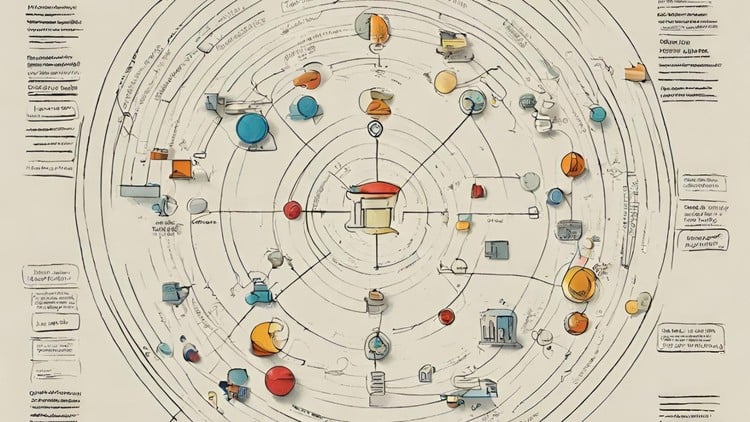
Design and development of complex system and game, design thinking along with game theory for game designers, ceo etc
⏱️ Length: 8.8 total hours
⭐ 4.63/5 rating
👥 15,460 students
🔄 January 2025 update
Add-On Information:
Note➛ Make sure your 𝐔𝐝𝐞𝐦𝐲 cart has only this course you're going to enroll it now, Remove all other courses from the 𝐔𝐝𝐞𝐦𝐲 cart before Enrolling!
- Course Overview
- Beyond isolated problems and linear cause-and-effect, the ‘Master in Systems Thinking’ course invites learners to transcend conventional analytical approaches. It provides a transformative framework for understanding the intricate dance of elements within any complex system, be it an emergent gameplay economy, a global supply chain, or an organizational culture. This program uniquely bridges the conceptual power of Systems Thinking with practical applications in cutting-edge game design, robust corporate strategy, and adaptive organizational leadership, emphasizing how interconnectedness and feedback loops fundamentally drive outcomes.
- You will delve into the underlying principles that govern the behavior of dynamic systems, moving past superficial symptoms to uncover root causes, identify critical leverage points, and anticipate future trajectories. The curriculum seamlessly integrates sophisticated analytical methods with creative problem-solving paradigms like Design Thinking, alongside the strategic foresight offered by Game Theory. This equips a diverse audience—from aspiring game designers shaping interactive worlds to C-suite executives navigating volatile markets and policymakers crafting impactful legislation—with unparalleled foresight, influence, and the capacity to foster systemic resilience.
- Designed for immediate applicability, this course offers a holistic lens to perceive, analyze, and ethically intervene in complex environments. It champions a shift from reactive fixes to proactive, sustainable design, fostering a new generation of leaders capable of orchestrating positive change, enhancing organizational adaptability, and driving innovation across diverse sectors, ultimately enabling them to design and manage systems that thrive.
- Requirements / Prerequisites
- Analytical Curiosity: A fundamental desire to look beyond superficial explanations, questioning “why” and “how” things truly work together, and an eagerness to uncover underlying patterns.
- Openness to New Perspectives: A willingness to challenge existing mental models, embrace interdisciplinary approaches, and synthesize insights from seemingly disparate fields to foster comprehensive solutions.
- Professional or Aspiring Professional Context: While no formal academic prerequisites are strictly enforced, the course content is most beneficial for individuals who are actively engaged in or aspire to roles involving strategic decision-making, complex problem-solving, product development, project management, or organizational leadership across any industry.
- Basic Digital Literacy: Familiarity with navigating online learning platforms and accessing digital resources is assumed to ensure a smooth and productive learning experience.
- Skills Covered / Tools Used
- Dynamic Modeling & Simulation Foundations: Gain proficiency in conceptualizing complex scenarios by mapping feedback loops, identifying critical stocks and flows, and understanding time delays that influence system behavior, laying the groundwork for more advanced qualitative and quantitative analysis.
- Mental Model Elicitation & Refinement: Learn structured techniques to surface, challenge, and reconstruct underlying assumptions and implicit beliefs that shape organizational and individual actions, fostering clearer communication and building shared understanding across diverse teams.
- Leverage Point Identification & Intervention: Develop the astute ability to pinpoint high-impact intervention points within a system where a small, well-placed change can yield disproportionately large and sustainable positive outcomes, moving beyond superficial or symptomatic fixes.
- Interdependency Mapping & Network Analysis: Master methodologies for visually representing the intricate web of relationships, influences, and causal connections among various components of a system, revealing hidden drivers, potential bottlenecks, and opportunities for synergistic action.
- Scenario Archetyping & Pattern Recognition: Utilize established systems thinking archetypes (e.g., “Shifting the Burden,” “Limits to Growth,” “Fixes that Fail”) to quickly diagnose recurring patterns of systemic behavior and anticipate their likely trajectories, enabling more robust future planning and proactive management.
- Cross-Functional Communication & Facilitation: Enhance your capacity to articulate complex systemic insights and model results to non-technical stakeholders, fostering collaborative problem-solving, building consensus, and driving collective action across organizational and disciplinary silos.
- Ethical System Design & Impact Assessment: Cultivate a deep awareness of the broader societal, environmental, and ethical implications of design choices and interventions, promoting the creation of systems that are not only efficient but also equitable, resilient, and sustainable for all stakeholders.
- Emergent Property Analysis & Adaptive Management: Understand how simple interactions at a micro-level can lead to unpredictable, complex behaviors at a macro-level, preparing you to anticipate, manage, and harness emergent phenomena in dynamic and uncertain environments.
- Benefits / Outcomes
- Enhanced Holistic Vision: Develop the profound capacity to see the “bigger picture,” understanding how individual components interact to create system-wide effects, leading to more comprehensive, integrated, and effective strategies in any domain.
- Proactive Solution Design: Transition from reactive problem-solving to proactively designing resilient and future-proof systems that anticipate challenges, mitigate risks, and adapt gracefully to changing conditions and unexpected disruptions.
- Strategic Foresight & Anticipation: Cultivate the ability to predict potential unintended consequences of actions, policies, and designs with greater accuracy, allowing for earlier intervention, course correction, and more favorable long-term outcomes.
- Improved Collaborative Leadership: Become adept at fostering a shared understanding and common purpose among diverse stakeholders and teams, leading to more cohesive collaborative efforts and impactful organizational alignment.
- Sustainable Innovation Capability: Drive innovation that inherently considers ecological, social, and economic sustainability, designing solutions that are robust, ethically sound, and beneficial for the long term, avoiding detrimental ripple effects.
- Accelerated Career Growth: Position yourself as an invaluable asset capable of tackling complex, interdisciplinary challenges that elude conventional approaches, opening doors to advanced leadership, design, and strategic management roles across a myriad of industries.
- PROS
- Highly Relevant & Contemporary: Addresses critical needs in today’s interconnected, volatile, uncertain, complex, and ambiguous (VUCA) world, offering universally applicable tools for various complex domains.
- Interdisciplinary Application: Uniquely blends core concepts from game design, business strategy, design thinking, and game theory, making it broadly appealing and versatile for a diverse professional audience.
- Proven Student Satisfaction: A robust rating of 4.63/5 from over 15,460 students reflects consistently high content quality, effective instructional delivery, and strong learner engagement.
- Concise yet Comprehensive: Delivers powerful, foundational insights into Systems Thinking within an accessible format (8.8 total hours), optimizing learning efficiency for busy professionals.
- Up-to-Date Content: The January 2025 update ensures learners receive the latest perspectives, cutting-edge practical methodologies, and contemporary case studies in the field.
- CONS
- While comprehensive in its scope and foundational principles, the depth of topics covered within the stated course length might necessitate supplementary self-study and practical application for complete mastery in highly specialized or academically rigorous domains.
Learning Tracks: English,Business,Management