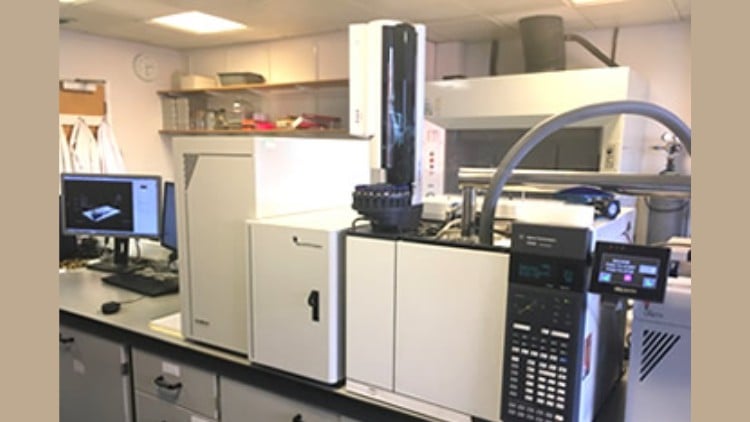
Unlocking the Science of Separation
⏱️ Length: 1.4 total hours
⭐ 3.61/5 rating
👥 2,718 students
🔄 June 2023 update
Add-On Information:
Note➛ Make sure your 𝐔𝐝𝐞𝐦𝐲 cart has only this course you're going to enroll it now, Remove all other courses from the 𝐔𝐝𝐞𝐦𝐲 cart before Enrolling!
-
Course Overview
- Dive into the Gas Chromatography (GC) Fundamentals: Comprehend how volatile and semi-volatile compounds are precisely separated based on their unique chemical properties and interactions within the GC system.
- Explore Core GC Principles: Understand the critical roles of the mobile gas phase and stationary phase in achieving efficient and accurate component resolution.
- Grasp the GC Workflow: Learn the sequential steps from sample introduction through separation in the column, detection, and initial data acquisition.
- Identify GC’s Unique Advantages: Recognize why GC is the preferred technique for analyzing thermal stable and vaporizable samples in diverse analytical challenges.
- Instrumental Component Breakdown: Familiarize yourself with the essential parts of a GC system, including carrier gas, injector, column, oven, and detector types.
- Applications in Analytical Chemistry: Discover how GC is pivotal for compound identification, purity assessment, and quantitative analysis in various sectors.
- Conceptual Clarity: Gain a strong theoretical foundation that explains the mechanisms driving chromatographic separation and detector responses.
- Demystifying Separation: Unpack the factors influencing retention time, peak shape, and resolution, allowing for a deeper understanding of chromatogram characteristics.
- Role in Quality Control: Understand how GC is indispensable for ensuring product quality and compliance across industries by verifying component purity and concentration.
- Environmental Monitoring Insights: Explore GC’s contribution to environmental science, from detecting pollutants in air and water to analyzing soil contaminants.
- Bridging Theory and Practice: Develop a robust conceptual framework that prepares you for understanding practical GC operations and experimental design.
- Mastering GC Terminology: Become fluent in the specific vocabulary used in gas chromatography, enhancing your professional communication in analytical settings.
- Foundational Expertise: Acquire a comprehensive yet concise overview of GC, laying the groundwork for more advanced studies or practical laboratory applications.
-
Requirements / Prerequisites
- Basic Chemistry Knowledge: A foundational understanding of general chemistry principles, including organic functional groups and intermolecular forces, will aid comprehension.
- No Prior GC Experience Required: This course is tailored for beginners, assuming no prior exposure to gas chromatography theory or practical application.
- Internet Access and Device: A stable internet connection and a standard computing device (laptop, desktop, or tablet) are necessary to engage with the online material.
- Enthusiasm for Analytical Science: A genuine interest in chemical separation techniques and a willingness to explore new scientific methodologies are the most important prerequisites for this course.
-
Skills Covered / Tools Used
- Injector Types and Application: Understand various GC injection techniques (e.g., split/splitless, on-column) and their suitability for different sample matrices and concentration ranges.
- Optimized Column Selection: Learn to select appropriate GC columns (e.g., stationary phase chemistry, column dimensions) based on analyte volatility, polarity, and desired separation efficiency.
- Temperature Programming Principles: Grasp how to effectively utilize oven temperature gradients and isothermal conditions to enhance resolution, reduce analysis time, and improve peak shape for complex sample analysis.
- Detector Functionality: Gain insight into the working principles of common GC detectors (e.g., Flame Ionization Detector (FID), Thermal Conductivity Detector (TCD), Electron Capture Detector (ECD)) and their specific applications.
- Chromatogram Interpretation: Develop the foundational skill of reading GC chromatograms, identifying peaks, assessing baseline quality, and evaluating separation efficiency parameters like resolution and asymmetry.
- Basic Data Acquisition: Understand the fundamental process by which raw GC detector signals are captured, processed, and converted into usable analytical data through chromatography software.
- Initial Troubleshooting Approaches: Acquire a fundamental understanding of common GC operational issues, such as poor peak shape, retention time shifts, or baseline noise, and initial diagnostic steps.
- Parameter Optimization Awareness: Develop an awareness of how adjusting GC parameters like carrier gas flow, injection volume, and temperature profiles impacts chromatographic outcomes.
- Understanding Calibration Curves: Learn the basics of how calibration curves are generated and used for quantitative analysis in GC.
- Sample Preparation Considerations: Gain insight into the importance of proper sample preparation techniques suitable for GC analysis to ensure accurate and reliable results.
-
Benefits / Outcomes
- Enhanced Analytical Acumen: Sharpen your approach to chemical separation problems, applying precise GC-specific methodologies and principles.
- Informed Method Development: Gain foundational knowledge to make sound decisions on GC parameter selection for developing and optimizing analytical methods.
- Confident Lab Communication: Articulate GC results, principles, and instrumental functions clearly and effectively with scientific peers and within professional laboratory environments.
- Foundation for Advanced GC: Build a solid conceptual base for delving into more specialized GC applications, such as GC-Mass Spectrometry (GC-MS), multidimensional GC, and advanced method validation.
- Broadened Scientific Perspective: Recognize GC’s widespread impact across diverse scientific and industrial sectors globally, from pharmaceutical manufacturing to petrochemical analysis.
- Critical Data Evaluation: Learn to critically assess the accuracy, precision, and reliability of GC data, ensuring robust and defensible analytical conclusions.
- Practical Engagement Readiness: Develop a strong conceptual readiness for hands-on GC operations, subsequent laboratory training, and active participation in analytical projects.
- Problem-Solving Mindset: Foster an analytical problem-solving mindset applicable to complex mixture analysis, utilizing GC as a primary tool.
- Career Advancement Potential: Equip yourself with a foundational skill highly valued in various analytical chemistry roles, paving the way for professional growth.
-
PROS
- Concise and Time-Efficient: At just 1.4 hours, it offers rapid foundational knowledge in Gas Chromatography, perfect for busy professionals or quick skill acquisition.
- Up-to-Date Information: The “June 2023 update” guarantees current and relevant insights into modern GC principles and applications.
- Flexible Online Access: Learn at your own pace from any location, making it highly adaptable to diverse schedules and learning preferences.
- Cost-Effective Introduction: Provides an accessible and affordable entry point to understanding a complex and critical analytical technique.
- Peer-Validated Quality: A 3.61/5 rating from 2,718 students reflects a generally positive and valuable learning experience from a broad audience.
- Immediate Conceptual Foundation: Offers a quick yet solid grasp of GC fundamentals without requiring extensive prior knowledge.
-
CONS
- Limited In-Depth Practicality: Due to its short duration, the course provides a conceptual overview rather than extensive hands-on operational training or advanced troubleshooting for real-world scenarios.
Learning Tracks: English,Teaching & Academics,Science