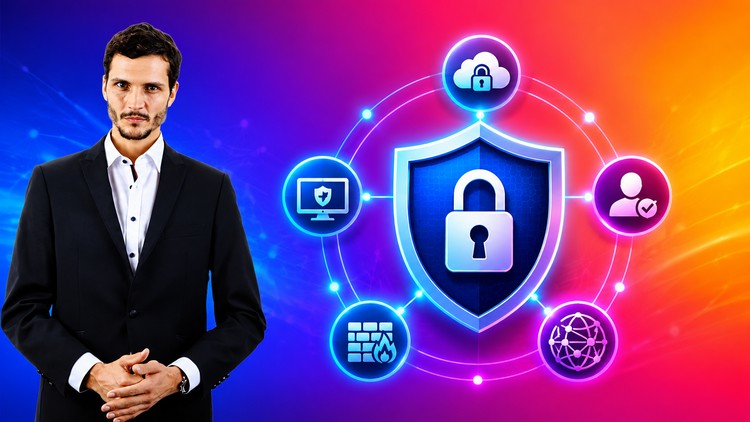
Learn the essential cybersecurity skills to protect computers, networks, cloud systems from modern cyber threats
What You Will Learn:
- Understand the core principles of cybersecurity and explain the modern cyber threat landscape, including malware, ransomware, phishing, social engineering.
- Protect computers, devices, and networks using industry best practices such as firewalls, VPNs, secure Wi-Fi, endpoint protection, system hardening, and secure
- Implement Identity and Access Management (IAM) by applying strong password policies, Multi-Factor Authentication (MFA), authentication, authorization, and the P
- Secure sensitive data using encryption, data classification, secure backups, Data Loss Prevention (DLP), and privacy best practices.
- Secure sensitive data using encryption, data classification, secure backups, Data Loss Prevention (DLP), and privacy best practices.
- Apply cloud security fundamentals by understanding the Shared Responsibility Model, securing cloud identities, protecting cloud storage, and mitigating common c
- Show more
Overview
The first thing you notice about this course is its aggressive focus on the “now.” We are well past the era where a simple firewall was enough to keep the bad guys out. This course understands that. It provides a nuanced look at the modern cyber threat landscape, specifically how the shift to remote work and the cloud has fundamentally broken the old security perimeter.
Instead of just reciting definitions, the curriculum forces you to think like an attacker. It’s one thing to know what ransomware is; it’s another to understand how a single social engineering lapse can lead to a total network compromise. The overview of the Shared Responsibility Model in cloud security is particularly sharp—most beginners fail to realize that just because your data is on a major platform doesn’t mean it’s “safe” by default. This course cuts through that noise, making it an excellent piece of certification prep for those eyeing the Security+ or similar entry-level credentials.
Prerequisites
Don’t let the “Fundamentals” tag fool you into thinking you need to be a coding wizard. That said, you shouldn’t be a total tech novice either. To get the most out of the hands-on labs, you should have a baseline comfort level with operating systems (Windows and Linux) and a general idea of how the internet works—think IP addresses and DNS. If you’ve ever messed around with a router or tried to troubleshoot your own Wi-Fi, you have the foundational DNA required to succeed here. It is a true beginner to advanced bridge course.
Skills & Tools
This is where the course earns its keep. It’s packed with industry-standard tools and methodologies that you’ll actually use in a Security Operations Center (SOC). You’ll dive deep into:
- Identity and Access Management (IAM): Moving beyond simple passwords to Multi-Factor Authentication (MFA) and the Principle of Least Privilege.
- Network Defense: Configuring VPNs, firewalls, and secure Wi-Fi protocols that actually stand up to scrutiny.
- Data Protection: Learning the dark arts of encryption, data classification, and Data Loss Prevention (DLP).
- System Hardening: Turning a vulnerable out-of-the-box OS into a locked-down environment through endpoint protection and system hardening.
Career Benefits & Job Roles
If you’re looking for career growth, this course is a catalyst. The cybersecurity talent gap is real, but companies aren’t just hiring anyone—they want people with real-world projects on their resumes. By completing the modules on cloud security and IAM, you’re positioning yourself for several entry-to-mid-level roles:
- Cybersecurity Analyst: The bread and butter of the industry.
- Junior Pen Tester: Understanding the defense is the first step to becoming a great ethical hacker.
- IT Security Specialist: A role focused on securing sensitive data and maintaining secure backups.
- Cloud Security Associate: Focusing specifically on mitigating common cloud threats.
Pros
- Holistic Approach: It doesn’t ignore the human element. The sections on phishing and social engineering are vital because humans are always the weakest link in the chain.
- Cloud Integration: Many fundamental courses ignore the cloud. This one treats cloud security as a core pillar, which is essential for 2024 and beyond.
- Practicality: The focus on job-ready skills over mere rote memorization makes it feel like a professional workshop rather than a boring lecture.
- Clear Progression: It handles the beginner to advanced transition smoothly, ensuring you aren’t overwhelmed by encryption algorithms before you understand basic data classification.
Cons
If I have one gripe, it’s that the section on Data Loss Prevention (DLP) and privacy best practices can feel incredibly dense. It covers a lot of ground in a short amount of time, and if you aren’t paying close attention, you might find yourself needing to re-watch the modules to fully grasp the implementation side of the tools. It’s a minor hurdle, but it’s definitely the “heaviest” part of the curriculum.