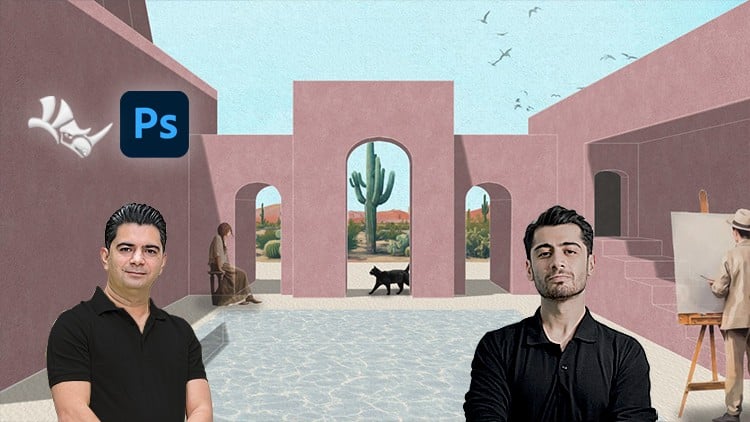
Architecture Digital Presentation in Photoshop & Rhino, for Portfolio Design and Competitions Winning Visualisations
⏱️ Length: 1.9 total hours
👥 19 students
🔄 November 2025 update
Add-On Information:
Note➛ Make sure your 𝐔𝐝𝐞𝐦𝐲 cart has only this course you're going to enroll it now, Remove all other courses from the 𝐔𝐝𝐞𝐦𝐲 cart before Enrolling!
-
Course Overview
- This intensive course plunges into the transformative art of architectural visualization, bridging the gap between raw 3D models and breathtaking final presentations. It’s meticulously designed for aspiring and established architects, designers, and visualization artists who aim to elevate their digital output beyond mere rendering, crafting compelling visual narratives that resonate.
- The curriculum explores how advanced post-production techniques, combined with strategic digital collage, can imbue your architectural representations with unparalleled atmosphere, realism, and emotional resonance. Far from just tweaking images, this course teaches a holistic approach to visual communication, enabling you to articulate design intent with clarity and captivating impact.
- Participants will uncover the secrets to crafting competition-winning visualizations and portfolio-defining imagery, ensuring their projects not only look professional but truly tell a story. This focused module is a gateway to mastering the critical final steps in architectural representation, transforming technical renders into persuasive, evocative artworks that capture attention and communicate vision effectively.
- It addresses the contemporary demand for dynamic and high-impact digital presentations in a fast-paced industry, offering insights into a streamlined, high-quality workflow. Learn to breathe life into your designs, making them speak volumes before a single brick is laid or a concept is fully realized on paper, solidifying your position in a competitive field.
-
Requirements / Prerequisites
- Foundational 3D Modeling Acumen: Participants should possess a working knowledge of any standard architectural 3D modeling software (e.g., Rhino, SketchUp, Revit), having the ability to generate basic unrendered or raw rendered views of their designs. This course builds upon that foundation, focusing on enhancing pre-existing digital models, not creating them from scratch.
- Basic Photoshop Familiarity: While the course delves into advanced techniques, a fundamental understanding of Photoshop’s interface, layers, and basic editing tools is essential to ensure a smooth learning progression. Experience with selection tools, masking, and simple adjustments will be highly beneficial for a productive learning experience.
- Creative Disposition & Eagerness to Experiment: A genuine interest in visual aesthetics, composition, and a willingness to explore innovative digital artistry is crucial. The course encourages pushing creative boundaries and developing a unique visual voice that sets your work apart.
- Access to Adobe Photoshop: An active subscription or access to Adobe Photoshop CC is mandatory, as it serves as the primary software environment for all post-production and collage exercises throughout the course.
- Adequate Computing Power: A computer capable of efficiently running graphic-intensive software like Photoshop, with sufficient RAM and processing power, is recommended to handle complex files and advanced editing operations without significant performance impediments.
- Design Sensibility: An inherent understanding of architectural design principles, scale, proportion, and context will greatly aid in applying the visualization techniques to create meaningful, accurate, and impactful representations.
-
Skills Covered / Tools Used
- Mastering Visual Storytelling & Narrative Composition: Develop the ability to craft compelling visual sequences that guide the viewer’s eye and effectively communicate the architectural concept and atmosphere, creating an emotional connection.
- Advanced Atmospheric Rendering Techniques: Learn to manipulate environmental elements beyond basic render settings, creating nuanced moods, weather conditions, and time-of-day effects through sophisticated post-production.
- Dynamic Digital Asset Integration: Acquire expertise in seamlessly incorporating diverse digital assets—such as custom textures, vegetation libraries, entourage (people, vehicles), and contextual elements—to enrich scene realism without visual discontinuity.
- Photorealistic Material & Texture Enhancement: Dive deep into techniques for refining and amplifying the tactile qualities of surfaces, ensuring materials appear authentic and responsive to light within the post-production environment.
- Strategic Use of Lighting & Shadow in Post: Understand how to artfully adjust and enhance light sources, shadows, and reflections to define spatial depth, create dramatic impact, and achieve desired emotional tones without re-rendering.
- Efficient Workflow for High-Impact Visuals: Discover streamlined processes and smart shortcuts in Photoshop to transform raw renders into stunning final images swiftly, optimizing efficiency without compromising quality or artistic intent.
- Leveraging Artificial Intelligence for Enhanced Visualization: Explore practical applications of AI tools within the post-production pipeline to generate or augment specific visual elements, offering new dimensions to creative possibilities, especially for challenging scenarios like intricate night scenes.
- Precision Masking & Compositing for Flawless Integration: Gain mastery over advanced masking techniques and compositing strategies to blend multiple image elements flawlessly, achieving a cohesive, believable, and professional final presentation.
-
Benefits / Outcomes
- Elevated Portfolio & Competition Success: Significantly enhance the visual impact and professional polish of your architectural portfolio, leading to increased recognition and a competitive edge in design competitions and job applications.
- Cultivate a Distinctive Visual Style: Develop a unique aesthetic voice in your architectural visualizations, allowing your presentations to stand out and effectively communicate your individual design philosophy and artistic vision.
- Professional-Grade Presentation Mastery: Gain the skills to produce visually stunning, emotionally resonant architectural imagery that meets and exceeds current industry standards for digital representation, impressing clients and jurors alike.
- Enhanced Creative Autonomy: Empower yourself to take full creative control over the final look and feel of your renders, minimizing reliance on render engines for absolute perfection and opening up new artistic possibilities in post-production.
- Optimized Time & Resource Management: Learn efficient post-production workflows that enable you to achieve high-quality results in less time, making your visualization process more productive and less resource-intensive in the long run.
- Deepened Understanding of Visual Communication: Develop a more profound appreciation for how color, light, composition, and mood collectively shape perception and convey architectural intent effectively to diverse audiences.
- Versatility Across Project Types: Apply learned techniques to a wide range of architectural projects, from residential to commercial, urban planning, and conceptual designs, adapting your approach to diverse visualization needs and scales.
- Future-Proof Your Skills: Acquire contemporary skills, including AI integration and advanced digital collage, ensuring your visualization capabilities remain relevant and cutting-edge in an ever-evolving digital architectural landscape.
-
PROS
- Immediate Impact on Professional Output: Skills acquired are directly applicable to improving the quality of competition boards, client presentations, and professional portfolios, yielding instant visual upgrades.
- Highly Practical & Workflow-Oriented: Focuses on actionable techniques and efficient workflows, enabling students to achieve high-end results without extensive theoretical detours, perfect for hands-on learners.
- Leverages Cutting-Edge Technologies: Integrates contemporary AI applications and advanced Photoshop features, ensuring learners are proficient with the latest tools in architectural visualization.
- Concise & Intensive Learning Experience: The short duration delivers maximum impact and knowledge transfer in a focused timeframe, ideal for busy professionals and students looking for rapid skill enhancement.
- Boosts Creative Control & Artistic Expression: Empowers designers to inject greater artistic vision and narrative depth into their representations, moving beyond generic render outputs to truly personalize their work.
- Cost-Effective Enhancement: Teaches methods to dramatically improve existing renders without requiring costly upgrades to rendering hardware or licenses for complex render engines, maximizing your current resources.
-
CONS
- Demands Consistent Practice & Robust Hardware: Fully mastering and implementing the advanced techniques taught requires ongoing personal practice and a reliable, powerful computer system to handle demanding software operations efficiently.
Learning Tracks: English,Design,Architectural Design