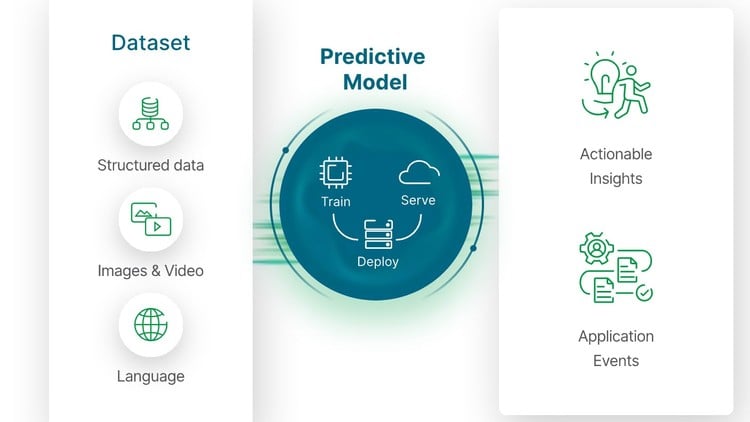
Master Predictive Modeling & Regression Analysis: Linear, Logistic, Diagnostics, and Advanced Model Selection Techniques
👥 18 students
Add-On Information:
Note➛ Make sure your 𝐔𝐝𝐞𝐦𝐲 cart has only this course you're going to enroll it now, Remove all other courses from the 𝐔𝐝𝐞𝐦𝐲 cart before Enrolling!
- Course Caption: Master Predictive Modeling & Regression Analysis: Linear, Logistic, Diagnostics, and Advanced Model Selection Techniques
- Course Overview
- This intensive certification program, “Certified Predictive Modeling & Regression,” is meticulously designed to equip aspiring and seasoned data professionals with a profound understanding and practical mastery of predictive modeling and regression analysis. It moves beyond theoretical concepts, immersing participants in the art and science of building robust, interpretable, and actionable predictive models from real-world data. The curriculum is structured to build a solid foundation in core regression methodologies, progressively advancing to complex model selection strategies and critical diagnostic assessments.
- You will embark on a comprehensive journey starting with the foundational principles of statistical inference, progressing through the intricacies of various regression types, and culminating in advanced techniques for model validation and optimization. This course emphasizes a hands-on approach, ensuring that every participant gains the confidence to apply sophisticated analytical methods to diverse business challenges. From predicting customer churn to forecasting market trends, this certification empowers you to harness the power of data for strategic decision-making and competitive advantage, transforming raw data into predictive insights.
- The program places a strong emphasis on understanding not just how to run models, but critically, when and why to choose particular approaches, how to interpret their outputs correctly, and how to communicate complex findings to a non-technical audience. It’s an essential deep-dive for anyone looking to excel in data science, analytics, machine learning engineering, or business intelligence roles where predictive power is paramount.
- Requirements / Prerequisites
- Foundational Statistical Knowledge: A basic understanding of statistical concepts such as mean, median, mode, standard deviation, variance, hypothesis testing, p-values, and confidence intervals is highly recommended. Familiarity with basic probability distributions will also be beneficial.
- Basic Algebra and Calculus: A working knowledge of linear equations, functions, and elementary calculus (derivatives) to grasp the underlying mechanics of optimization algorithms.
- Introductory Programming Acumen: Prior exposure to a programming language commonly used in data science (e.g., Python or R) is advantageous, as the course involves practical application and coding exercises. This includes familiarity with data structures and basic scripting logic.
- Data Handling Skills: Experience with data manipulation, cleaning, and exploration using tools like spreadsheets (Excel) or basic database queries. The ability to work with structured datasets is key.
- Analytical Mindset: A strong curiosity for data-driven problem-solving and a desire to uncover insights from complex datasets.
- Skills Covered / Tools Used
- Mastering Regression Techniques:
- Linear Regression: In-depth understanding of Ordinary Least Squares (OLS), multiple regression, assumptions, and interpretation of coefficients.
- Logistic Regression: Applying logistic models for binary and multinomial classification problems, understanding log-odds and probabilities.
- Polynomial Regression: Modeling non-linear relationships between variables.
- Ridge & Lasso Regression: Implementing regularization techniques to prevent overfitting and enhance model generalization, particularly in high-dimensional datasets.
- Stepwise Regression: Strategies for automated feature selection and model simplification.
- Generalized Linear Models (GLMs): Exploring the broader framework of GLMs for various response variable distributions.
- Advanced Model Diagnostics & Validation:
- Assumption Testing: Comprehensive checks for linearity, normality, homoscedasticity, and multicollinearity using statistical tests and graphical methods.
- Outlier Detection & Influence Analysis: Identifying influential data points and outliers using metrics like Cook’s Distance, leverage, and DFFITS.
- Residual Analysis: Interpreting residual plots to assess model fit and identify areas for improvement.
- Cross-Validation Techniques: Implementing K-fold, stratified, and leave-one-out cross-validation for robust model evaluation.
- Model Selection & Evaluation Criteria:
- Information Criteria: Utilizing AIC, BIC, and adjusted R-squared for comparing and selecting optimal models.
- Performance Metrics: Deep dive into metrics like ROC AUC, F1-score, precision, recall for classification; MAE, MSE, RMSE, R-squared for regression.
- Feature Engineering: Techniques for creating new variables to improve model performance and interpretability.
- Hyperparameter Tuning: Optimizing model parameters to achieve peak predictive accuracy.
- Practical Application & Tools:
- Programming Languages: Extensive hands-on experience with Python (using libraries like NumPy, Pandas, Scikit-learn, Statsmodels) and/or R (using packages like `glm`, `caret`, `lmtest`).
- Data Visualization: Leveraging Matplotlib, Seaborn (Python) or ggplot2 (R) for insightful data exploration and model diagnostics.
- Reporting & Communication: Structuring analytical results and communicating complex model insights effectively to diverse audiences.
- Mastering Regression Techniques:
- Benefits / Outcomes
- Industry-Recognized Certification: Earn a “Certified Predictive Modeling & Regression” credential, validating your expertise and enhancing your professional profile in a competitive job market.
- Deep Analytical Prowess: Develop a profound understanding of various regression models, enabling you to select and apply the most appropriate technique for any given business problem.
- Data-Driven Decision Making: Gain the ability to construct powerful predictive models that provide actionable insights, empowering organizations to make informed, forward-looking decisions.
- Enhanced Problem-Solving Skills: Learn to approach complex data challenges systematically, from hypothesis formulation and data preparation to model building, validation, and interpretation.
- Career Advancement: Position yourself for high-demand roles in data science, machine learning, business analytics, and quantitative research across diverse industries.
- Robust Model Building: Acquire the skills to build not just predictive, but also robust and reliable models, critically evaluating their assumptions, limitations, and overall fitness.
- Effective Communication: Master the art of translating technical model outputs into clear, concise, and compelling narratives for stakeholders, fostering better collaboration and decision adoption.
- PROS
- Comprehensive Curriculum: Covers a broad spectrum of predictive modeling and regression techniques from foundational to advanced, ensuring a holistic understanding.
- Hands-On Learning: Emphasizes practical application with real-world datasets and extensive coding exercises in industry-standard tools (Python/R).
- Expert Instructors: Taught by experienced practitioners who bring real-world insights and best practices into the classroom.
- Certification Value: Provides a valuable credential that signifies specialized expertise, enhancing employability and career progression.
- Diagnostic Focus: Strong emphasis on model diagnostics and validation, crucial for building reliable and trustworthy predictive systems.
- Career Impact: Directly equips participants with highly sought-after skills for various data-centric roles in today’s economy.
- CONS
- Intensive Time Commitment: Requires significant dedication and study time outside of scheduled sessions due to the depth and breadth of the material covered.
Learning Tracks: English,IT & Software,Other IT & Software