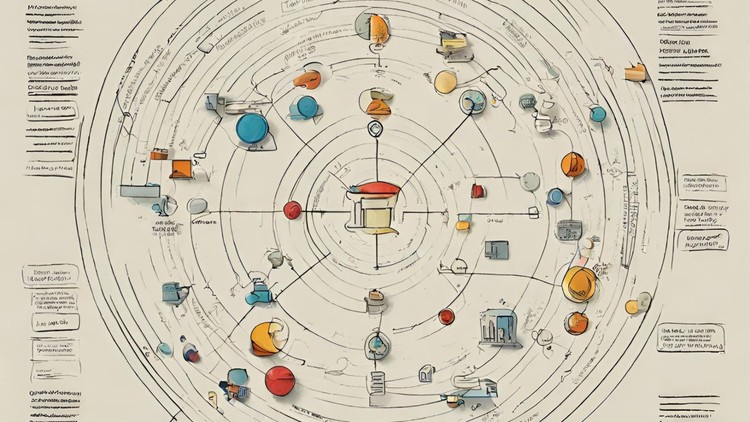
Holistic approach for analysis and design of complex system, strategic thinking, problem solving decision making etc
What you will learn
Note➛ Make sure your 𝐔𝐝𝐞𝐦𝐲 cart has only this course you're going to enroll it now, Remove all other courses from the 𝐔𝐝𝐞𝐦𝐲 cart before Enrolling!
What is Systems Thinking
How can Systems Thinking be used for
Problem Solving
Decision Making
Strategic Planning
Policy Analysis
Innovation and Design
Add-On Information:
- Unlock a paradigm shift in how you perceive and interact with the world, moving beyond linear cause-and-effect to embrace the interconnectedness of all things.
- Develop the ability to discern underlying patterns and feedback loops that drive the behavior of intricate systems, from organizational dynamics to global challenges.
- Cultivate a heightened sense of situational awareness, enabling you to anticipate emergent behaviors and unintended consequences in multifaceted environments.
- Acquire the skills to deconstruct complexity into manageable components, identifying leverage points for impactful intervention and sustainable change.
- Master the art of synthesizing diverse perspectives and data streams to build a comprehensive understanding of system architecture and interdependencies.
- Enhance your capacity for resilient thinking, equipping you to navigate uncertainty and adapt effectively in dynamic and evolving landscapes.
- Gain proficiency in designing interventions that foster positive system transformation, rather than merely addressing surface-level symptoms.
- Develop the critical faculty to challenge assumptions and conventional wisdom, paving the way for innovative and breakthrough solutions.
- Learn to visualize systemic relationships through powerful modeling techniques, facilitating clearer communication and shared understanding.
- Become adept at identifying and mitigating systemic risks, protecting against cascading failures and promoting organizational stability.
- Foster a mindset of continuous learning and adaptation, recognizing that systems are living entities requiring ongoing observation and adjustment.
- Empower yourself to influence and lead change within complex organizations and societies by understanding the levers of systemic influence.
- Cultivate empathy and collaborative intelligence by appreciating the diverse roles and interactions of stakeholders within a system.
- Transform your approach to resource allocation and management by understanding the flow and dynamics within complex networks.
- Gain the confidence to tackle seemingly intractable problems by applying a rigorous and holistic analytical framework.
- Develop a deep appreciation for the ethical implications of interventions within complex systems.
- Pros:
- This course offers a profoundly transferable skill set applicable across virtually any domain or industry.
- It equips you with the tools to become a more insightful and effective leader in an increasingly complex world.
- It fosters a unique perspective that sets you apart in professional and personal endeavors.
- Cons:
- Mastering systems thinking requires a significant commitment to cognitive restructuring and can be challenging for those accustomed to purely linear problem-solving.
English
language