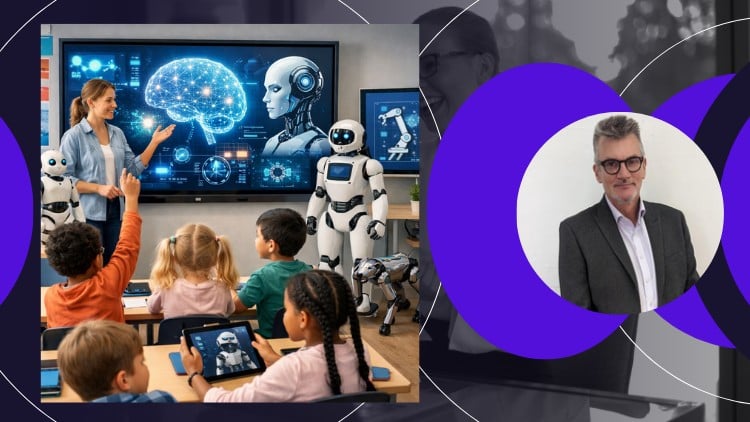
Master prompt engineering, AI content creation, and automated workflows to build better learning experience in half time
What You Will Learn:
- Apply advanced prompt engineering frameworks to generate high-quality learning objectives and course outlines in seconds.
- Automate the creation of assessments, quizzes, and interactive scenarios using generative AI tools.
- Integrate AI into the ADDIE and SAM models to accelerate every phase of the instructional design lifecycle.
- Critique and mitigate AI bias and ethical concerns within educational content and corporate training.
- Develop a personalised AI toolkit to streamline video scripting, voiceovers, and visual asset generation.
- Design personalised learning paths at scale using AI-driven data analysis and student personas.
- Show more
The Real Talk on AI for L&D: Beyond the Hype
Let’s be honest: the instructional design world has been a bit of a grind lately. We’ve all been buried under mounting backlogs, stakeholders who want everything “yesterday,” and the constant pressure to innovate with limited resources. When I first saw AI Foundations & Acceleration for Learning Designers, I was skeptical. I’ve seen enough “prompt engineering” webinars to last a lifetime. However, after diving into this curriculum, it’s clear this isn’t just another surface-level tutorial. It’s a structural re-engineering of how we approach learning experience design.
The core shift here isn’t just about using a chatbot to write a quiz; it’s about moving from being a manual content creator to becoming a “learning architect.” The course tackles the biggest bottleneck in our industry—the time-to-market for high-quality training. It bridges the gap between traditional pedagogical theories and the raw power of generative AI. If you’ve been feeling like your career growth has hit a ceiling because you’re too busy doing the administrative heavy lifting, this is the pivot point you’ve been looking for.
What You Actually Need Before Starting
While the course scales from beginner to advanced, you shouldn’t go in totally blind. You don’t need to be a data scientist, but you do need a solid grasp of basic instructional design principles. If you don’t know what a learning objective is or why the ADDIE model matters, the AI will just help you produce bad content faster. This isn’t a “magic button” course; it’s for professionals who want to enhance their existing expertise. A baseline curiosity about industry-standard tools like ChatGPT, Claude, or Midjourney is helpful, but the course does a great job of holding your hand through the initial setup.
Skills Acquired & The Tech Stack
The curriculum is heavy on hands-on labs, which is where the real value lies. You aren’t just watching videos; you’re building. You’ll master a stack of tools that make the old way of working look like using a typewriter in a fiber-optic world. Key areas include:
- Prompt Engineering Frameworks: Moving beyond “write me a script” to complex, multi-shot prompting that respects student personas and brand voice.
- Automated Workflows: Using generative AI to bridge the gap between video scripting, voiceovers, and visual asset generation without leaving your desk.
- Ethical AI Auditing: Learning how to spot and mitigate AI bias—a critical skill as corporate DEI requirements become more stringent.
- Rapid Prototyping: Utilizing AI-driven data analysis to iterate on real-world projects in hours rather than weeks.
Career Benefits & Job Roles
In the current market, “Instructional Designer” is becoming “AI Learning Strategist.” Completing this course is essentially certification prep for the next decade of L&D. By developing these job-ready skills, you position yourself for high-impact roles such as Senior Learning Architect, AI Content Operations Manager, or Performance Consultant. Organizations are desperate for people who can deliver personalized learning paths at scale without 10x-ing the budget. If you want to command a higher salary, you have to prove you can produce more value in less time, and this toolkit is your leverage.
What I Liked (The Pros)
- Practical Over Theoretical: The focus is on real-world projects. You walk away with a portfolio of AI-augmented work, not just a certificate.
- Efficiency Gains: The techniques for integrating AI into the SAM and ADDIE models actually work. I’ve seen production timelines cut by 40-50% using these workflows.
- Future-Proofing: It addresses the “elephant in the room”—the fear of AI replacement—by teaching you how to be the person who controls the AI.
The Reality Check (The Cons)
The only real downside is the velocity of change. The AI toolscape moves so fast that some specific UI walkthroughs for tools like ElevenLabs or Gamma might feel slightly dated within six months. You have to be willing to focus on the logic and frameworks rather than just memorizing which button to click, or you’ll find yourself frustrated when a tool updates its interface.
Final Verdict: If you’re serious about career growth in instructional design, you can’t afford to ignore this. It’s an investment in your most valuable asset: your time.