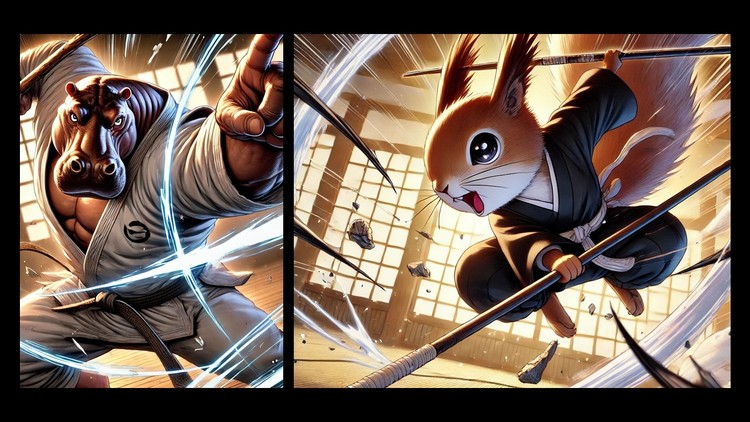
Mastering Fluid Motion: Escriba Stick Training for Coordination, Fitness, and Flow
What You Will Learn:
- Recall fundamental grips, positions, and movement principles of the Escriba stick, recognizing their role in fluid motion and coordination.
- Explain the concepts of rhythm, flow, and continuous movement, describing how they contribute to improved dexterity and mobility.
- Demonstrate proper technique by performing wrist rolls, directional changes, and controlled transitions with increasing fluidity.
- Differentiate between efficient and inefficient movement patterns, identifying areas for refinement in stick handling and coordination.
- Adjust movement sequences based on personal comfort and effectiveness, refining techniques for smoother execution.
- Develop a personalized flow routine by integrating various Escriba stick movements into a seamless, self-expressive practice.
- Show more
Overview: Finding the Flow in a High-Stress Tech Stack
As someone who spends most of my day navigating complex real-world projects and debugging legacy code, I’m always looking for ways to optimize my cognitive load and physical well-being. We talk a lot about hands-on labs for software, but we rarely apply that same “lab” mentality to our own manual dexterity. That’s why I picked up the “Short Stick Work Out – Cross Between Sticks & Juggling Pens.” It’s a bit of an outlier in the world of certification prep and technical training, but honestly, it’s one of the most effective tools I’ve found for building what I call “mental bandwidth.”
The course isn’t just about twirling sticks; it’s about mastering a specific industry-standard tool for movement called the Escriba stick. Think of it as pen spinning scaled up to a size that actually requires your whole arm and shoulder to get involved. For a tech professional, this is the ultimate “fidget spinner” on steroids. It forces you to move from beginner to advanced levels of coordination by using rhythm and flow to reset your brain after a grueling sprint. It’s less about “working out” in the traditional sense and more about developing a job-ready skill for your nervous system—helping you stay calm and focused when the production server decides to melt down at 4:00 PM on a Friday.
Prerequisites
You don’t need a background in martial arts or a certification in physical therapy to get started here. The beauty of this training is that it’s accessible to anyone with two hands and a bit of floor space. However, I’d recommend a baseline of patience. If you’ve ever tried to learn a new programming language or a complex industry-standard tool, you know the “frustration phase” is real. You’ll need a pair of short sticks (Escriba style), enough room to move without hitting your dual-monitor setup, and a willingness to look a little silly while your brain re-wires its motor pathways. No prior hands-on labs in movement are required, but a bit of rhythm doesn’t hurt.
Skills & Tools
The primary “stack” here revolves around the Escriba stick itself. Throughout the course, you aren’t just mimicking movements; you’re building a library of job-ready skills for your hands and wrists. Key takeaways include:
- Wrist Rolls & Transitions: These are the “hello world” of stick work, teaching you how to move the tool across your hand without losing control.
- Rhythmic Flow: This is where the career growth happens—learning to maintain a continuous, efficient movement pattern that mimics the “deep work” state we strive for in coding.
- Efficiency Analysis: The course teaches you to differentiate between “noisy,” inefficient movements and “clean,” optimized transitions. It’s basically code refactoring, but for your muscles.
- Personalized Routine Development: You eventually move into “production” by creating your own seamless flow, integrating various movements into a routine that feels natural to your specific physiology.
Career Benefits & Job Roles
You might wonder how twirling sticks helps a DevOps Engineer or a Senior Architect. The answer is dexterity and cognitive reset. Modern tech roles are sedentary and high-stress, leading to RSI (Repetitive Strain Injury) and burnout. Engaging in a real-world project that involves physical coordination helps mitigate these risks.
- Software Developers & Engineers: Improved wrist mobility directly combats the stiffness from hours of typing and mouse usage.
- Cybersecurity Analysts: The “flow state” practiced here translates to the high-level focus needed during threat hunting and incident response.
- Project Managers: Using these routines as a “pattern break” between meetings can significantly lower cortisol levels and improve decision-making.
It’s a unique form of career growth that focuses on the “hardware” (your body) rather than just the “software” (your knowledge).
Pros
- High Focus ROI: Unlike a treadmill, this requires 100% of your brain. It’s a “hands-on lab” for your focus, pulling you out of digital rabbit holes and into the present moment.
- Portability: You can practice these moves anywhere. I’ve taken my sticks to tech conferences and used them to decompress between sessions. It’s an industry-standard tool for personal maintenance that fits in a backpack.
- Beginner to Advanced Scaling: The progression is logical. You start with basic grips and end with complex, real-world project style routines that feel genuinely impressive to execute.
- Physical Longevity: As someone in the tech industry, your hands are your livelihood. This course provides the “preventative maintenance” necessary to keep them functional for decades.
Cons
- The “Clutter” Factor: Let’s be honest—until you get the “controlled transitions” down, you are going to drop these sticks. A lot. If you’re practicing in a cramped home office with expensive gear nearby, it’s a recipe for a broken peripheral. It takes a while to reach that job-ready level of fluidity where you aren’t a hazard to your own workspace.