Pass your APICS CSCP certification with realistic practice tests, detailed explanations, and fully updated 2026 content
What You Will Learn:
- Pass the 2026 APICS CSCP exam using realistic practice tests and detailed explanations.
- Build and manage global supply chains while following modern sustainability laws.
- Track carbon emissions and create circular economy models to reduce daily waste.
- Predict customer demand and keep perfect inventory levels without running out of stock.
- Protect your factory from disasters, cyberattacks, and sudden global shipping delays.
Overview: The 2026 Pivot in Supply Chain Mastery
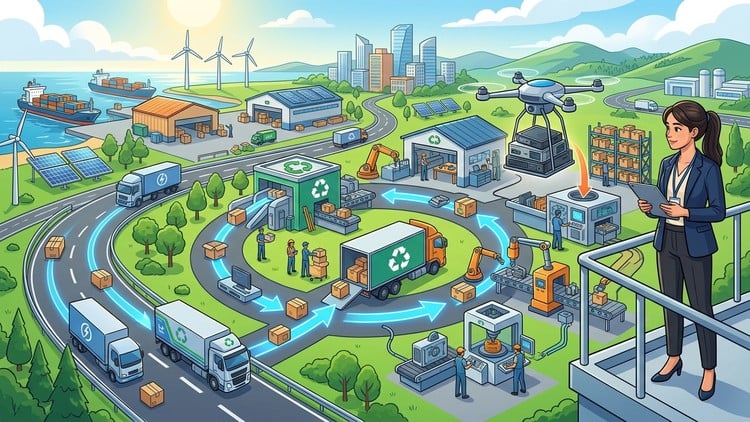
I’ve been in the tech and operations space long enough to see certifications come and go, but the APICS CSCP (Certified Supply Chain Professional) has always been the gold standard. However, the game changed recently. If you’re still studying material from 2022, you’re essentially preparing for a world that doesn’t exist anymore. That’s why I dove into the ‘Prepare For APICS CSCP Exam: Supply Chain & Circular Economy’ course. It’s one of the first deep dives I’ve seen that actually tackles the 2026 content updates head-on, specifically focusing on the shift from “take-make-waste” to a circular economy model.
What I found refreshing here isn’t just the certification prep; it’s the acknowledgment that modern supply chains are fragile. We’re dealing with “perma-crisis” mode—cyberattacks, geopolitical shifts, and the urgent need for carbon emissions tracking. This course doesn’t just teach you how to pass a test; it acts as a blueprint for career growth in a landscape where sustainability is no longer a “nice-to-have” but a legal requirement. It moves past the theoretical and gets into the grit of how to actually protect a global network from the next “black swan” event.
Prerequisites: What You Actually Need
Before you jump in, let’s be real—this isn’t a “Supply Chain 101” for someone who has never heard of a Bill of Materials. While it’s structured to take you from beginner to advanced levels of strategic thinking, you’ll get the most out of it if you have:
- A baseline understanding of business operations or logistics (APICS usually requires 3 years of related experience for the actual cert anyway).
- A basic comfort level with data. You don’t need to be a data scientist, but you shouldn’t be afraid of a spreadsheet.
- A mindset geared toward real-world projects; this course asks you to think like a manager, not a technician.
- Patience. The 2026 curriculum is dense, and the circular economy modules require unlearning some old-school linear habits.
The Toolkit: Skills & Industry-Standard Tools
This course goes heavy on job-ready skills that actually look good on a LinkedIn profile. You aren’t just memorizing definitions; you’re learning how to utilize industry-standard tools and frameworks. Key highlights include:
- Demand Forecasting & Inventory Optimization: Mastering the math behind “safety stock” so you aren’t the reason the warehouse is empty during a peak season.
- Sustainability & ESG Frameworks: Learning how to track and report carbon footprints, which is a massive high-CPC industry term right now.
- Risk Management & Cybersecurity: Protecting the digital thread of the supply chain from hackers—a skill set that is currently in massive demand.
- End-to-End Visibility: Using hands-on labs (metaphorically speaking through case studies) to map out global shipping routes and identify potential bottlenecks before they happen.
Career Benefits & Job Roles
Let’s talk money and titles. Getting CSCP certified is one of the fastest ways to jump from a mid-level analyst to a Supply Chain Manager or Director of Operations. Companies are desperate for people who understand the circular economy because it directly impacts their bottom line and tax liabilities. Possible roles include:
- Senior Supply Chain Strategist: Designing resilient networks that can survive global shocks.
- Sustainability Consultant: Helping firms transition to zero-waste models.
- Logistics Manager: Overseeing complex, multi-modal international shipping.
- Procurement Lead: Managing vendor relationships with an eye on ethics and risk mitigation.
Pros: Why This Course Stands Out
- Realistic Practice Tests: The questions aren’t just “easy wins.” They mimic the actual complexity and phrasing of the 2026 APICS exam, which is notorious for being tricky.
- Future-Proof Content: Most courses ignore the circular economy or treat it as an afterthought. This course bakes it into the core strategy, which is exactly where the industry is heading.
- Detailed Explanations: If you get a question wrong in the practice sets, you get a deep dive into why. This is crucial for certification prep because it builds true understanding rather than just rote memorization.
Cons: The Honest Truth
If I have one gripe, it’s the sheer volume of information. This isn’t a “weekend crash course.” Because it covers beginner to advanced topics, the 2026 updates add a layer of complexity that can feel overwhelming if you’re trying to rush. If you don’t dedicate at least a few weeks to the detailed explanations, you might find yourself drowning in the technicalities of carbon legislation and global trade laws. It’s a marathon, not a sprint.