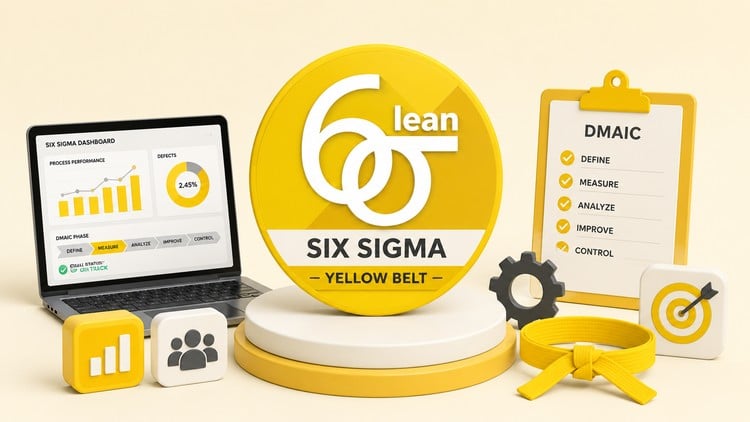
300+ practice questions with detailed explanations. Covers DMAIC, tools & statistics. Pass your SSYB exam confidently
What You Will Learn:
- Understand Six Sigma fundamentals and quality management principles
- Learn the DMAIC methodology for process improvement projects
- Identify process inefficiencies, defects, and root causes of problems
- Understand Lean concepts and waste reduction techniques
- Learn process mapping, data analysis, and continuous improvement strategies
- Improve problem-solving and decision-making skills in business environments
- Gain knowledge of Six Sigma tools commonly used in organizations
- Build confidence for Six Sigma Yellow Belt certification preparation
Alright, let’s talk brass tacks about the ‘Six Sigma Yellow Belt Practice Tests 2025’. As someone who’s navigated the choppy waters of various certifications and seen countless “quick study” guides come and go, I have a pretty strong opinion on what actually moves the needle for career growth. This isn’t a full-blown Six Sigma course; let’s be super clear about that upfront. What it is, however, is a rigorously structured set of practice exams designed to solidify your understanding and ensure you’re genuinely ready to ace that Yellow Belt certification. Think of it as your final mental workout before the big race.
My take? In the world of process improvement and quality management, theoretical knowledge is a good start, but practical application and exam readiness are where the rubber meets the road. This package doesn’t just throw questions at you; it’s geared towards embedding the core principles of Six Sigma, like identifying critical-to-quality characteristics and understanding variation, in a way that sticks. It’s particularly valuable because it helps you transition from merely knowing concepts to applying them under exam conditions, a common stumbling block for many. The “2025” in the title also suggests an updated curriculum, keeping pace with contemporary industry standards, which is always a plus.
Prerequisites
Honestly, the Yellow Belt is largely considered an entry point into the Six Sigma universe, so the prerequisites aren’t overly demanding. You don’t need a deep background in statistics or advanced project management. A basic understanding of business processes, how organizations operate, and a willingness to engage with problem-solving methodologies will serve you well. If you’ve ever been curious about making things work better, or if you’ve been on a team struggling with inefficiencies, you’re probably already halfway there. No prior Six Sigma training is explicitly required, but if you’ve skimmed a book or two on continuous improvement, it certainly won’t hurt.
Skills & Tools
While this is a practice test product, working through 300+ questions with detailed explanations is an incredibly effective way to build genuine job-ready skills. You’ll become much more adept at:
- Understanding Six Sigma Fundamentals: Grasping the philosophy, roles, and benefits beyond just memorization.
- Mastering the DMAIC Methodology: Practicing its application across various hypothetical scenarios, from Define to Control. This isn’t just about defining DMAIC; it’s about discerning its proper use cases.
- Process Analysis: Sharpening your ability to identify inefficiencies, pin down root causes of defects, and understand process flow through simulated mapping exercises.
- Lean Principles Application: Recognizing different types of waste (Muda) and scenarios where Lean techniques can be applied for reduction.
- Data Interpretation: While not a deep dive into advanced statistics, you’ll get comfortable interpreting basic data outputs and understanding how they inform decisions.
- Proficiency with Industry-Standard Tools: Familiarity with the practical application of tools like Pareto charts, Ishikawa diagrams, and control charts, as they apply to Yellow Belt scope.
- Problem-Solving & Decision-Making: Developing a more structured approach to tackling business problems, a skill invaluable in almost any professional setting.
Career Benefits & Job Roles
Earning your Six Sigma Yellow Belt is more than just another line on your resume; it’s a clear signal to employers that you understand and are committed to quality and efficiency. For individuals looking to embark on significant career growth, this certification offers a solid foundation. It’s particularly beneficial for:
- Team Members on Process Improvement Projects: You’ll be able to actively contribute to and understand the larger Six Sigma initiatives.
- Quality Assurance Specialists: Enhance your ability to identify, analyze, and report on quality issues.
- Operations Analysts: Gain a structured framework for improving operational workflows and reducing waste.
- Front-line Managers & Supervisors: Equip yourself to lead smaller improvement efforts and better support larger projects.
- Anyone Seeking Foundational Quality Management Knowledge: It’s an excellent entry point for those aiming for Green or Black Belt certifications down the line, demonstrating a commitment to continuous learning and excellence in business environments.
It essentially equips you with a powerful problem-solving toolkit, transferable across almost any industry, helping you contribute to real-world projects from day one.
Pros
- Comprehensive Question Bank & Detailed Explanations: With 300+ practice questions, you’re getting a substantial amount of material. Crucially, the detailed explanations for each answer are a huge learning asset. This isn’t just about getting it right or wrong; it’s about understanding why and reinforcing the underlying principles.
- Realistic Exam Simulation for Confidence Building: The tests are structured to mimic the actual certification exam, which is paramount for effective certification prep. This helps you manage time, understand question formats, and build significant confidence to “Pass your SSYB exam confidently.”
- Strong Focus on DMAIC & Key Tools: The content heavily emphasizes the DMAIC methodology and the Six Sigma tools relevant to a Yellow Belt, ensuring you’re tested on the most critical aspects of the curriculum. This targeted approach is efficient for focused study.
- Accessibility for Beginners: While thorough, the practice tests are designed to cater to those at the beginning of their Six Sigma journey, making complex topics digestible through repeated exposure in practical contexts.
Cons
- Not a Standalone Learning Course: Let’s be candid: this product is explicitly ‘Practice Tests.’ It’s a fantastic resource for testing and reinforcing knowledge, but it won’t teach you Six Sigma from scratch. You’ll need supplementary learning materials – books, online courses, or workshops – to gain initial theoretical understanding before these practice tests become truly effective for application and mastery. It’s the ultimate sparring partner, but you still need a coach for the initial training.