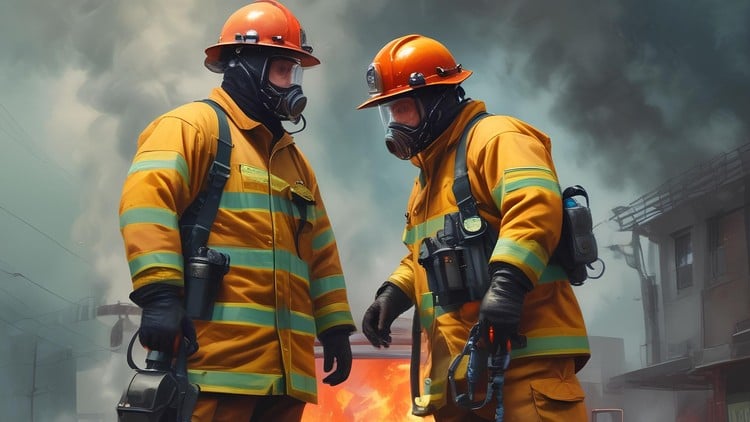
Master Fire Prevention, Fire Risk Assessment, Safety Regulations, Emergency Planning and Fire Protection Strategies
What You Will Learn:
- Understand the fundamental principles of fire science, combustion, and fire dynamics.
- Identify potential fire hazards and implement effective fire prevention strategies.
- Gain expertise in fire detection, alarm, and suppression systems, including modern technologies.
- Conduct comprehensive fire risk assessments in industrial, commercial, and residential settings.
- Apply international fire safety codes, standards, and regulations (NFPA, OSHA, ISO).
- Design and implement emergency evacuation plans and crisis communication strategies.
- Show more
The Real Talk on the Postgraduate Diploma in Fire Safety & Risk Management
Let’s be honest: fire safety often feels like one of those “check-the-box” compliance tasks until you’re actually standing in a facility responsible for thousands of lives and millions in assets. I’ve spent years in the industrial and tech space, and if there’s one thing I’ve learned, it’s that a general safety certificate doesn’t cut it when you’re dealing with complex infrastructure. That’s where the Postgraduate Diploma in Fire Safety & Risk Management comes in. This isn’t a weekend seminar; it’s a deep dive into the literal science of how things burn and, more importantly, how to stop them from doing so.
What struck me most about this program is its shift away from “theory for theory’s sake.” It bridges the gap between old-school fire prevention and modern fire engineering. We aren’t just talking about where to hang an extinguisher. We’re talking about the fluid dynamics of smoke, the structural integrity of materials under extreme heat, and the high-stakes world of international compliance. It’s a curriculum built for people who want to be the smartest person in the room during a crisis. If you’re looking for job-ready skills that translate directly to the field, this hits the mark.
Prerequisites: What You Need Before Diving In
This is a Postgraduate Diploma, so don’t expect a “Fire Safety 101” vibe. To really get the most out of this, you should ideally have:
- A foundational degree in Engineering, Architecture, or Occupational Health & Safety.
- A baseline understanding of building layouts—being able to read a blueprint is a massive advantage.
- A professional background in a technical or safety-adjacent field; while the course scales from beginner to advanced, having some “dirt under your fingernails” helps the concepts stick.
- A knack for detail-oriented reading. You’ll be spending a lot of time with industry-standard regulatory documents.
Skills Acquired & Industry Tools
This is where the course earns its keep. It’s heavy on hands-on labs (even in digital simulations) and real-world projects. You aren’t just reading about hazards; you’re mapping them. You’ll walk away with a toolkit that includes:
- Fire Dynamics & Modeling: Understanding the physics of combustion and how fire spreads through different ventilation systems.
- Technical Proficiency: Mastery of industry-standard tools for fire detection and suppression, including the latest in intelligent alarm systems and automated gaseous suppression.
- Regulatory Navigating: Deep-level certification prep for navigating NFPA, OSHA, and ISO standards. Being able to cite these codes off the top of your head is what separates a technician from a consultant.
- Risk Assessment Software: Experience using specialized software to conduct quantitative and qualitative fire risk assessments in high-risk environments like chemical plants or data centers.
Career Benefits & Job Roles
In terms of career growth, this diploma is a significant lever. Fire safety is no longer just a “side duty” for an HR manager; it’s a specialized engineering niche with high demand and even higher stakes. Completing this program positions you for high-level roles such as:
- Fire Safety Consultant: Working independently or for a firm to audit corporate high-rises and industrial sites.
- EHS (Environment, Health, and Safety) Manager: A staple role in manufacturing and construction where fire risk is a primary concern.
- Fire Protection Engineer: Designing the very systems that detect and suppress fires in new builds.
- Crisis Manager: Leading the emergency response and evacuation strategy for large-scale organizations.
Pros: Why This Course Stands Out
- Comprehensive Framework: It moves seamlessly from the micro-level (chemistry of fire) to the macro-level (international safety law), ensuring you have a 360-degree view of the field.
- Practical Application: The focus on real-world projects means you aren’t just memorizing facts; you’re building evacuation plans and suppression strategies that you could actually use on a job site tomorrow.
- Global Relevance: Because it leans heavily into NFPA and ISO standards, the knowledge is portable. You can take these skills from London to Dubai to New York without feeling out of place.
- Career Longevity: Fire safety isn’t a trend. As long as we’re building structures and using energy, this skill set will be in demand. It’s a “future-proof” career move.
Cons: The Honest Truth
If I have one gripe, it’s the sheer volume of “legalese” you have to wade through in the middle modules. While the fire science and hands-on labs are engaging, the deep dive into international codes and standards can feel like a slog. It’s absolutely necessary for certification prep and being a legal authority in the field, but be prepared for some dry nights spent highlighting 500-page regulatory documents. It’s a mental marathon, not a sprint.