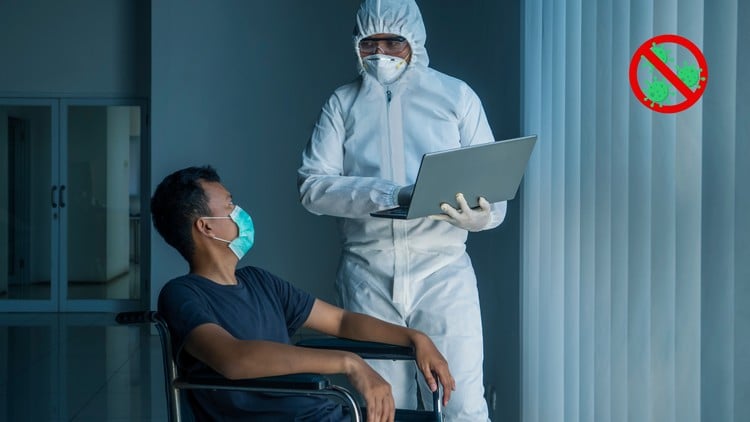
Understand Infection Prevention and Infection Control Protocol in Caregiving, Home Health and Nursing
⏱️ Length: 2.8 total hours
👥 13 students
Add-On Information:
Note➛ Make sure your 𝐔𝐝𝐞𝐦𝐲 cart has only this course you're going to enroll it now, Remove all other courses from the 𝐔𝐝𝐞𝐦𝐲 cart before Enrolling!
- Course Title: Diploma in Infection Prevention and Control in Care Settings
- Course Caption: Understand Infection Prevention and Infection Control Protocol in Caregiving, Home Health and Nursing
- Course Length: 2.8 total hours
- Number of Students: 13
- Course Overview
- This comprehensive diploma program is meticulously designed to equip healthcare professionals and caregivers with the essential knowledge and practical skills to proactively combat the spread of infections within diverse care environments.
- It delves into the fundamental principles of microbial life and their implications in healthcare, emphasizing a multi-faceted approach to safeguarding patient well-being and maintaining a sterile environment.
- The curriculum focuses on practical application, empowering participants to implement robust infection control strategies that are critical for preventing hospital-acquired infections (HAIs) and ensuring patient safety in an era of evolving infectious threats.
- The program underscores the importance of a systematic and evidence-based approach to infection prevention, fostering a culture of safety and responsibility among all healthcare personnel.
- Participants will gain an in-depth understanding of the critical role infection control plays in mitigating risks, improving patient outcomes, and upholding the highest standards of care.
- The course provides a foundational understanding of biological agents and their potential to cause harm, alongside the intricate pathways through which they can transmit.
- Emphasis is placed on developing a keen awareness of the environmental factors that contribute to or inhibit microbial growth and spread.
- Participants will learn to critically assess various care settings and identify specific vulnerabilities and high-risk areas for infection transmission.
- The program fosters an understanding of epidemiological principles relevant to healthcare settings, enabling participants to recognize patterns and implement targeted interventions.
- It highlights the interconnectedness of individual actions, environmental hygiene, and overall facility-wide infection control policies.
- The course promotes a proactive mindset, encouraging participants to anticipate potential infection risks and develop contingency plans.
- Understanding the impact of societal factors and global health trends on infection control practices within care settings is also a key component.
- The program aims to cultivate a sense of ethical responsibility in preventing the spread of infections, recognizing the profound impact on individuals and communities.
- Requirements / Prerequisites
- While no formal academic prerequisites are strictly mandated, a foundational understanding of basic healthcare principles or experience in a caregiving role is highly beneficial.
- Participants should possess a commitment to learning and a dedication to upholding the highest standards of health and safety in their practice.
- A willingness to engage with technical information and practical application is essential for maximizing the benefits of this course.
- Basic literacy and comprehension skills are necessary to effectively absorb the course material and participate in any assessments.
- Access to a reliable internet connection and a suitable device for online learning are required for participation in this digital program.
- An open mind and a proactive attitude towards continuous professional development are encouraged.
- Skills Covered / Tools Used
- Proficiency in hazard identification and risk assessment related to microbial contamination.
- Application of aseptic techniques and sterile procedures to minimize pathogen introduction.
- Expertise in selecting and correctly utilizing appropriate personal protective equipment (PPE) for various tasks.
- Competence in implementing effective cleaning, disinfection, and sterilization protocols for equipment and environments.
- Skilled management of different categories of clinical waste to prevent secondary contamination.
- Development of critical thinking skills to analyze infection scenarios and devise appropriate control measures.
- Understanding and application of universal precautions and transmission-based precautions.
- Familiarity with standard operating procedures (SOPs) for infection control in care settings.
- Ability to conduct basic environmental monitoring and surveillance for microbial presence.
- Effective communication strategies for educating patients, colleagues, and visitors on infection prevention best practices.
- Knowledge of reporting mechanisms for occupational exposure and infection outbreaks.
- Understanding of antimicrobial stewardship principles and the responsible use of antibiotics.
- Familiarity with relevant regulatory guidelines and professional standards.
- Benefits / Outcomes
- Enhanced ability to create and maintain safe and hygienic care environments, significantly reducing the incidence of preventable infections.
- Increased confidence and competence in implementing evidence-based infection control strategies across various care settings, including home health, nursing homes, and hospitals.
- Improved patient outcomes through a demonstrable reduction in healthcare-associated infections (HAIs), leading to faster recovery times and fewer complications.
- Stronger professional credibility and employability within the healthcare sector, as infection prevention and control expertise is highly sought after.
- A deeper understanding of personal and organizational responsibilities in upholding public health and preventing disease transmission.
- Empowerment to contribute to a culture of safety and continuous improvement within healthcare facilities.
- The capacity to effectively educate and guide patients, families, and colleagues on essential infection control practices.
- Reduced risk of legal and regulatory non-compliance related to infection prevention protocols.
- The ability to adapt infection control practices in response to emerging infectious diseases and evolving scientific knowledge.
- A foundational understanding that can lead to further specialization in infection prevention and control roles.
- Contribute to minimizing the burden of infectious diseases on healthcare systems and the wider community.
- Develop a proactive approach to safeguarding vulnerable populations from infection.
- PROS
- Highly relevant and practical for immediate application in caregiving roles.
- Concise and time-efficient, making it accessible for busy professionals.
- Covers essential aspects of infection prevention for a broad range of care settings.
- CONS
- May lack the depth for specialized roles in infection control due to its short duration.
Learning Tracks: English,Health & Fitness,Safety & First Aid