NoSQL & Graph Databases Certification: Mastering Data Modeling, MongoDB, Cassandra, and Neo4j for Modern Applications.
👥 22 students
Add-On Information:
Note➛ Make sure your 𝐔𝐝𝐞𝐦𝐲 cart has only this course you're going to enroll it now, Remove all other courses from the 𝐔𝐝𝐞𝐦𝐲 cart before Enrolling!
- Course Overview
- This comprehensive certification program is meticulously designed for data professionals, developers, and architects seeking to master the rapidly evolving landscape of NoSQL and Graph databases.
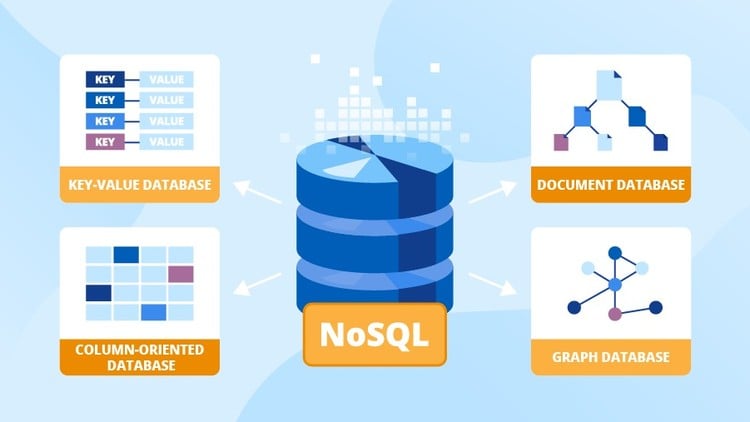
- Explore the fundamental differences and unique advantages of various NoSQL paradigms, including document, column-family, and graph databases, compared to traditional relational systems.
- Gain deep theoretical understanding combined with extensive practical experience in selecting the appropriate NoSQL database for specific modern application requirements.
- Delve into the core architectures, data modeling principles, and operational best practices for leading NoSQL technologies like MongoDB, Cassandra, and Neo4j.
- Understand the challenges and solutions related to scalability, consistency, availability, and partitioning within distributed NoSQL environments.
- Learn how to design robust, high-performance data models that leverage the strengths of each database type to build resilient and efficient modern applications.
- Requirements / Prerequisites
- A foundational understanding of basic programming concepts, ideally with exposure to languages like Python or Java, will facilitate hands-on exercises and client interactions.
- Familiarity with general database concepts and SQL query syntax is beneficial, providing a strong basis for understanding NoSQL differences and advantages.
- Basic command-line proficiency and an understanding of operating system fundamentals (Linux/macOS/Windows) are recommended for setting up and managing database instances.
- An eagerness to learn about distributed systems, data architecture, and modern application development paradigms is crucial for maximizing course engagement.
- Skills Covered / Tools Used
- NoSQL Fundamentals: Master the CAP theorem, BASE properties, and different NoSQL data models (key-value, document, column-family, graph) and their appropriate use cases.
- Data Modeling for NoSQL: Develop expertise in designing schemaless and schema-flexible data structures optimized for read/write performance in diverse NoSQL environments.
- MongoDB Mastery:
- Perform advanced CRUD operations, including complex queries, updates, and deletions, leveraging MongoDB’s rich query language.
- Design and implement effective indexing strategies to optimize query performance and ensure efficient data retrieval in large datasets.
- Utilize the Aggregation Framework for powerful data processing, transformation, and analytical reporting directly within MongoDB.
- Understand MongoDB’s replication for high availability and sharding for horizontal scalability, including configuration and management.
- Interact with MongoDB using popular client drivers and explore administration tasks such as backup, restore, and performance monitoring.
- Cassandra Expertise:
- Learn Cassandra’s distributed architecture, including nodes, clusters, data centers, and the gossip protocol for inter-node communication.
- Master Cassandra Query Language (CQL) for defining schemas, inserting, querying, and updating data in a column-family database.
- Apply best practices for Cassandra data modeling, focusing on query-driven design to achieve ultra-high availability and linear scalability.
- Explore Cassandra’s consistency levels and their implications for read/write operations in a highly distributed, eventually consistent system.
- Gain hands-on experience with Cassandra cluster setup, configuration, and monitoring tools for operational efficiency.
- Neo4j & Graph Databases:
- Understand the power of graph databases for representing highly connected data and solving complex relationship-driven problems.
- Master Cypher, Neo4j’s declarative graph query language, for pattern matching, traversing relationships, and manipulating graph data.
- Learn effective graph data modeling techniques, including nodes, relationships, and properties, to represent real-world entities and their connections.
- Explore common graph algorithms (e.g., shortest path, community detection, centrality) and their applications in areas like recommendation systems and fraud detection.
- Work with Neo4j Browser and client drivers to visualize and interact with graph data, facilitating insights and development.
- Benefits / Outcomes
- Earn a recognized certification that validates your expertise in designing, implementing, and managing NoSQL and Graph databases for modern applications.
- Develop the critical thinking skills to evaluate and select the most appropriate database technology for specific architectural and business challenges.
- Elevate your career prospects and become a sought-after expert in designing and implementing scalable, high-performance data solutions.
- Be proficient in developing and deploying applications that leverage the power of MongoDB, Cassandra, and Neo4j for diverse use cases.
- Contribute effectively to projects requiring distributed data storage, real-time analytics, and complex relationship modeling.
- Gain the confidence to architect robust and future-proof data infrastructures capable of handling massive data volumes and high transaction rates.
- Network with fellow data enthusiasts and instructors, fostering a community of practice around cutting-edge database technologies.
- PROS
- Gains practical, real-world experience with leading NoSQL and Graph database technologies through extensive hands-on labs and project work.
- Covers a diverse range of critical database paradigms, making participants versatile and highly adaptable to various industry needs.
- Designed to directly enhance career opportunities by providing in-demand skills and a valuable certification in a rapidly growing field.
- Instruction by experienced practitioners who share best practices and insights from real-world enterprise deployments.
- CONS
- The dynamic nature of database technologies requires continuous self-learning beyond the course material to stay current with industry trends and updates.
Learning Tracks: English,IT & Software,Other IT & Software