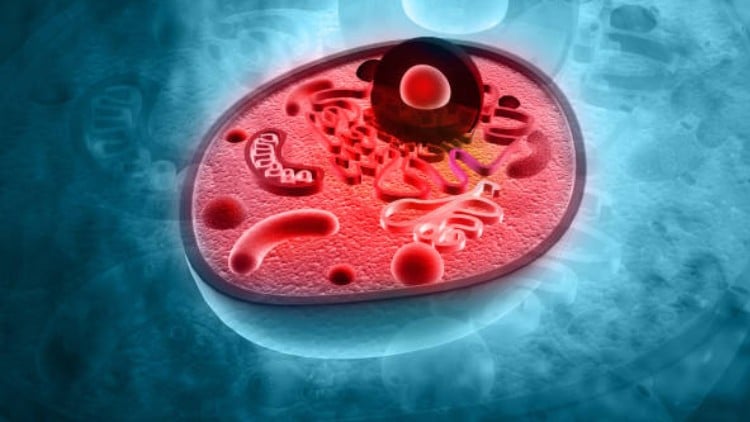
Exploring the Building Blocks of Life: A Beginner’s Guide to Cell Structure and Function
⏱️ Length: 4.5 total hours
⭐ 4.19/5 rating
👥 4,648 students
🔄 November 2024 update
Add-On Information:
Note➛ Make sure your 𝐔𝐝𝐞𝐦𝐲 cart has only this course you're going to enroll it now, Remove all other courses from the 𝐔𝐝𝐞𝐦𝐲 cart before Enrolling!
-
Course Overview
- This course offers a foundational voyage into the microscopic universe, revealing the exquisite complexity and intelligent design within every living cell. It transcends simple memorization by fostering a deep appreciation for how cellular components interoperate with astonishing precision, illustrating that life’s most intricate mechanisms operate at its smallest scales.
- Embark on a captivating exploration differentiating between the fundamental architectural plans of prokaryotic and eukaryotic cells, understanding the evolutionary journey that led to their distinct organizational strategies and the diverse forms of life they support. Discover the ancient origins of cellular compartmentalization and the adaptive advantages it conferred.
- Uncover the dynamic nature of the cell, not as a static entity, but as a bustling, adaptive city, constantly responding to its environment, repairing itself, and communicating with neighboring cells. This section highlights the fluid mosaic model in action, demonstrating how membranes are far more than mere boundaries.
- Gain unique insights into the critical mechanisms of cellular defense and quality control, understanding how cells maintain homeostasis, identify and repair damage, and even initiate self-destruction when necessary (apoptosis) – a crucial aspect often overlooked in introductory texts.
- Explore the intricate dance of cell-to-cell communication, deciphering the molecular signals and pathways that allow cells to coordinate complex biological functions, from tissue development to immune responses, emphasizing how miscommunication can lead to disease.
-
Requirements / Prerequisites
- Basic Curiosity for Life Sciences: No advanced scientific background is required beyond a general interest in how living organisms work. An open mind and a willingness to explore fundamental biological concepts are your primary assets.
- Familiarity with General Biology Terms: While not strictly necessary, a high school-level understanding of basic biological terms (e.g., DNA, protein, organism) would be beneficial for smoother comprehension but is not a barrier to entry.
- Access to a Computer or Mobile Device: Ensure you have a stable internet connection and a device capable of streaming video content to fully engage with all course materials.
- Note-Taking Materials: Whether digital or physical, having a method to record key concepts, definitions, and your own reflections will significantly enhance your learning and retention of the detailed information presented.
-
Skills Covered / Tools Used
- Enhanced Biological Literacy: Develop a robust vocabulary and conceptual framework for discussing cellular biology with confidence, allowing you to interpret scientific articles and discussions related to cells more effectively.
- Critical Thinking in Biological Contexts: Hone your ability to analyze complex biological processes, predict the consequences of cellular malfunctions, and appreciate the interconnectedness of various cellular activities.
- Conceptual Modeling and Visualization: Learn to mentally construct and manipulate three-dimensional models of organelles and cellular processes, fostering a deeper, intuitive understanding beyond two-dimensional diagrams.
- Interpreting Scientific Diagrams and Schematics: Gain proficiency in deciphering the visual language of biology, enabling you to extract maximum information from diagrams illustrating molecular pathways, cellular structures, and experimental results.
- Foundational Research Skills: While not directly performing experiments, you will cultivate an understanding of how scientific discoveries in cell biology are made, including the role of various microscopy techniques and molecular assays in elucidating cellular functions. This indirectly prepares you for understanding research methodologies.
- Problem-Solving in Biological Scenarios: By understanding how cells normally function, you’ll develop an initial framework for contemplating what goes wrong in disease states, fostering a problem-solving mindset applicable to various biological challenges.
-
Benefits / Outcomes
- Solid Foundation for Advanced Studies: Establish an unshakeable bedrock of knowledge essential for pursuing further education in fields such as molecular biology, biochemistry, genetics, microbiology, pharmacology, and biomedical engineering.
- Informed Health Literacy: Develop a more profound understanding of the cellular basis of health and disease, enabling you to better comprehend medical news, personal health information, and the mechanisms of various treatments and preventative measures.
- Appreciation for Life’s Complexity: Cultivate a heightened sense of wonder and appreciation for the astonishing complexity and elegance of life at its most fundamental level, enriching your perspective on all living things.
- Career Pathway Insight: Gain clarity on potential career paths that rely heavily on cellular biology knowledge, from research and development in pharmaceuticals to clinical laboratory science, biotechnology, and science communication.
- Empowered Scientific Curiosity: This course will ignite or re-ignite your passion for scientific inquiry, providing you with the tools to ask deeper questions about biological phenomena and seek out further knowledge independently.
- Context for Modern Biological Discoveries: Understand the cellular context for groundbreaking news in areas like gene editing (CRISPR), immunotherapy, stem cell research, and vaccine development, making current scientific headlines more accessible and meaningful.
-
PROS
- Accessible Entry Point: Designed specifically for beginners, making complex topics understandable without prior extensive scientific training.
- Highly Rated and Student Approved: A strong endorsement from thousands of learners signifies effective instruction and valuable content.
- Concise and Focused: Delivers essential knowledge efficiently within a manageable 4.5-hour timeframe, perfect for busy schedules or quick refreshers.
- Up-to-Date Content: The November 2024 update ensures you are learning the most current understanding and relevant information in cell biology.
- Practical Relevance: Connects fundamental cell biology to real-world applications and larger biological systems, enhancing applicability.
-
CONS
- Limited Depth for Advanced Learners: As an introductory course, it may not delve into the exhaustive detail required for advanced academic or specialized research purposes.
Learning Tracks: English,Teaching & Academics,Online Education